Why Veterinary Clients Decline Treatment and What Clinics Can Do Before Cost Becomes the Barrier


Most practice owners read declined treatment as a money problem. The estimate lands, the client hesitates, and the assumption is that the number was simply too high. Sometimes that is exactly right. Cost is a real and growing barrier, and no workflow change pretends otherwise. But cost is not the whole story, and treating every “no” as a pricing failure means missing the part you can actually do something about.
A veterinary client declining treatment is the moment a pet owner chooses not to proceed with the care their pet needs, whether that is a dental, a diagnostic workup, a surgery, or a recommended follow-up. Cost is the most often given reason. It is frequently the real one. But underneath a sizable share of refusals sits something else: a client who did not fully understand why the care mattered, or who was never shown a way to afford it.
This is no longer a billing conversation that happens at checkout. It is a clarity and trust problem that builds across the entire visit, and your PIMS is where you either get ahead of it or lose it.
Why Do Veterinary Clients Decline Treatment?
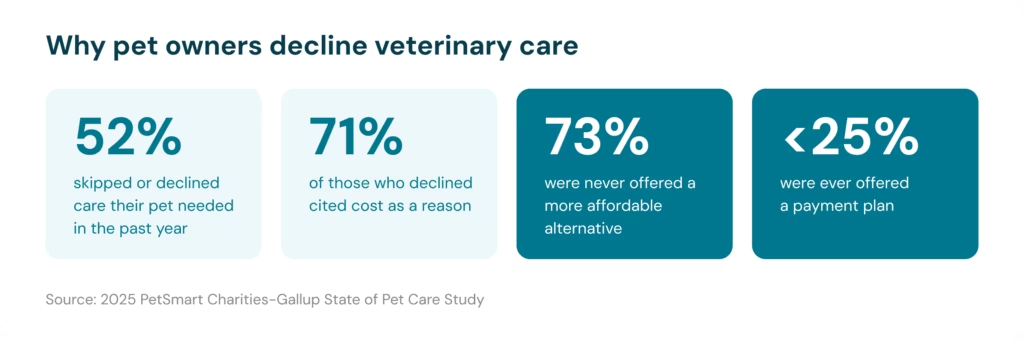
The scale of this is hard to look away from. A 2025 PetSmart Charities-Gallup State of Pet Care Study found that 52% of U.S. pet owners had skipped or declined veterinary care they felt their pet needed in the past year. Among those who declined, 71% pointed to cost: either they could not afford it, did not feel it was worth the price, or both.
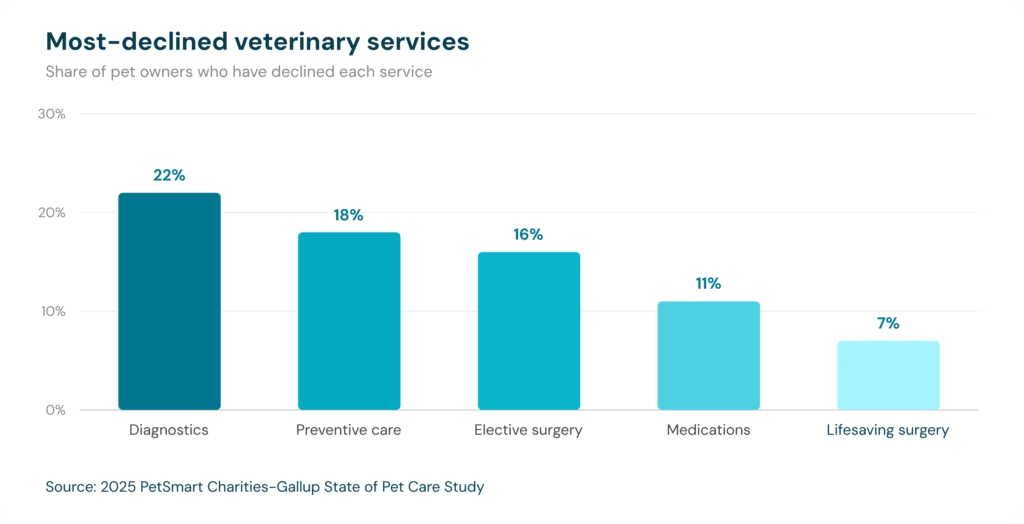
American Veterinary Medical Association also reported that veterinarians are seeing clients grow more price-sensitive year over year, with 81% reporting clients were more cost-conscious than the year before. Diagnostics are refused first, followed by nonessential procedures and preventive care. More owners are stretching the time between visits and waiting until something is clearly wrong before coming in, which means the routine, lower-cost care that catches problems early is exactly what gets skipped.
So cost matters. Among pet owners who declined care over affordability, 73% said they were never offered a more cost-effective alternative. And 64% said a payment plan would let them afford at least twice as much for lifesaving treatment, yet fewer than one in four had ever been offered one. The barrier in those cases was not only the price. It was the absence of another way to say yes.
So, among the top reasons why pet parents decline treatments are:
- Genuine financial limitation, where the answer is a more flexible path to care.
- Information gap, where a client who does not fully grasp why the dental or the bloodwork matters hears a price instead of a recommendation.
Both are addressable. Neither is solved by quietly lowering your standard of care.
How Can a PIMS Help Before Cost Becomes the Barrier?
The work of preventing a decline does not happen at checkout. It happens earlier, across touchpoints your practice already controls. The goal is to make the value clear, give clients a realistic path to afford care, and never let a deferral go cold. Some of this is conversation and training. Some of it is workflow that your PIMS can carry for you.
Make value clear before a number is ever on the table
The strongest defense against a cost-driven “no” is a client who already understands why the care matters. That starts in the exam room, with cost conversations that present options rather than a single take-it-or-leave-it figure. It continues between visits through education.
In Digitail, the Pet Parent App can hold curated educational materials and a client-facing knowledge base, so the reasoning behind preventive care and recommended treatment reaches owners in plain language, on their own time, not only in the rushed minutes of an appointment. A client who understands why a dental prevents a bigger problem later is far less likely to read the estimate as optional.
Give clients a way to say yes to part of it
A single large estimate with a yes-or-no choice pushes hesitant clients toward no. The Gallup finding is blunt here: most clients who declined over cost were never offered an alternative, and most were never offered a payment plan. Closing that gap is one of the highest-leverage moves a clinic can make.
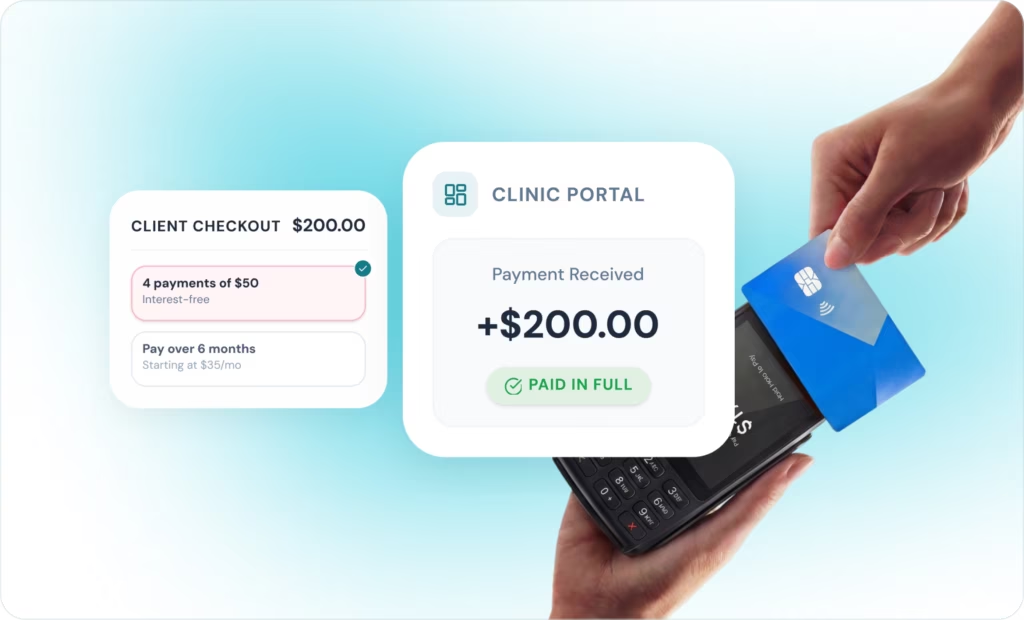
Digitail supports flexible payment options, including Buy Now-Pay Later, so costs can be spread over time rather than being confronted all at once, and treatment plans can be phased into stages a client approves in sequence. The decline you avoid is often not a client who could not afford care. It is a client who was never offered a way to start.
Frame preventive care as the recurring, lower-cost path
Prevention is where cost sensitivity does the most quiet damage, because it is the first thing clients cut.
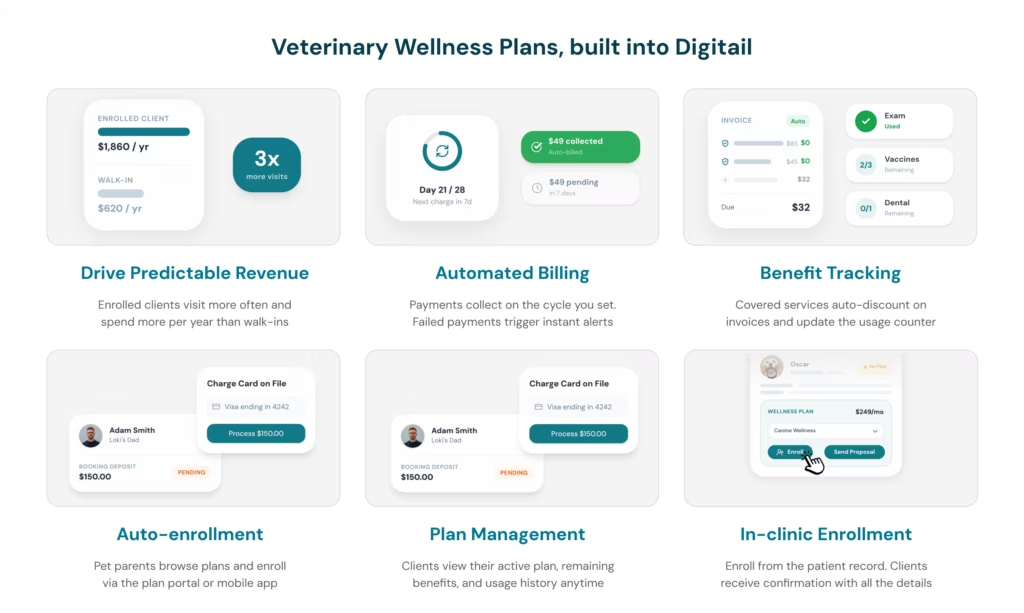
Digitail’s customizable Wellness Plans bundle preventive services into predictable, recurring care, which builds compliance and turns a big annual decision into a manageable ongoing one. A client on a wellness plan is not re-deciding the dental from scratch every year. The commitment to prevention was made upstream, when the relationship was framed around it.
Close the loop so a deferral never disappears
Many declines are not refusals. They are “let me think about it” with no follow-up behind them. Digitail’s automated reminders go out by email, SMS, and app push notification, and the same logic covers overdue vaccinations and preventive care, not only upcoming appointments, which turns routine reminders into a proactive recall engine. The same infrastructure that fills tomorrow’s schedule is what keeps a deferred recommendation from quietly vanishing.
A Practical Starting Point
You do not need to overhaul everything at once. A realistic sequence for most clinics looks like this:
- Find where care is leaking. Pull your declined-recommendation and lapsed-patient data from your PIMS. You cannot fix what you are not tracking.
- Fix the options gap first. Make sure every estimate over a set threshold is paired with a payment option and, where appropriate, a phased plan. This is the fastest win, because so many declines are about how care was offered, not whether it was wanted.
- Turn on education. Load preventive care and treatment explainers into the Pet Parent App so clients get the “why” before they ever see the “how much.”
- Make prevention recurring. Move eligible clients onto wellness plans so preventive care stops being an annual yes-or-no decision.
- Automate the follow-up. Set reminders and recall to run on their own, so no deferral depends on a team member remembering to call.
Start with one. The returns compound, and each step makes the next easier.
Improve Treatment Acceptance Across Your Practice
Discover how Digitail helps clinics create a better experience for both teams and pet owners.