Client Engagement in Veterinary Medicine: What Actually Improves Satisfaction


What Drives Client Satisfaction in a Veterinary Practice?
Client satisfaction in veterinary medicine comes down to four things: communication, transparency, convenience, and continuity. Clinical excellence is the price of entry. These four are what clients actually notice, remember, and repeat to their friends.
The table below is a quick diagnostic. Be honest about which column your clinic lives in.
| Satisfaction driver | What frustrates clients | What delights them |
| Communication | Voicemail with no callback; being left in the dark during a hospitalization | Proactive updates before they have to ask |
| Transparency | Invoice bigger than expected; unclear why a test was needed | Estimates up front, explained in plain language |
| Convenience | Phone-only booking during work hours; paper forms in the lobby | 24/7 self-service booking, digital intake |
| Continuity | Repeating the pet’s history at every visit | A team that already knows the patient |
If most of your gaps are in the left column, you don’t have a marketing problem. You have an engagement problem.
How to Improve Client Engagement: 6 Practical Changes
1. Make Booking Effortless, Not Just Available
Roughly a third of pet parents want to book outside business hours, and every unanswered call is a client who may simply move on to the clinic down the road. Phone-only booking quietly filters out the exact people you’re trying to attract: busy, working pet owners.
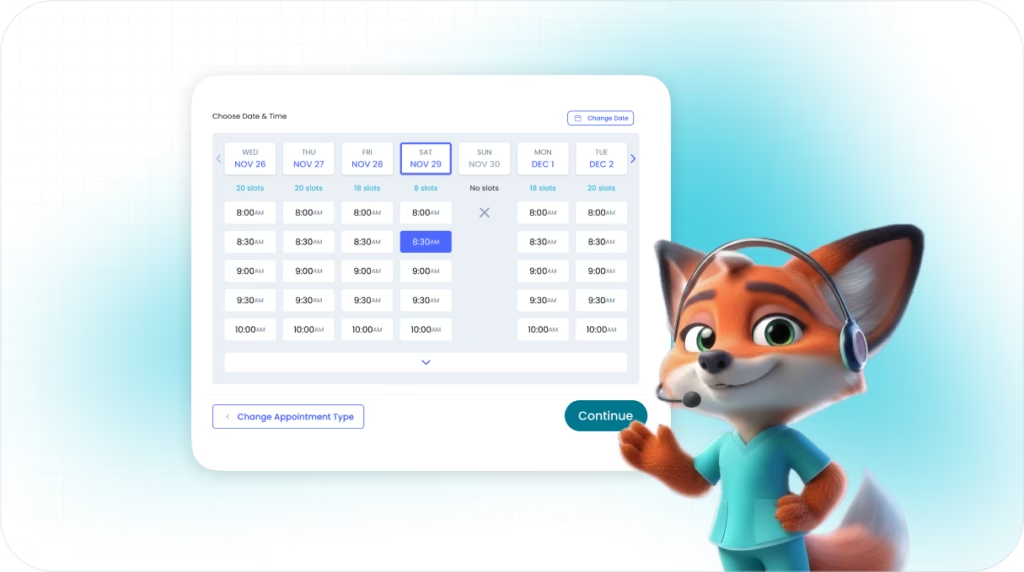
Online booking lets clients schedule when it’s convenient for them, while your front desk stops fielding the same three questions forty times a day. In Digitail, online booking syncs directly with your internal calendar, so there’s no double-booking and no manual reconciliation.
Even without software, audit your phone tree. Call your own clinic at 4:45 pm on a Friday. Time how long it takes to reach a human.
2. Communicate Before They Have to Ask
The single most common complaint in veterinary practice is silence. A client whose dog is in for a dental at 8 am and hasn’t heard anything by 2 pm is not thinking about your excellent anesthesia protocol. They’re thinking about the worst.
A simple rule: every client should hear from you at least once during their pet’s stay, before they contact you. Even if the update is “she’s resting comfortably, we’ll call at 4.”
Digitail’s 2-way chat makes this practical rather than aspirational. Your team can send a quick update, share a lab result, or drop a photo of a recovering patient directly from the patient record, without giving out personal cell numbers or juggling three separate apps.
3. Kill the Clipboard
Nobody’s day was ever improved by filling out a form on a clipboard while restraining an anxious cat. Paper intake is slow, error-prone, and it eats your front desk’s attention at the exact moment a new client is forming their first impression.
Digital intake sent in advance means clients arrive already checked in. Digitail’s AI Intake goes a step further: it collects the history and summarizes it for the clinical team, so the vet walks into the exam room already knowing why the patient is there.
4. Set Financial Expectations Early
Cost is the leading reason pet owners delay or decline care. But the resentment doesn’t come from the price, it comes from the surprise.
The order of operations matters:
- Discuss the recommendation and why it matters clinically.
- Present a written estimate before any work begins.
- Get explicit approval.
- Offer options if the estimate is out of reach.
- Invoice with no line items the client hasn’t already seen.
Digitail’s treatment plans connect estimates, client consent, and invoicing in one workflow, so nothing gets approved verbally and then disputed at checkout. For clients who need flexibility, Buy Now, Pay Later options keep care accessible without your clinic carrying the risk.
5. Own the Follow-Up
The visit isn’t over when the client leaves. It’s over when the pet is better.
A post-visit check-in, even an automated one, is one of the highest-leverage engagement moves available, and almost nobody does it consistently. It catches complications early, it improves compliance, and it makes clients feel like the clinic actually cares about what happens after they have paid.
Automated appointment reminders in Digitail handle the mechanical side: vaccine due dates, medication refills, and recheck appointments. That frees your team to make the calls that genuinely require a human voice.
6. Make Records Feel Like Continuity, Not Interrogation
When a client has to re-explain their pet’s chronic condition at every visit, the message they receive is: you don’t remember us.
A Pet Parent App flips this. Clients get their own access to appointments, records, invoices, and messages, meaning they arrive informed rather than confused. They stop asking your receptionist when the last vaccine was, because they can see it themselves.
The Engagement Journey: Where Clinics Lose People
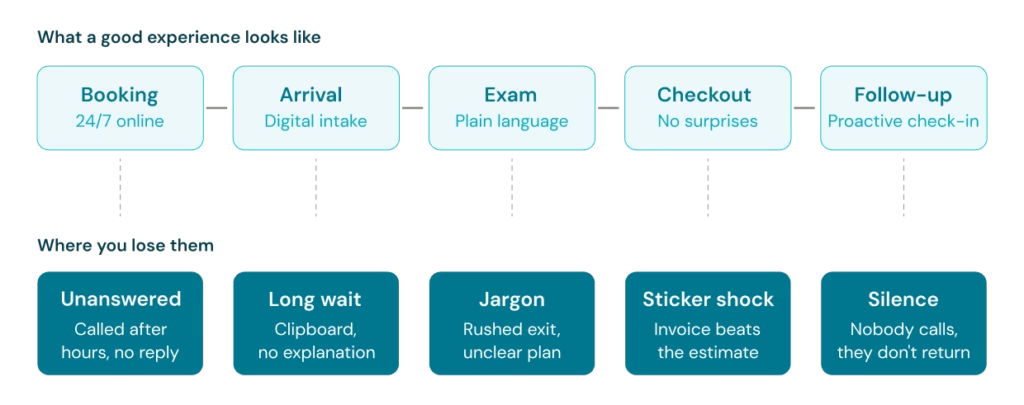
Most clinics obsess over the exam room. But satisfaction is won and lost across the entire journey, and the drop-off points are predictable.
Client Engagement Strategies You Can Start This Week
Not everything requires new software.
Free, start Monday:
- Institute a “no client leaves confused” rule: every discharge ends with the client repeating the plan back in their own words.
- Assign one person per shift to own mid-day updates for hospitalized patients.
- Read your last 20 Google reviews. Categorize the complaints. The pattern will be obvious.
- Standardize your estimate conversation script so every team member handles cost the same way.
Higher-leverage, tooling-dependent:
- Turn on automated reminders for vaccines and rechecks.
- Move intake forms online and send them at booking.
- Enable 2-way chat so clients can reach a human without a phone tree.
- Offer Wellness Plans to convert episodic visitors into ongoing relationships.
How Do You Measure Client Satisfaction in a Vet Clinic?
If you’re not measuring, you’re guessing. These four will tell you most of what you need to know:
| Metric | What it tells you | Watch for |
| Client retention rate | Whether people come back | A slow decline is the loudest signal you’ll get |
| No-show rate | Whether your reminders work | Rising no-shows often mean broken communication, not flaky clients |
| Review volume and sentiment | What clients say publicly | Volume matters as much as rating |
| Compliance rate | Whether clients follow recommendations | Low compliance usually traces back to unclear explanations |
Digitail’s performance dashboards and operational reporting pull these numbers for you, so nobody has to rebuild them in a spreadsheet every month. Having the report is the easy part. The point is that you look at it monthly and act on it.
Client engagement isn’t a campaign. It’s the accumulation of small moments where a pet parent either feels informed and respected, or doesn’t.
One veterinary software for the whole client journey
Want to see how Digitail helps clinics attract, engage, and retain clients?