

Veterinary CSR Burnout: The Workflow Problems Hiding Behind Client Service


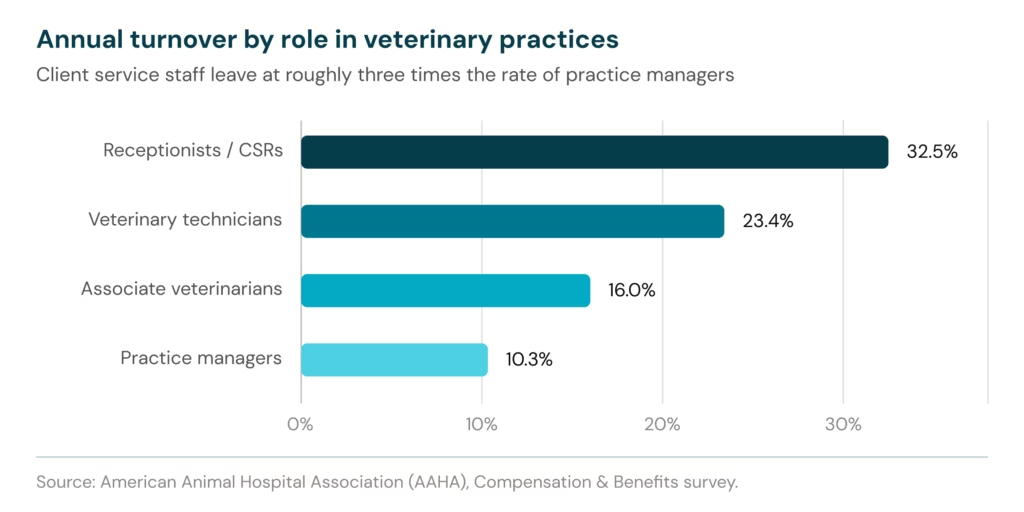
According to AAHA’s Compensation & Benefits survey, receptionists and client service representatives turn over at 32.5% annually — the highest of any core role in the practice, and well above the 23% practice-wide average. For comparison, associate veterinarians sit at 16% and practice managers at 10.3%.
That gap isn’t about who applies for the job. It’s about what the job asks of them once they’re in it.
What Actually Causes Burnout at the Veterinary Front Desk
1. Constant task-switching with no recovery time
A CSR checking in a patient gets interrupted by the phone. Mid-call, someone walks in with a bleeding dog. The call gets put on hold, the check-in stalls, and the original task is now a loose thread. Repeat this forty times a day. Task-switching itself is exhausting, but the higher cost is the mental load of tracking everything that got dropped.
2. Being the buffer for everyone’s frustration
Clients are worried about their pets and often worried about money. Doctors are behind. Technicians need rooms turned over. The CSR absorbs all of it and passes none of it back. Front desk staff describes this as being the shock absorber for the whole hospital and shock absorbers wear out.
3. Repeating information that should already be in the system
Confirming appointments by phone one at a time. Re-entering client details that exist in three places. Reading estimates aloud because the client never received the email. Hunting for vaccine dates. None of this is skilled work, and all of it eats the day.
4. No visibility into what’s happening behind them
The most common complaint in veterinary front desk isn’t rude clients; it’s not knowing the answer. Is the doctor running late? Did the lab result come in? Was that callback made? When CSRs can’t see the status of the hospital, every client question becomes a small investigation.
5. Blame for outcomes they don’t control
Late doctors, out-of-stock medications, and delayed results all land at the front desk. CSRs get the complaint, take the tone, and often get the negative review with their name in it.
How to Tell If Your CSRs Are Burned Out
Burnout in a veterinary practice is measurable if you look for the right signals. Go through this honestly.
Workload signals
☐ Callbacks and client messages regularly carry over to the next day
☐ CSRs eat lunch at the front desk, or skip it
☐ Someone is answering phones and handling the counter at the same time, most of the day
☐ Scheduling and check-in errors have increased in the last quarter
☐ Your CSRs stay late to finish administrative work
Emotional signals
☐ A previously warm CSR now sounds flat or transactional with clients
☐ Sick days cluster on Mondays and after busy weekends
☐ Staff who used to flag problems have gone quiet
☐ You’ve heard “I don’t get paid enough for this” more than once this month
Structural signals
☐ A front desk hire has left within their first 90 days in the past year
☐ Your annual CSR turnover is above 32%
☐ CSRs manually move information between two or more systems daily
☐ There’s no documented process for handling cost objections or euthanasia calls
A short, anonymous quarterly pulse survey with three questions about workload, support, and whether they’d recommend the job will tell you more than an annual review.
How to Reduce Veterinary CSR Burnout
1. Consolidate your software instead of adding another tool
When front desk chaos does trace back to systems rather than staffing, it usually looks the same: intake happening at the last minute, patient information scattered across different screens, client communication managed through several separate tools. That stack tends to grow one sensible decision at a time. Each addition solved a real problem. The question worth asking is whether, taken together, they’ve quietly made the CSR the connective tissue between systems that don’t talk to each other.
2. CSRs don’t need more tools. They need one that works.
That’s the case for an all-in-one veterinary practice management software rather than a standard PIMS with add-ons around it. In Digitail, the pieces that matter most to the front desk are these:
- Online booking takes pressure off the front desk with 24/7 self-scheduling, so routine appointment calls stop reaching the phone at all.
- Appointment reminders and client notifications go out automatically by email, text, and push, which retires the daily confirmation call block from a CSR’s morning.
- SMS and 2-way chat keep client conversations attached to the patient record instead of scattered across a texting app, a shared inbox, and someone’s memory.
- The Pet Parent App gives owners their own appointments, records, invoices, and messages. Every question a client answers themselves is a call the front desk doesn’t take.
- AI intake and forms collect and summarize patient history before the pet arrives, which removes the clipboard bottleneck when three people walk in at once.
- The Flowboard shows patient status from check-in to discharge in real time, so a CSR can tell a waiting client exactly where things stand instead of putting them on hold to go find out.
- Patient History puts a patient’s full timeline (records, past treatments, past client communication) in one place, so answering a question doesn’t mean opening five tabs.
- Integrated payments and treatment plans connect estimates, invoices, and client consent in one flow, so financial conversations happen with real numbers on screen rather than a guess and a callback.
None of this removes the human part of the job — the reassurance, the judgment, reading a worried client’s face. It removes the parts that were never human work to begin with.
3. Protect phone time
Assign one person to phones for a set block while another handles the counter, then swap. Splitting attention between both is the biggest driver of front desk overwhelm, and no software fixes a staffing pattern that guarantees it.
4. Give CSRs authority to make small decisions
Waiving a small fee, moving an appointment, offering a callback slot. Every decision that has to be escalated adds a delay the CSR has to explain to the client.
5. Run a five-minute morning huddle
Who’s in, who’s out, which doctors are double-booked, what’s likely to go sideways. CSRs who know the shape of the day stop being ambushed by it.
6. Write scripts for the hard conversations
Cost objections, euthanasia calls, declined care. Having language ready removes the emotional improvisation that drains people fastest.
7. Close the loop on complaints
If a CSR takes a complaint about a doctor, tell them what happened afterward. Absorbing conflict with no resolution is what turns frustration into cynicism.
8. Acknowledge the work out loud
Front desk staff routinely report feeling invisible next to clinical teams. Naming specific things they handled well, in front of the whole team, matters more than most managers expect.
Replacing a veterinary CSR costs thousands in recruiting, training, and lost productivity, and the disruption lands directly on client experience. Practices with stable front desk teams book more appointments, retain more clients, and generate better reviews not because those CSRs are better people, but because they aren’t spending their capacity on work the system should be doing.
Burnout at the front desk is feedback. It’s telling you where the workflow is broken. The practices that listen to it fix the process; the ones that don’t keep hiring.
Give Your Team the Tools They Deserve
Replace manual tasks and disconnected tools with an all-in-one software designed for modern veterinary care.