The 4 Workflow Breakpoints That Hurt Pet Parent Experience Most


Problems with the pet parent experience are usually noticed as symptoms rather than as causes. A practice sees a run of negative reviews, an increase in no-shows, or a front desk team that says it is overwhelmed, and responds by retraining staff. In most cases, the problem started earlier in the visit and involved a different part of the team.
Much of what pet parents describe as poor service is the result of a workflow breakpoint. A workflow breakpoint is a point where a client is handed from one person or system to another, and something stops moving with them, so they wait, repeat themselves, or chase an answer.
Every practice has them, and they are rarely the same from one clinic to the next. A practice with a well-staffed front desk but no digital discharge process loses clients at a different point than one that offers 24/7 booking but carries a three-week recheck backlog. The first task is to find out which breakpoints exist in your own clinic rather than to work from a general list.
How Do You Find the Workflow Breakpoints in Your Own Clinic?
Three methods, used together, will help you to identify most of them.
- Map the journey by handoff rather than by stage.
Write out every point at which a client’s request passes from one person or system to another, then mark the points at which the client is waiting for something. A stage map records what happens during a visit, while a handoff map records where responsibility changes hands, which is where information is most often lost.
- Measure the handoffs.
Five operational metrics will locate breakpoints more quickly than client surveys, which by design report on visits that have already concluded:
- New-client inquiries that ended without a booking, and how many received a callback within 24 hours
- Median minutes from check-in to exam room, recorded by day of week
- Share of treatment plans delivered to the client in writing before a decision was made
- Share of discharges sent digitally rather than delivered verbally
- Recheck and recall compliance at 30 days
- Ask the team where they apologize most often.
An apology usually indicates a process problem that arose before the person delivering it became involved. A receptionist who repeatedly explains a delay is reporting a lack of visibility rather than a personal failing.
The four breakpoints below are the ones practices most commonly identify through this exercise. Each should be checked against your own figures first.
Breakpoint 1: Why Veterinary Practices Lose New Clients on the First Call
Patient Prism reviewed 568,309 client calls placed to 384 US veterinary practice and group locations during 2025 and published the results in its 2026 Veterinary Patient Access Report. Of those calls, 195,186 were genuine booking opportunities and 69,227 ended without an appointment. Fewer than 1,000 of those callers were contacted again.
The same data shows that practices booked roughly 80% of returning clients who called, but fewer than half of new-client opportunities. Most of the callers who did not book were still deciding or still looking for a time that worked, which points to availability and follow-up rather than price. There are two causes. The request often arrives when no one is available to answer it, and the unbooked inquiry is then recorded informally, if at all.
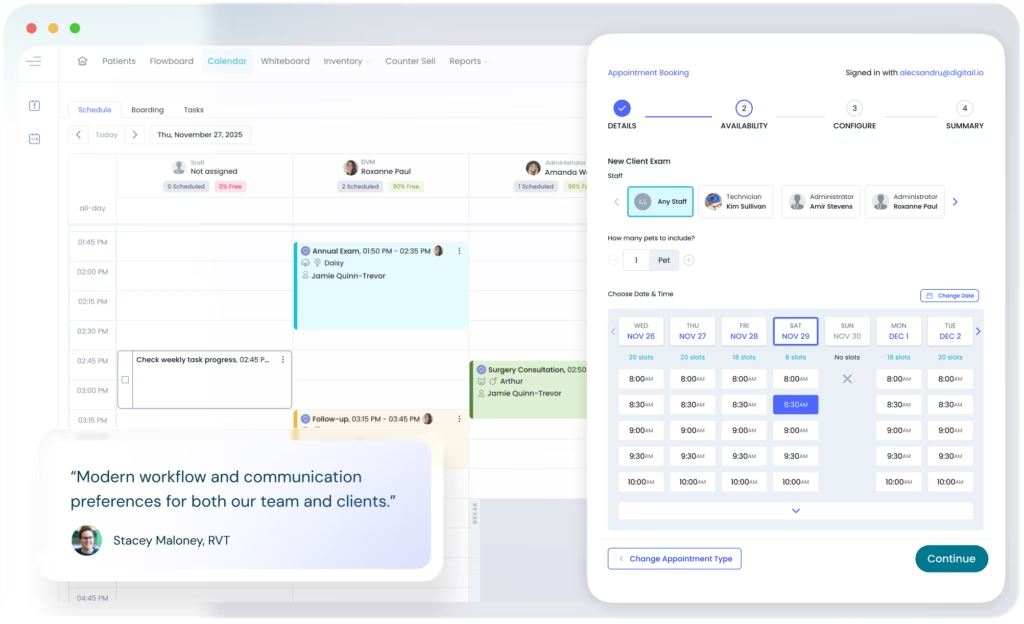
Digitail’s online booking displays live availability and writes confirmed appointments into the clinic calendar, so requests made outside opening hours do not wait for the phones. AI Concierge handles routine front desk traffic, which gives the team time to work through outstanding callbacks.
Dr. Taylor at Vet Concierge moved from an initial target of around 200 patients to managing as many as 400 on a unified system.
Breakpoint 2: Why Veterinary Wait Times Feel Longer Than They Are
Clients rarely object to waiting itself. They object to waiting without information, because a client in the waiting room cannot tell whether a delay is caused by a room that is not yet ready or by an appointment that has been overlooked.
This breakpoint runs from the front door to the exam room and usually contains two failures. Patient history is collected verbally two or three times, at the desk, by the technician, and again in the exam room, without being captured once in a form the next person can read. The status of each patient is also known only to the staff working directly with it, which is why reception is often unable to answer the question being asked.
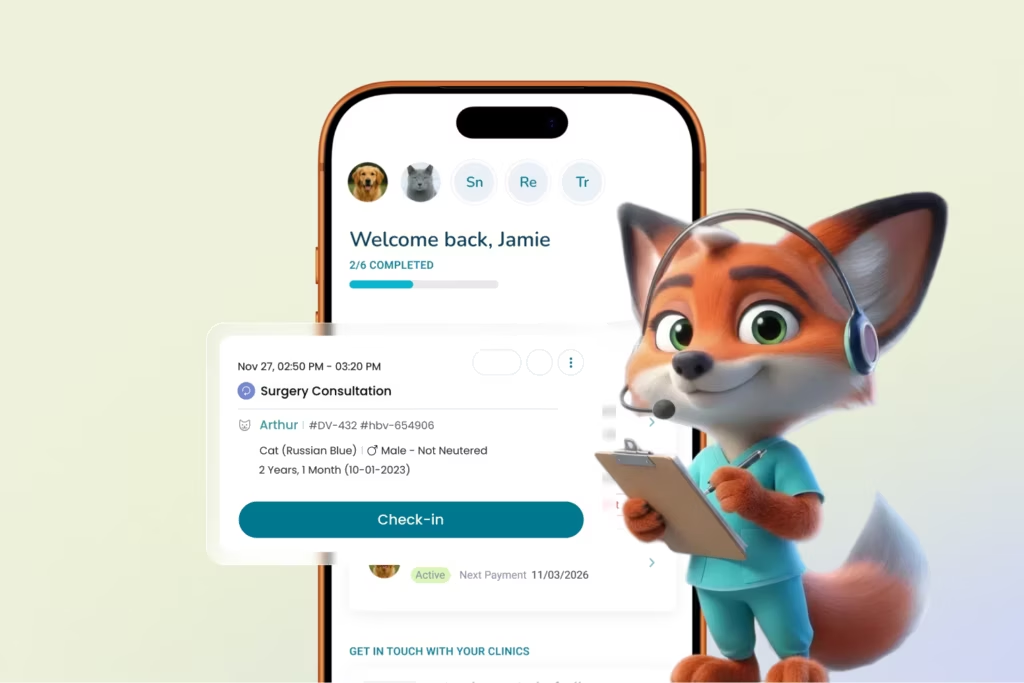
Digitail’s AI intake and forms collect and summarise patient history before arrival, so the appointment begins with that history already in the record. Flowboard displays every patient across six stages, from Scheduled through Checked-In, In Progress, Hospitalized, Pending Checkout, and Closed, so the whole team shares one view of where each case stands.
Dr. Liza Price at Riverside Vet completed 35 appointments in a single day with three records outstanding at the end of it, saving roughly 5 minutes per appointment. Read the full story here.
Breakpoint 3: Why Pet Owners Decline Care You Thought You Offered
To understand how cost shapes care decisions, PetSmart Charities partnered with Gallup to survey 2,498 US dog and cat owners, then followed that with a study of 933 practicing veterinarians published in January 2026. The two studies report on the same interaction from each side of it.
In the pet owner study, 52% had skipped a visit or declined recommended care, and 71% of that group cited cost. In the veterinarian study, 81% said they often or always recommend an alternative treatment plan when care is declined for financial reasons. As the AVMA noted in its review of the owner data, however, most owners reported not being offered a lower-cost alternative.
The likeliest explanation is not that either group is misreporting. The alternative is presented verbally, at the point in the visit when a client is least able to take in new information, and it is not documented anywhere they can return to later.
Digitail’s treatment plans present tiered options with pricing in a document the client can open on their phone before deciding. AI invoice generation keeps checkout consistent with the estimate, while Digitail Secure Payments, wellness plans, and buy now-pay later increase the number of affordable options a client can accept.
Breakpoint 4: Why Pet Parents Forget Discharge Instructions and Skip Follow-Up
Researchers at a veterinary neurological referral center surveyed clients twice, at discharge and again two weeks later, to measure how much of the conversation they had retained. The study, published in the Journal of Veterinary Internal Medicine in 2024, concluded that instructions clinicians consider critical need to be stressed explicitly rather than assumed to have been understood. The authors also cite the human literature, in which adding written instructions to a verbal handover raised correct use of pain medication from 40% to 71%.
Verbal discharge in a busy lobby, with a stressed owner and a pet pulling at the leash, is the weakest link in your care plan. Written instructions in plain language, delivered somewhere the client still has them at 9 pm, fix most of it.
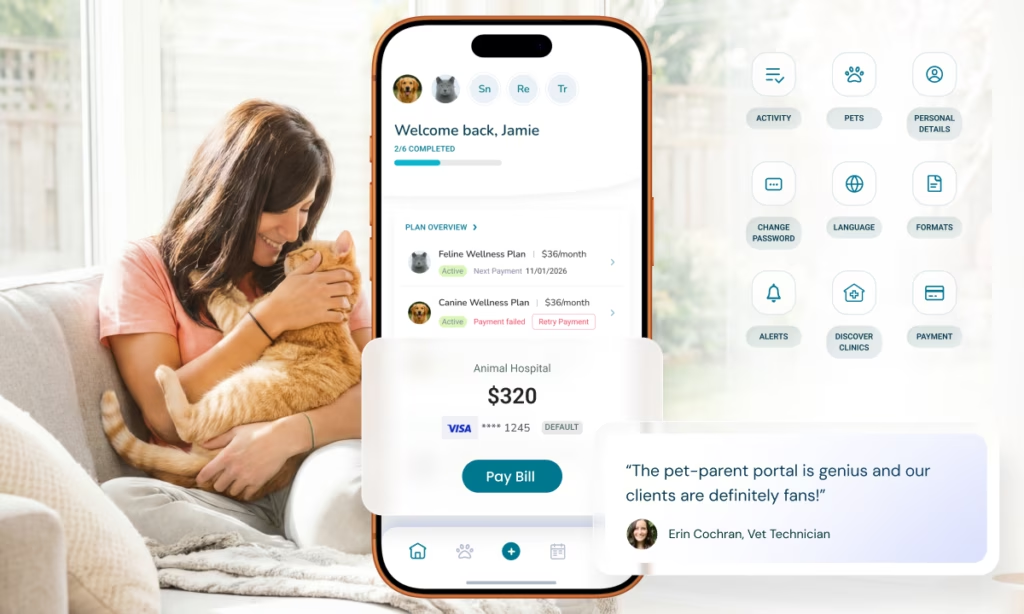
Digitail’s Pet Parent App holds discharge notes, records, invoices, and upcoming appointments where the client can consult them when questions arise. Automated appointment reminders are sent by email, text, and push notification, and SMS and chat allow an uncertain owner to send a photograph of an incision rather than assessing it themselves.
Start With One Breakpoint
Every breakpoint described here has the same underlying cause. The information required at each handoff is held in one person’s memory, on a printed document, or in a system the rest of the team cannot access. Practices that have closed these gaps generally did so by changing where information sits rather than by adding staff.
The handoff map and the five measurements are a reasonable place to begin, and most practices find that one breakpoint accounts for the majority of what their clients notice.
The all-in-one software for better veterinary care
Cloud-based and AI-powered, Digitail brings scheduling, medical records, client communication, and payments into a single system, so your team spends less time moving information between tools.