
The Veterinary Wellness Plan Implementation Guide: Operations, Team Training, and Client Adoption


Preventive care is where veterinary medicine earns its biggest wins, and it’s exactly where clinics are losing ground. Pet parents delay wellness visits to manage costs, vaccines lapse, dentals get postponed year after year, and the clinic absorbs the consequences: sicker patients, unpredictable revenue, and a schedule that thins out every time the economy tightens.
The numbers confirm what most teams already feel. According to 2025 Vetsource data cited by AAHA’s Trends magazine, pet visits are down 2.3%, wellness visits have dropped 2.9%, and the average time between visits has stretched to 112.3 days, a 48% increase over four years.
At Digitail, we built Digitail Wellness Plans to close that gap. A wellness plan bundles a year of preventive care (exams, vaccines, parasite control, routine diagnostics) into a predictable monthly payment, and Digitail runs the program for you: automated billing, benefit tracking inside the SOAP, and enrollment your clients can complete from your website in minutes.
The software removes the administrative barrier, but a successful program still needs plans worth buying, a team that knows how to offer them, and clients who understand the value. Wellness plan implementation is no longer a pricing exercise. It is an operations, training, and client adoption project, and this guide walks through all five phases.
Why Wellness Plans Are Worth the Implementation Effort
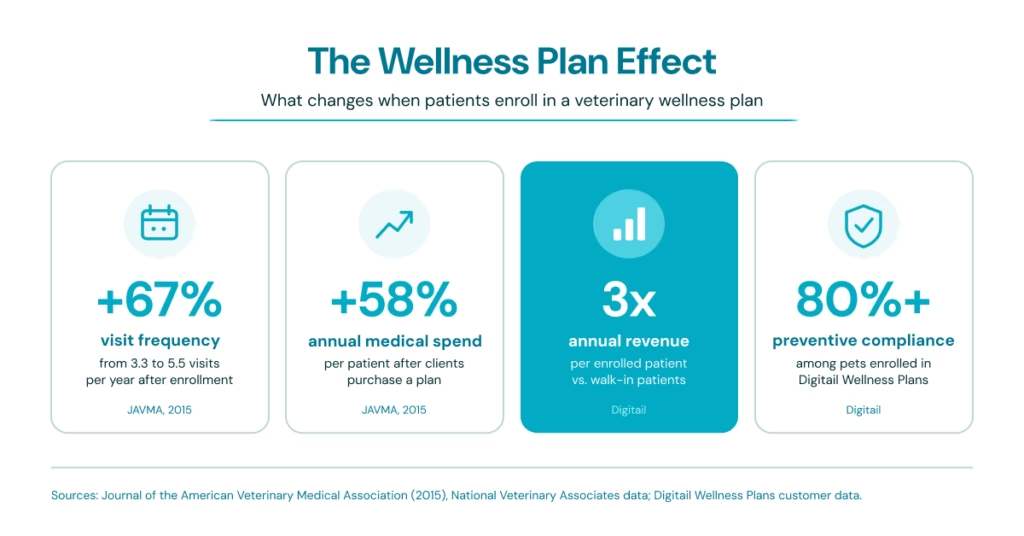
Enrolled patients behave differently. A 2015 report in the Journal of the American Veterinary Medical Association (JAVMA) found that clients who purchased wellness plans at National Veterinary Associates practices increased their visit frequency by 67% (from 3.3 to 5.5 visits per year) and spent 58% more annually on medical services. The same report found dental compliance jumped from 8.4% to 74.4% for enrolled pets once annual cleanings were included in plans. The pattern holds today: patients on Digitail Wellness Plans generate roughly 3x more annual revenue than walk-ins and reach preventive care compliance rates above 80%.
Phase 1: Design Plans Your Clients Will Actually Understand
Start small. Two or three tiers built around life stage or species (puppy/kitten, adult dog, adult cat, senior) cover most practices, and a small lineup is far easier to sell and administer than a menu of eight. You can always add a tier once the first ones prove out.
Then do the math before you set a price. Add up the retail value of every included service, decide what the plan must earn to be profitable, and only then decide on the discount. A plan priced to feel generous but built on wishful math is worse than no plan at all. Three design decisions matter most:
- Included benefits with limits. Define exactly how many of each service the plan covers per year, for example, one annual exam, two fecal tests, or 24 flea and tick doses. Limits keep the plan value predictable for both sides.
- A member discount on everything else. A flat percentage off other services and products rewards enrollment without giving away your margin on core benefits.
- An upfront enrollment fee. A one-time fee at activation encourages commitment and offsets the deferred cash flow of monthly billing.
One detail quietly decides whether clients use their plans: name the benefits in plain language. In Digitail, every benefit carries a Client-facing name, so pet parents see “Wellness & Sick Exams” instead of an internal code like “5010 Exam Revenue.” Clinics that fill these in see meaningfully higher sign-ups and benefit usage.
Phase 2: Set Up Operations Before You Sell a Single Plan
Manual administration is where wellness plan programs go to die. Before launch, your system needs to handle three jobs without human intervention: billing, benefit tracking, and payment recovery.
With Digitail Wellness Plans, billing runs automatically on the cycle you set, covered services apply their discounts right inside the SOAP while the benefit counter updates in real time, and a failed payment triggers instant alerts to both the clinic and the pet parent, who can resolve it themselves from the pet portal.
Set up all three enrollment paths from day one, because each serves a different moment:
| Enrollment path | How it works | Best for |
| In-clinic | Staff assigns the plan from the patient record, adds the card on file, and activates it in under two minutes | Clients who are ready to commit during the visit |
| Email proposal | The client receives a secure link and self-enrolls from the app or browser, no password needed | Clients who want to review details or discuss at home |
| Website enrollment link | A per-plan link on your site lets pet parents browse plans, register, and enroll on their own | New clients who aren’t in your system yet |
That third path deserves emphasis: the website enrollment flow doubles as new client registration, so a pet parent your team has never met can become an active client and a plan member in one sitting.
Phase 3: Train the Team to Offer Plans Without Selling
Clients don’t buy discounts. They buy a longer, healthier life for their pet, and your team’s language should reflect that. The 2011 Bayer Veterinary Care Usage Study, as reported by AAHA’s Trends magazine, found that 45% of pet owners said a monthly-billed wellness plan would increase their visit frequency. The demand exists. The training gap is what usually blocks it.
Build the offer into three existing conversations rather than inventing new ones:
- The new puppy or kitten visit. First-year care is the most predictable in medicine, which makes it the easiest plan to explain and the most natural moment to enroll.
- The estimate conversation. When a client hesitates over a preventive care estimate, the plan reframes the same care as a manageable monthly amount instead of one large invoice.
- The dental recommendation. If your plans include an annual cleaning, present the plan alongside the dental estimate. The NVA compliance data show how far this moves acceptance.
Give every role one job. The DVM connects the plan to the pet’s health needs, the technician walks through what’s included, and the front desk sends the proposal or enrolls on the spot. Rehearse the handoff until it takes less than a minute.
Phase 4: Market the Plan and Drive Client Adoption
Enrollment shouldn’t depend on who happens to walk in. A plan that only gets mentioned when a team member remembers will plateau within months. Treat the program like a product launch with its own marketing calendar.
1. Launch It Like a Product, Not a Policy
Start inside the building. Enroll team members’ pets first, at a staff discount if needed, so every person at the front desk can say “my own dog is on this plan” instead of reciting a brochure. Then announce to clients with a short email series: one email introducing the plans and the problem they solve, one walking through a real example of a pet’s first year on a plan, and one with a launch offer. Back it up in the clinic with exam room table cards and a front desk sign, because the decision often happens in the building.
2. Sell the Value, Price the Month
Never market the plan as a discount. Market the comparison: “a full year of preventive care, valued at $1,100, for $59 a month.” The annual value anchors the price, the monthly figure makes it feel achievable, and the framing keeps the conversation about care rather than savings. On your website, show each tier’s included services next to their standalone prices so the math makes the argument for you.
3. Put Enrollment Where Clients Already Look
- Add the enrollment link to your website’s pricing, service, and new client pages
- Send targeted email proposals to the segments that benefit most, such as puppy owners or patients overdue for dentals
- Mention plans in appointment reminders and post-visit follow-ups
- Show plan value inside the Pet Parent App, where enrolled clients can see their remaining benefits anytime
4. Borrow Trust and Create Honest Urgency
Social proof sells subscriptions. Ask two or three enrolled clients for a short testimonial, label your best seller “most popular” on the website, and mention enrollment counts once they’re impressive (“over 200 pets in our practice are on a plan”). For urgency, waive the enrollment fee during a defined launch window or tie it to a seasonal moment like Dental Health Month. A real deadline moves fence-sitters; a fake perpetual one trains clients to ignore you.
Visibility drives renewal too. When a pet parent can see exactly which benefits they’ve used, the plan stops feeling like a monthly charge and starts feeling like care they already own.
Phase 5: Measure What’s Working and Fix What Isn’t
Review three numbers monthly: active enrollments, benefit usage, and payment health. In Digitail, the Plans filter in the Patients, Sales, and Payments reports shows who’s enrolled, what plan revenue looks like, and which payments went through, and every plan carries a real-time status (Active, Pending, Past due, Partially Paid, or Canceled), so nothing slips into limbo.
A client paying monthly for benefits they never use is a cancellation waiting to happen, so treat unused exams as outreach triggers, not savings. And when a client does cancel, handle it cleanly: Digitail’s automatic settlement calculates what’s owed or refunded based on benefits already used, which protects the relationship for a future re-enrollment.
Frequently Asked Questions About Wellness Plan Implementation
Plan on 60 to 90 days from design to a fully operational program, the timeline National Veterinary Associates reported across its practices (JAVMA, 2015). Configuring plans in Digitail takes hours, not weeks; most of that window goes to plan design, team training, and refining scripts.
Total the retail value of included services, confirm the plan is profitable at your target monthly price, and resist deep discounting. Value can come from bundling, payment convenience, and small no-cost extras.
In Digitail, both the clinic and the pet parent are notified instantly, and the client can pay the outstanding invoice or update their card directly from the pet portal, with no staff follow-up required.
See How Digitail Can Simplify the Way Your Whole Practice Runs
All-in-one practice management with AI built in, so your team spends less time on screens and more with patients.