
The Pros and Cons of Being a Mobile Vet: An Honest Look at Practicing on Wheels

Ask most veterinarians why they’d consider going mobile, and the answer usually starts with freedom. No lease, no landlord, no waiting room to manage. Set your own schedule, drive to your patients, practice medicine on your terms. That picture is mostly accurate. It just leaves out the part where you are also the receptionist, the billing department, and the person stuck on the highway while your 2 p.m. appointment texts to ask where you are.
So what are the real pros and cons of being a mobile vet? A mobile veterinary practice delivers care at the client’s home or another location instead of a fixed clinic, typically from an equipped vehicle or with portable gear. The model is growing fast: according to Mordor Intelligence, the mobile veterinary care market is expected to reach USD 0.85 billion in 2025 and grow to USD 1.24 billion by 2030.
That growth changes the stakes. Going mobile is no longer a fringe lifestyle choice for a handful of house call vets. It is a legitimate business model competing for the same clients as brick-and-mortar clinics, and it deserves the same clear-eyed analysis before you commit.
The Pros of Being a Mobile Vet
1. Lower startup costs than a brick-and-mortar clinic
Opening a traditional clinic means real estate, a build-out, and years of overhead before you break even. A mobile veterinary practice trades all of that for a vehicle and equipment. You skip rent, property taxes, and most facility costs, which means a much smaller loan and a much faster path to profitability. For a new graduate or a DVM leaving corporate practice, that lower barrier to entry is often the deciding factor.
2. Clients pay a premium for convenience
Pet parents have grown used to everything arriving at their door, and veterinary care is no exception. House calls are especially valuable for clients with limited mobility, households with multiple pets, parents juggling young kids, and people in areas where getting to a clinic is genuinely hard. Because you are saving clients time and stress, house call pricing typically carries a premium over in-clinic fees. Fewer appointments per day can still mean healthy revenue per appointment.
3. Calmer patients and better medicine
Cats who yowl through every car ride and dogs who tremble in the lobby often behave like different animals at home. A patient examined in a familiar environment is easier to handle, and lower stress can mean more reliable exam findings and blood work. Fear-Free care is much easier to deliver when there is no clinic to fear in the first place.
4. Your practice is a rolling billboard
A wrapped van parked in a driveway does marketing work that a static storefront never could. Every visit puts your name, services, and phone number in front of an entire neighborhood, and curious neighbors who watch you care for the dog next door are warm leads by the time they call.
5. Deeper client relationships
Mobile vets see the pet’s actual environment: the food bin, the stairs the arthritic Lab struggles with, the backyard fence. Those details lead to better recommendations, and the one-on-one format builds the kind of loyalty that keeps a practice full through referrals alone.
The Cons of Being a Mobile Vet
1. Admin support is usually thin
How much help you have depends on the size of the operation. Solo mobile vets often handle every phone call, booking request, reschedule, and payment question themselves, sometimes while elbow-deep in an exam. Larger mobile practices may run with a technician or assistant in the van, and multi-vehicle clinics often add remote reception to field calls. Even then, the support team tends to be leaner than in a brick-and-mortar clinic, and coordinating schedules across vans, doctors, and neighborhoods adds a layer of complexity a fixed location never deals with. Without a system to absorb that load, admin work eats into drive time, and drive time eats into everything else.
2. Longer, less predictable days
Traffic does not care about your schedule. A wreck on the highway or an appointment that runs long can cascade through your entire afternoon, and the buffer time you build in for travel is time you are not billing. Many mobile vets also find that charting and invoicing pile up at the end of the day, turning an eight-hour schedule into a twelve-hour one.
3. The vehicle is a cost center
Fuel, insurance, maintenance, and eventual replacement all come out of your margin, and these costs are variable in a way rent never is. A transmission failure is more than a repair bill. It is a week of canceled appointments.
4. You cannot carry a whole hospital
Even a well-equipped van has limits. Radiographs, surgeries, hospitalization, and some diagnostics may require a referral relationship with a local clinic. The practices that handle this well are upfront with clients about scope, so nobody is surprised when a case needs to go elsewhere.
5. It can get lonely
Solo mobile practice means no colleague down the hall for a curbside consult and no team to share the emotional weight of hard cases. Building a network of local DVMs, online communities, and referral partners is not optional. It is part of the job.
How Mobile Vets Manage the Downsides
Look back at that list of cons. Most of them are not medicine problems. They are logistics problems, and logistics problems have software solutions.
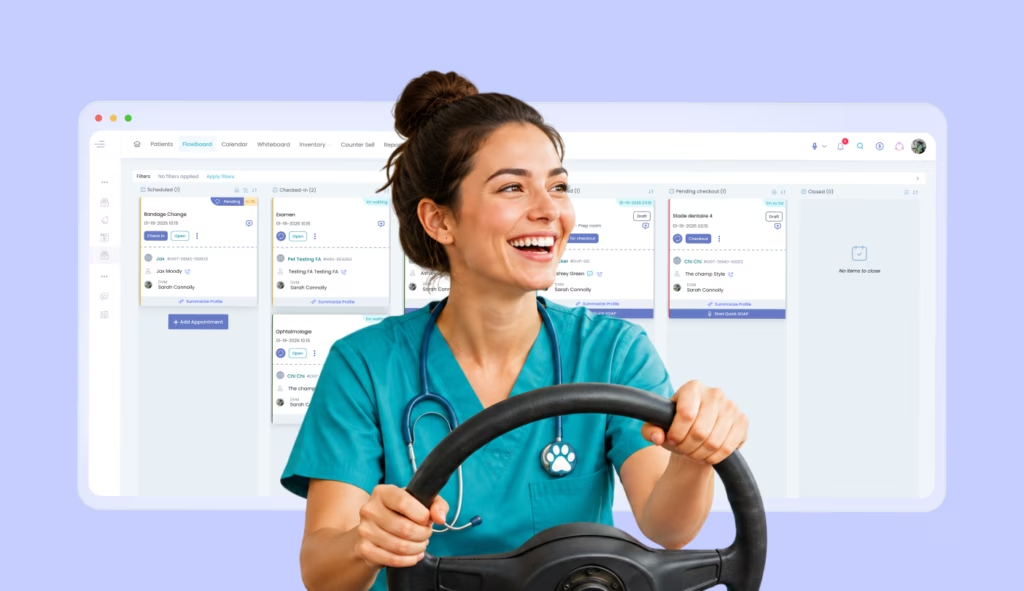
This is where a cloud-based PIMS built for mobile practices earns its keep. Digitail’s online booking and Pet Parent App let clients schedule, message, and pay on their own, which quietly replaces the receptionist you do not have.
Dr. Taylor of Vet Concierge saw patient capacity double from 200 to as many as 400 patients after moving the practice onto a unified system. Read the full story here.
The long-day problem shrinks too. Tails AI Dictation turns exam-room conversation into a finished SOAP note, and voice-to-invoice workflows capture charges before you pull out of the driveway.
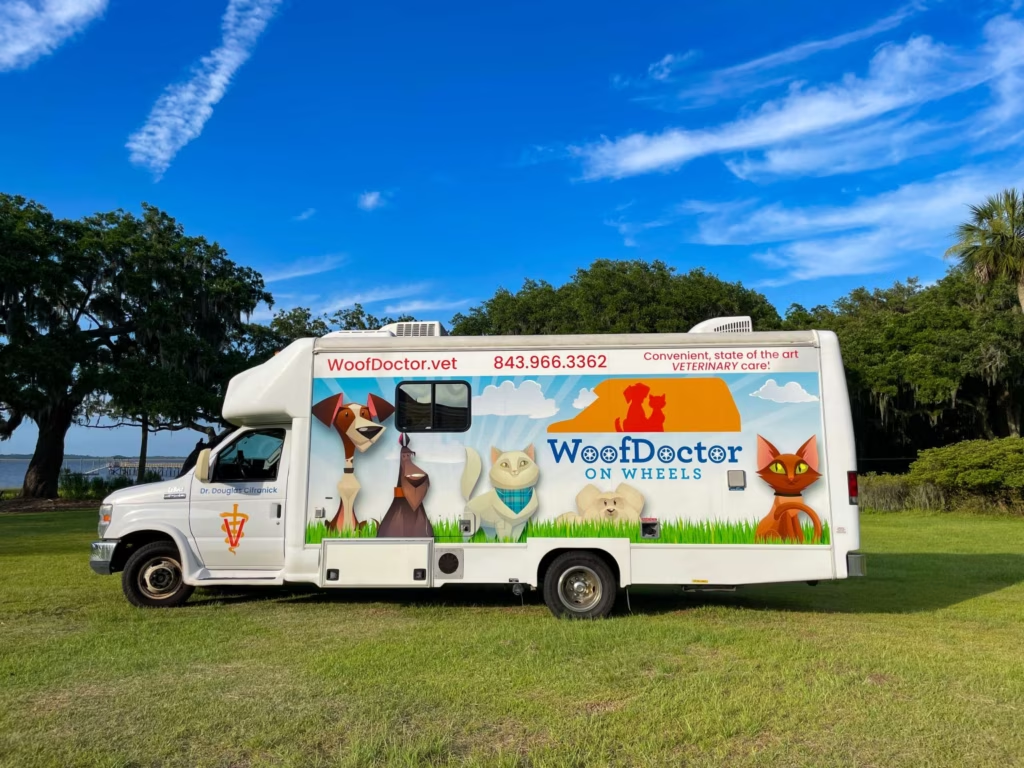
Dr. Doug Cifranick of WoofDoctor on Wheels saves around five minutes per visit with AI-powered workflows, which across a full day of house calls adds up to an appointment or two of reclaimed time. Read the full story here.
Records, schedules, and billing live in the cloud, so the practice runs from a tablet in the van just as well as from a laptop at home.
Everything you need to power your mobile clinic
Simple workflows, fast charting, and reliable billing on the road, all in one cloud-based platform that works on any device, wherever you’re practicing.