AI in Veterinary Medicine: Streamlining Operations, Empowering Teams

Walk into any veterinary conference today, and you’ll hear people talking about AI. At almost every session, every panel, every hallway conversation — AI comes up. And much of that conversation is genuinely useful: SOAP note dictation, speech-to-text documentation, risk assessment… These tools are real, they’re being adopted now, and they’re making a measurable difference for veterinarians.
But here’s what those conversations tend to miss: the veterinarian is one person on a team. The receptionist is fielding 60 calls a day. The technician manages patient flow across three exam rooms. The practice manager is trying to understand why last month’s revenue doesn’t match the appointment volume. AI can help all of them — and in many cases, the impact on the broader team is larger than the impact in the exam room alone.
The clinics that are actually transforming their businesses right now aren’t just the ones that gave their vets a dictation tool. They’re the ones that figured out how to stop losing 70 minutes per doctor per day to paperwork, eliminate front-desk calls that never get answered, cut the no-show rate by automating reminders, and finally gave the practice manager real-time visibility into what’s actually happening in the business.
The future of AI in veterinary medicine isn’t just clinical. It’s operational. And it’s for the whole team.
The biggest constraint in veterinary medicine isn’t diagnostic accuracy. It’s the crushing volume of administrative work that surrounds every single patient interaction.
Scheduling, Triage, and Client Communication
Missed calls, unanswered messages, and follow-ups that fall through the cracks aren’t failures of effort — they’re failures of capacity. The front desk team is already at full load. AI addresses this not by replacing people but by handling the volume that currently doesn’t get handled at all.
Booking, after-hours triage, prescription refill requests, appointment reminders, proactive check-ins — these are tasks with clear rules and repeatable patterns. AI manages them consistently, around the clock, logging everything directly into the patient record. The outcome is fewer missed touchpoints, less phone dependency, and a front desk team that can focus on the interactions that actually require them.
Practices using automated reminder systems consistently reduce no-shows by around 30% — recoverable revenue from a workflow change, not a staffing increase.
Intake, Discharge, and Patient Flow
A significant portion of the operational load around a patient visit has nothing to do with the clinical work itself. Every appointment carries overhead before it starts and after it ends — and that overhead adds up across every visit, every day.
AI streamlines the whole surrounding flow:
Before the visit → Digital intake collects patient history from the pet owner ahead of arrival and attaches a structured summary to the record automatically. The team walks in prepared.
Going in → Pre-visit summaries surface everything relevant — recent visits, active medications, outstanding follow-ups — without anyone having to dig.
After the visit → Discharge instructions are generated from the visit record, not written from scratch at the end of a long shift.
The appointment itself stays the same. The overhead around it shrinks.
Practice Operations and Analytics
The operational intelligence side of running a practice — understanding what’s performing, what’s leaking, what needs attention — has historically required manual compilation and always arrived late. By the time a report lands, the picture has already shifted.
Real-time analytics change the decision-making loop. Revenue by service, appointment utilization, team performance, inventory burn rates — visible as they happen rather than reconstructed afterward. Inventory management connected to actual usage patterns. Business coaching and account support are built into the platform rather than being outsourced.
Industry data consistently puts missed charges at 5–10% of gross revenue — services performed but never captured on the invoice. For a practice grossing $2 million, that’s up to $200,000 walking out the door annually. Operational AI closes that gap at the system level, not through manual auditing.
Why The Operational Layer Is Harder to Replicate Than It Looks
Operational AI looks deceptively simple from the outside. A reminder is just an email; a SOAP note is just a transcription. But the actual intelligence required is significant, and it only delivers value when it’s deeply embedded in the workflow. A transcription tool that doesn’t understand veterinary terminology, or a charge capture feature bolted onto an existing system as an afterthought, doesn’t reduce friction. It adds it. Effective operational AI has to be trained on veterinary data, built around species-specific logic, and designed around how clinics actually flow — not how an engineer imagined they might.
The clinics that get the most value from AI aren’t the ones that added the most tools. They’re the ones that chose a platform where AI is embedded across every workflow, so it works in context, without requiring the team to switch applications or change habits.
Digitail Tails AI: Built for the Whole Practice
Tails AI by Digitail is a suite of 20+ AI workflows covering both the clinical and operational layers of your practice.
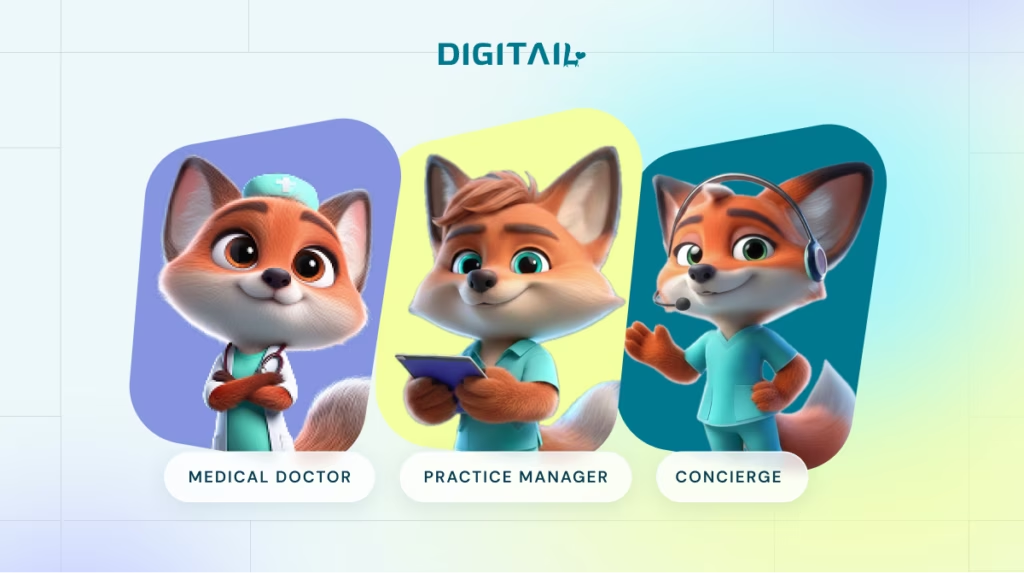
Tails Concierge handles scheduling, triage, client communication, follow-ups, and refills.
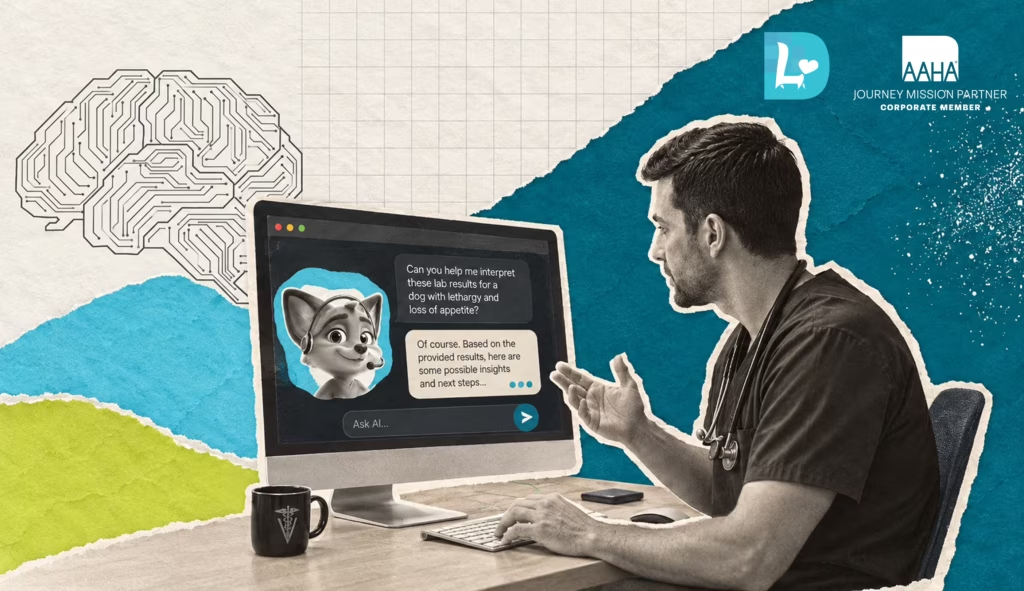
Tails Medical supports veterinarians with dictation, voice-to-invoice capture, clinical decision support, and record audits.
Tails Practice Manager delivers real-time analytics, inventory management, business coaching, and AI audit tools.
Across 20+ workflows, the goal is the same: less time on administration, more time on the work that actually matters.