Mobile App vs Web Portal: Which Digital Experience Pet Parents Will Actually Use?

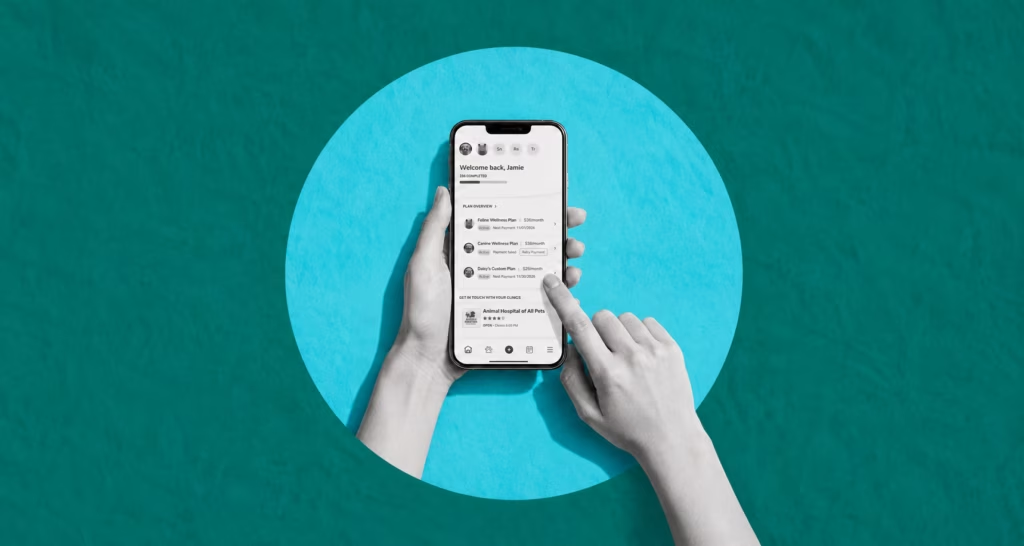
Strong client communication is not only about sending more messages. It is about reaching pet parents at the right moment and making it easy for them to respond, book care, share an update, or complete the next step.
Web portals and mobile apps can both support that connection, but they create very different client experiences. A portal gives pet parents online access to information and services. A mobile app builds on that experience with a more direct, accessible, and modern way for practices to stay connected between visits.
Mobile App vs Web Portal: What Is Actually Different?
| Dimension | Web Portal | Mobile App |
| Access model | The client has to open a browser, find the login page, and sign in again each time. | Installed once and kept signed in, so reaching the record takes a single tap from the home screen. |
| Direction of communication | Everything waits on the client remembering that the portal exists and choosing to visit it. | You can reach clients directly through push notifications, on the device they check dozens of times a day. |
| Presence between visits | Effectively invisible between appointments, because nothing reminds anyone it is there. | The icon sits among the apps clients already use daily, keeping your practice in view after the visit ends. |
| Effort per task | A routine job like booking a due booster takes several deliberate steps, and the client has to initiate every one of them. | The same job usually takes a notification and two taps, because the sequence starts on your side rather than theirs. |
| Device capabilities | Limited to what a browser session allows, so sending photos, saving a card, or logging in quickly are awkward at best. | The camera, a stored payment method, and biometric login are all available, which removes most of the friction around symptoms and billing. |
A web portal is mainly a destination. It works well when clients already know what they need and are motivated to go looking for it.
A mobile app can do the same job, but it can also bring the next action to the client. That distinction matters because many important client tasks do not fail because the information was unavailable. They fail because the client never saw it, forgot about it, or did not finish the process.
Mobile Access Is Becoming the Default
The strongest independent evidence comes from human healthcare, where this exact behavior has been tracked for a decade. The client sitting in your exam room is the same person managing their own medical records at home, on the same phone, and those habits do not change when the patient happens to be a dog.
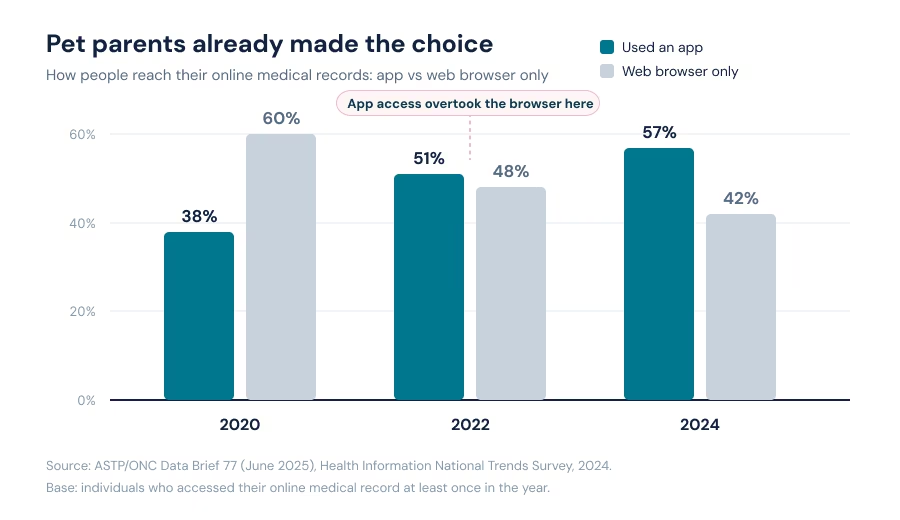
According to ASTP/ONC Data Brief 77 (June 2025), built on the 2024 Health Information National Trends Survey, 57% of individuals used an app to reach their online medical records, while web-only access dropped to 42%.
In 2020, those figures were reversed, at 38% app and 60% web-only.
Why App-Based Access Produces Higher Engagement
1. The vet clinic can start the conversation
A web portal stays quiet until the client decides to visit it. That works for a task the client is already thinking about, but not for something they have forgotten or do not yet realize needs attention.
An app allows the clinic to reach out first.
In Digitail, vaccination and preventive care reminders arrive as push notifications and also appear under Requires Attention on the app home screen. Appointment check-in opens three days before the visit and comes with its own notification.
The client does not have to remember to check whether something is due or search through an inbox for an old email. The next step is placed in front of them.
Over the course of a year, that can be the difference between a preventive care recommendation being overlooked and an appointment being booked.
2. There are fewer steps between the reminder and the action
Every additional step gives the client another opportunity to stop.
Through a portal, booking a due booster may involve finding the website, opening the portal, entering login details, navigating to the patient record, locating the reminder, and then starting the booking process.
Inside an app, the client may receive a notification, tap it, and move directly to the relevant action.
The precise number of taps will vary by platform, but the principle is simple: the shorter the path, the more likely the client is to complete it.
Some behavior that appears to be poor compliance is really a task that asked for more attention and effort than the client was willing to give it at that moment.
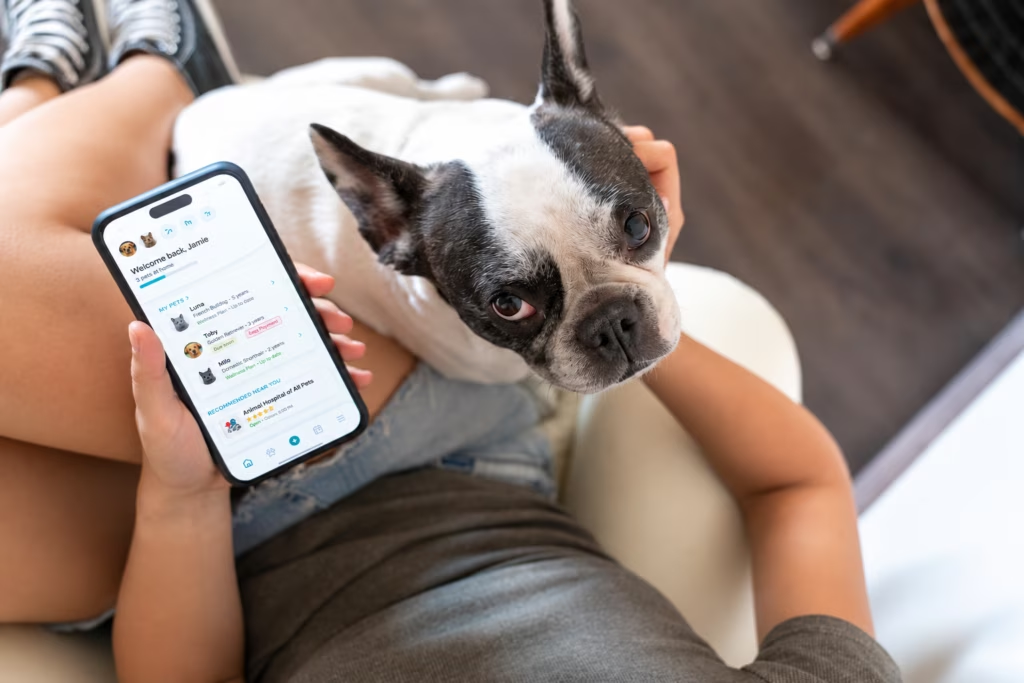
3. The phone brings tools a browser does not have.
The advantage is not that browsers are incapable of supporting photos, payments, or quick login. It is that these actions are generally more seamless inside an app designed around the phone.
When a client notices that a lump looks larger, they can take a photo and attach it to a message without moving between devices or platforms.
When an invoice arrives, a saved payment method can make paying it much easier than finding a wallet and entering card details again.
Biometric login also removes the password problem that often ends a portal visit before it begins.
No single one of these features transforms the client experience. Together, however, they reduce the small points of friction that determine whether someone finishes a task or leaves it for later.
4. It lives inside the daily routine.
A 2025 systematic review in BMC Veterinary Research by Haase and colleagues identified 10 design requirements for mobile health tools used by pet owners. One of those requirements was that the tool should fit into the owner’s everyday routine and remain usable when it is needed.
That is an important distinction.
When a dog stops eating at 9 p.m., the pet parent is likely already holding a phone. Opening an app to review information or contact the clinic feels like a natural next step.
Finding a portal that was last opened eight months ago, locating the login page, and resetting a password does not.
When contacting the practice feels difficult, clients are more likely to search for an answer somewhere else, even when their veterinary team would be the better source.
5. The history gets captured once.
The same review also emphasizes the importance of collecting information properly the first time, rather than asking the owner to repeat the same story at several points in the care process.
In Digitail, pet parents can describe symptoms and attach a photo through triage. When the clinic responds, the patient record is already available alongside the message.
Information recorded at home, such as weight, appetite, symptoms, or post-operative progress, can also become part of the patient timeline.
The client does not need to explain everything once in a message, again over the phone, and then a third time at the front desk. The team has more context from the beginning, calls can be shorter, and appointments can start with better information.
What Pet Parents Actually Do Inside the Pet Parent App
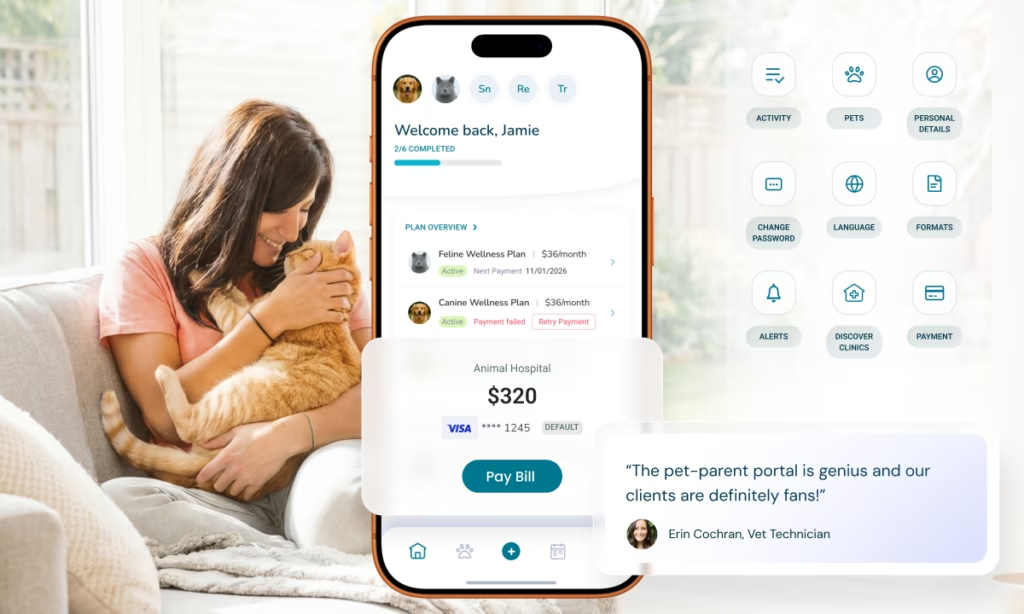
Before the visit
- Share symptoms using photos or video. Triage messages in the Pet Parent App arrive with patient context attached, and urgent cases get flagged and assigned in seconds.
- Book using live availability. Clients can view available times and request an appointment that flows into the clinic calendar, including outside regular business hours.
- Reschedule without calling. Upcoming, past, and cancelled appointments all sit in one place.
- Complete AI intake in advance. Check-in opens three days before the appointment and is supported by a push notification. The information the client provides flows into the appointment notes.
- See what is due. Vaccination and preventive care reminders appear under Requires Attention, where clients can see what needs follow-up.
During the visit
- Review the visit summary. Once the medical record is marked Closed, diagnoses, recommendations, discharge instructions, and attachments can appear in the app. The clinic controls which information is shared.
- Keep important certificates in one place. Rabies and other certificates can be generated automatically and remain available in the pet’s documents.
- Review and approve treatment plans. Estimates get shared and approved before the appointment rather than at the counter.
- Pay from a personal device. Invoices arrive in the app, and every transaction syncs back into Digitail.
After the visit
- Continue the conversation with the clinic. Chat can be used for follow-up questions, lab results, and requests for updated photos. Clients can send text, voice-to-text messages, videos, and documents.
- Join a telemedicine call from that chat. Digitail integrates with Whereby, so the pet parent gets a notification, taps it, and lands in the call.
- Request refills in one tap. Active medications include a refill option that sends the request directly to the clinic.
- Track recovery at home. Diary entries track weight, appetite, or post-op progress. Entries shared with the clinic become part of the patient file. .
- Prove vaccination status anywhere. Prevention status can be downloaded as a shareable document for boarding, grooming, or travel.
- Read information selected by the practice. A curated education library gives pet parents an alternative to searching for answers online, and clinics can add their own materials.
Moving From Client Access to Client Engagement
A web portal gives pet parents a digital place to access records, forms, invoices, and other practice information. A mobile app takes that experience further by helping the practice reach clients first and making it easier for them to act.
That difference can influence much more than app usage. It can affect whether clients complete intake, respond to reminders, book preventive care, follow recovery instructions, or contact the practice when something changes.
AcharaVet saw that impact after using Digitail’s Pet Parent App to automate appointment and preventive care reminders. Instead of relying on the team to follow up manually, notifications reached clients directly through the app and helped keep upcoming care visible. The practice reduced no-shows by 30% without adding more work for the front desk.
The result shows what a stronger digital client experience can look like in practice: better communication for pet parents, fewer routine follow-ups for the team, and more patients receiving care when they need it.
Build a Better Client Experience with Digitail
Give pet parents an easier way to communicate with your team, manage their pets’ care, and stay connected between visits.