Why Switching Practice Management Software Feels Harder Than It Is


The honest conversation most software companies won’t have with you.
Why most clinics wait longer than they planned to
Talk to any clinic owner who delayed switching and finally did it, and you’ll hear the same thing almost every time. They knew they needed to make the move long before they did. They can point to the exact moment the knowing arrived.
The server that kept going down. The IT bill to upgrade hardware that was already outdated, or the realization that adding a new workstation meant another expensive license and another device tethered to aging infrastructure.
They saw it coming, yet something stopped them from taking action when they needed to. What kept them from acting wasn’t a lack of options. It was familiarity. The known, however imperfect, felt safer than the unknown.
Staying put carries its own cost. Every month on a system that demands workarounds is a month that drains time from your team quietly, and it rarely shows up on any report.
That’s the hidden cost of outdated veterinary practice management software.
Dr. Rachel Hensch, owner of Beeville Veterinary Hospital in Beeville, Texas, put it simply:
“I really think probably the biggest thing people have is they are just afraid of the change. They probably know they need to change and they’re afraid of it.”
She’s describing most of the clinics we speak to. They’re not confused about whether a change is needed. They’re looking for permission, or reassurance, or a clearer picture of what modern cloud-based veterinary software actually looks like in practice.
What we know from the clinics that have come through it: the hesitation doesn’t go away before you choose to start. It goes away after.
Data migration, training sessions, and setup processes leading to go-live day are easier to deal with than most clinics assume. The more challenging part of the whole process is preparing the staff for change and overcoming the psychological challenges of letting go of old habits.
There’s a difference between comfortable and familiar
It’s worth naming plainly: the longer you run on aging infrastructure, the more your operation shapes itself around what the software can’t do rather than what your clinic actually needs.
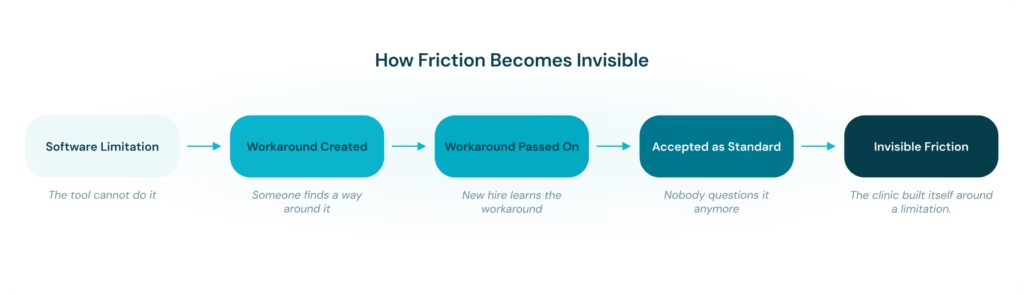
It happens gradually. Something doesn’t work the way it should, so someone finds a workaround. That workaround gets passed on to the next hire, then the one after that. A year later it’s just how you do things, and nobody questions it anymore. The friction didn’t disappear. You adapted to it.
This is especially common in legacy veterinary PIMS and server-based systems.
It’s called hidden normalized friction. It’s the slow accumulation of processes built to compensate for legacy software limitations and processes rather than to actually serve the clinic. The workaround became the workflow, the limitation became the standard, and because it happened so gradually it’s almost impossible to see from the inside.
Dr. Hensch described her team’s experience with inventory in the old system:
“I would look at it and think, I don’t even know what that is. I got to go to school, get an MBA just to learn what this is even talking about.”
To pull a basic report, her team had to call into support and ask someone to write a custom query. Tracking stock accurately in day-to-day practice was effectively impossible, not because the team wasn’t trying, but because the tool made it too difficult to act on.
They knew their cost of goods was something they needed to get under control. They just couldn’t get a clear enough picture to do anything about it.
After switching, they integrated their supplier directly into Digitail. Inventory became something they could actually see and manage in real time. Within seven months, their cost of goods had dropped by 5%.
“Like we’ve been trying for years, and now it just is finally working.”
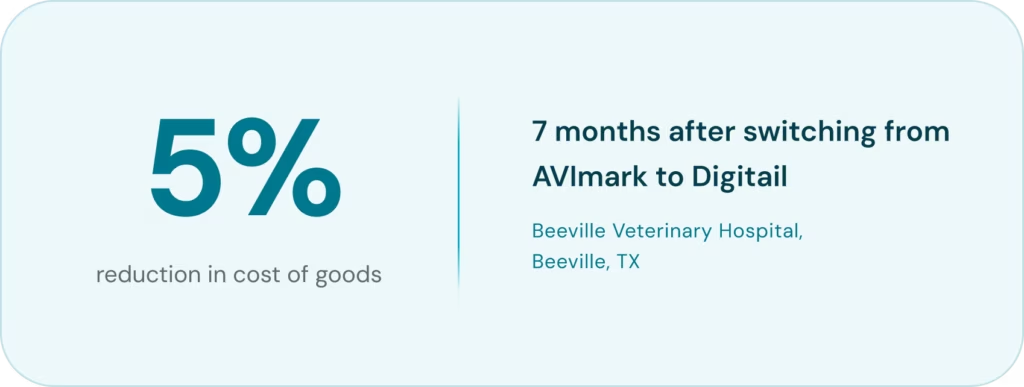
The visibility finally gave them something to act on, and combined with some deliberate changes to how they managed inventory day to day, the results followed. Read how Beeville Veterinary Hospital did it.
That’s the real cost of hidden normalized friction. It doesn’t show up as a single line item. It bleeds out slowly across thousands of small workarounds, week after week, year after year.
When Hefner Road Animal Hospital switched to Digitail, their doctors recovered more than 70 minutes each per day, not from any single dramatic change, but from eliminating the administrative drag clinics usually quietly accepted as part of the job. Read how they found it.
The first step isn’t choosing new software. It starts earlier than that. It’s giving yourself permission to look at your workflows with fresh eyes and ask not just “does this work?” but “have we just learned to live around it?”
Your evaluation checklist was written by your current software
Once you start looking at your workflows with fresh eyes, something else tends to shift. The criteria most clinics use to evaluate new software were shaped almost entirely by the system they’re trying to leave.
They arrive at a demo with a mental checklist. Does it handle invoicing the same way? Can we replicate our existing workflows? Those are reasonable questions. The thing is, they tend to anchor the search in the past rather than in what’s actually possible now. The real value comes from features you didn’t know to ask for in a modern veterinary practice management system.
The capabilities and workflows that end up making the biggest difference in daily practice are usually the ones that weren’t on the list. Dr. Hensch described seeing Digitail for the first time:
“We didn’t even know we wanted that, and so then seeing what’s possible made it an easy choice for us.”
She was talking about AI veterinary software features like SOAP automation, clinical documentation tools, scheduling automation. None of it was on her radar going in. Afterward, she couldn’t stop thinking about it.
Your checklist reflects the software that taught you what to care about. Leave room to be shown something you hadn’t considered, and pay attention when a demo surfaces a problem you’d quietly accepted as permanent.
There’s a related trap that tends to show up after the decision is made. Even once a clinic switches, the instinct is often to recreate familiar workflows in the new system, essentially trying to make the new tool behave like the old one. That impulse is understandable, but it means carrying forward the limitations of the tool you just left.
Digitail’s workflows were built around how an efficient clinic actually operates. The practices that get the most value from the switch are the ones willing to ask whether a better way exists, and being willing to change their existing workflow for the better.
The goal isn’t to replicate your old software. It’s to upgrade your clinic workflow to be more efficient, provide better client experience, and run a more profitable practice.
What the clinics that handled this well actually do
None of this is complicated in theory. Most clinic owners already sense what good change management looks like. The challenge is doing it while also running a full-schedule clinic.
After supporting many clinics through this transition, certain patterns emerge. The practices that come out the other side with confidence tend to share a few things in common, and none of them are about the software.
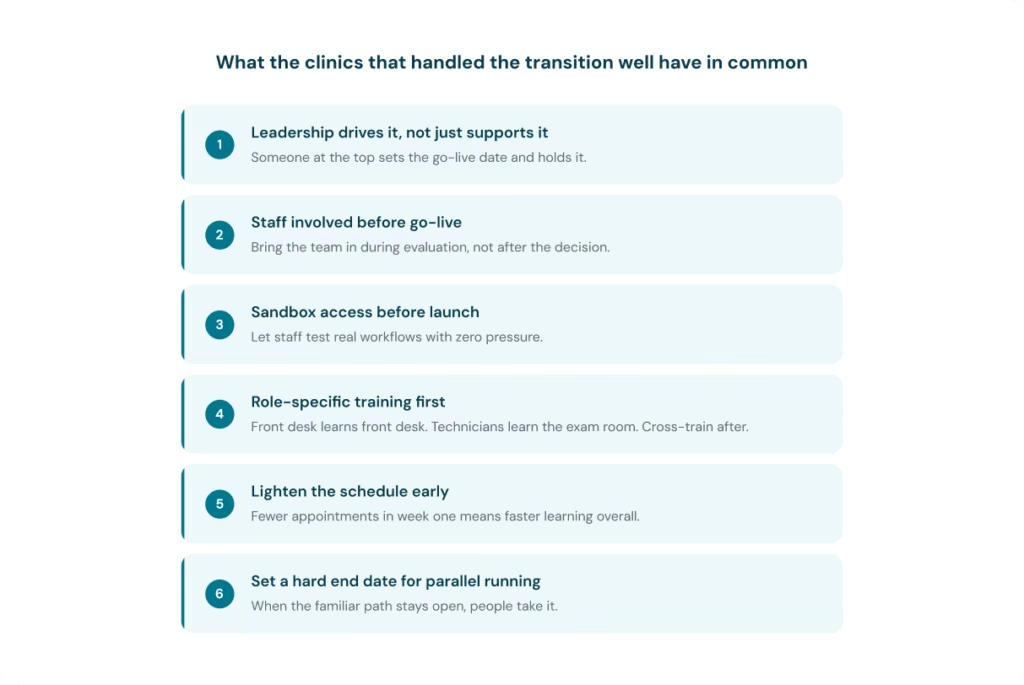
The single biggest factor is leadership. There’s a meaningful difference between a practice owner who supports the change and one who drives it. Clinics that move well through the transition almost always have someone at the top who set a go-live date, held it, and made the direction clear to the whole team. Dr. Hensch was equally direct about how her team committed to the launch:
“We just decided as a management team that we weren’t going to do it softly. And when it became go time, it’s go time.”
When the team sees ambiguity at leadership level, they treat the change as optional. That clarity removes the ambiguity.
Getting staff involved before go-live also makes a real difference, and the earlier the better. Rather than presenting the new system to the team as a done deal, the clinics that handle transitions well tend to bring people in during the evaluation itself.
Giving staff access to a sandbox environment lets them test real workflows under no pressure, and it builds confidence in the final choice well before launch day. Covina Animal Hospital took exactly this approach, and it paid off. See how they managed the transition.
From there, role-specific training works far better than trying to get everyone up to speed on everything at once. Front desk staff need scheduling, client records, and check-out. Technicians need the clinical documentation workflow. Overwhelming people with the full system before they’ve had a chance to feel competent in their own area is a reliable way to lose momentum early. Start narrow, build outward.
One of the most counterintuitive decisions a clinic can make during this period is to deliberately lighten the appointment schedule in the first weeks of operation. It feels like lost revenue. In practice, it’s one of the highest-leverage calls a clinic can make. Dr. Chris Simmons, who opened Simmons Veterinary Clinic in Decatur, Georgia on Digitail from day one, built this in by design. His team got real repetitions with the system before a full patient load arrived, which meant the learning curve that usually drags on for months was largely done before it became a problem. The slowdown paid for itself quickly. Read how Simmons Veterinary Clinic did it.
On parallel running: a brief overlap with the old system helps catch gaps, but it has a short shelf life. It’s human nature. When a familiar path stays open, most people will take it. A clear end date for parallel running helps the whole team commit to moving forward together.
The transition is also a genuine opportunity to clean house. Running on the same system for ten or fifteen years means accumulating a lot of data you no longer need. Inactive services, old products, configurations that made sense once. Rather than carrying all of that forward and inheriting the mess, we work with every clinic to review what’s actually in use and build their new setup around that.
It’s not starting from scratch. It’s starting intentionally, with full knowledge of what the clinic actually needs now, and practices almost always come out of that process leaner and faster than they went in.
How we reduce the friction on our end
The human adjustment is real, but it moves faster than most clinic owners expect. Our job is to make sure the software side of the transition adds nothing to it.
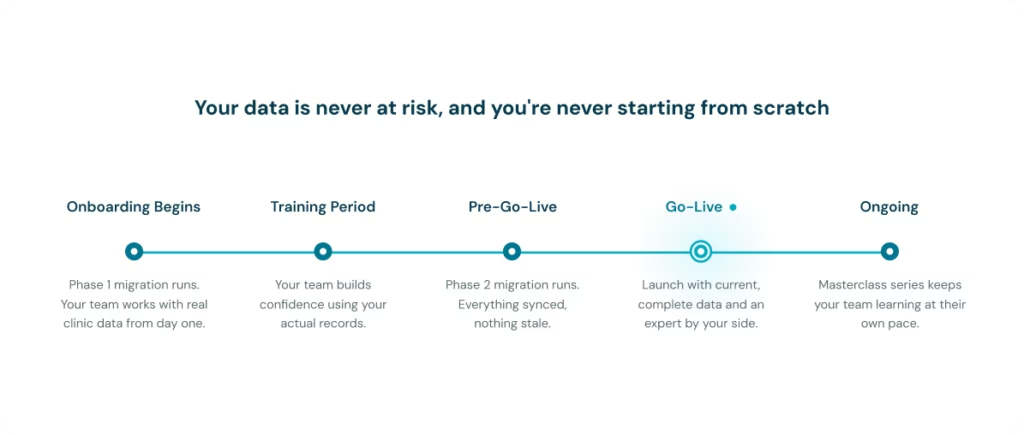
Data migration happens in two phases. The first runs at the start of onboarding, so your team is working with actual clinic data from day one rather than placeholders. A second migration runs just before go-live to make sure everything is current, nothing is stale, and there’s no last-minute scramble to reconcile what came across and what didn’t.
Our in-house data migration team is with you through both phases, not just technically but operationally. Support doesn’t drop off after your go-live date either. Beyond the initial onboarding period, all Digitail clinics have access to an ongoing Masterclass series. As your team grows into the product and starts exploring what else it can do, the Masterclasses provide a structured way to keep learning without having to figure everything out alone. It’s support without an expiration date.
The thing that actually determines how it goes
This isn’t a technology project. It’s a change management project that involves technology, and that distinction matters more than most clinics realize going in.
You can’t fully internalize a new system until you’re using it on real patients, in real time, in the middle of a real day.
“You really can’t learn it until you’re in it, using it, you just have to do it to really get comfortable and learn it.”
Training helps. Having an expert alongside you on launch day helps. But confidence is built through doing, and it tends to build faster than expected once the team commits.
The practices that look back on the switch most positively are almost always the ones that committed fully, pushed through the adjustment period, and found that the system they’d been putting off was faster, cleaner, and easier than anything they’d been working around for years. The hesitation was real. So was the relief on the other side.
If you’re weighing whether now is the right time, we’re happy to have an honest conversation about what it would actually look like for your clinic. Book a call with our team.