10+ Veterinary Stats and Findings That Actually Matter for 2026


Running a successful veterinary practice today requires more than just clinical excellence. It demands informed decision-making. Every choice you make, from investing in new technology to managing staff schedules, should be backed by a clear understanding of the industry’s current state and future direction.
When you connect the dots between the latest industry reports, you get a comprehensive view of the real challenges and opportunities shaping the profession. Whether you are looking to boost efficiency, improve staff retention, or better serve your patients, understanding the veterinary services landscape is essential.
Here are 12 findings that matter most for 2026, organized around the four questions practice owners are actually asking.
How Bad Is the Veterinarian Shortage in 2026?
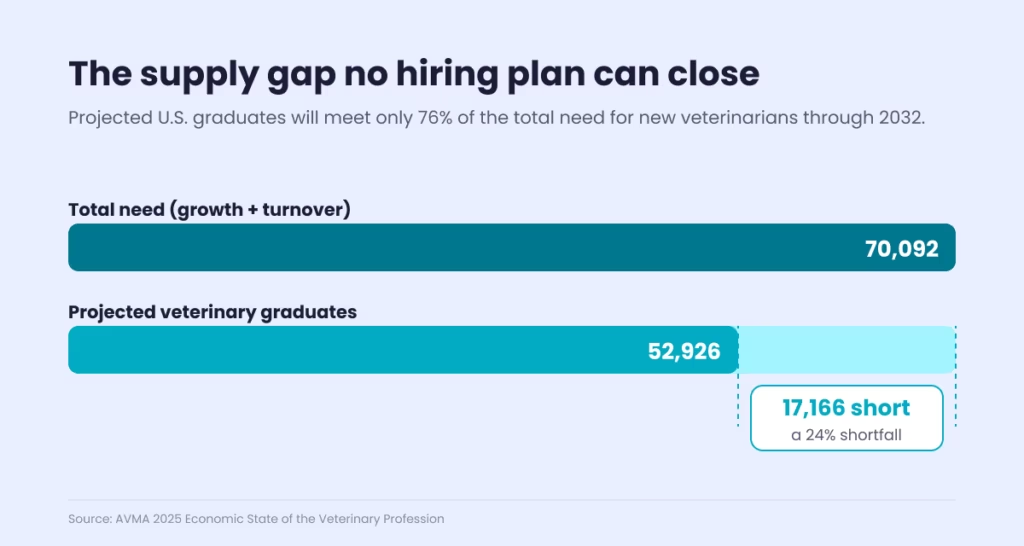
The U.S. will produce only about 76% of the veterinarians it needs through 2032, and there is no reserve of unemployed doctors to fill the gap.
1. A projected shortfall of more than 17,000 veterinarians by 2032
A study commissioned by the AAVMC projects a total need for 70,092 new veterinarians through 2032, counting both growth and turnover. Projected graduates over the same period: 52,926. That leaves a shortfall of 17,166, even after counting every new veterinary school and program expansion currently in the pipeline.
2. Turnover creates nearly twice as much demand as growth
In the same AAVMC analysis, 45,280 of those openings come from veterinarians leaving positions, versus 24,813 from market growth. Retention is worth almost double what expansion is. Every workflow change that keeps an experienced DVM from walking removes a vacancy you would otherwise spend months trying to fill.
3. Veterinarian unemployment sits at 0.7%
The AVMA’s 2025 Census of Veterinarians puts veterinarian unemployment at 0.7%, against a 3.9% U.S. rate. There is no bench. When a doctor leaves, the market does not hand you a replacement.
How Many Hours Do Veterinarians Work, and Why Are They Burning Out?
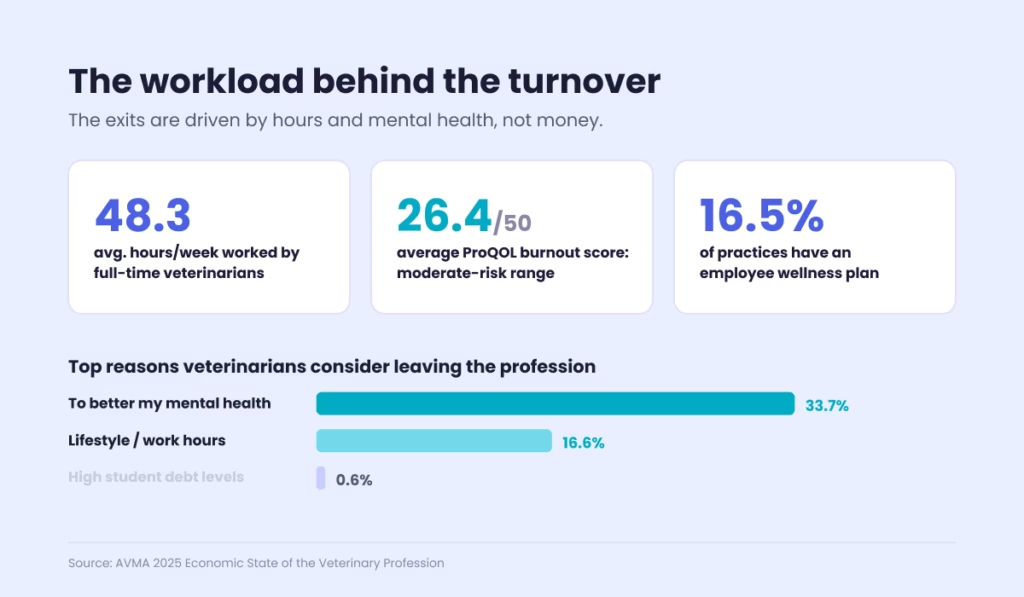
Full-time veterinarians average 48.3 hours per week, and half of those considering leaving the profession cite mental health or workload as the reason, not pay.
4. Full-time veterinarians still average 48.3 hours per week
Per the AVMA’s Economic State of the Veterinary Profession report, full-time veterinarians work an average of 48.3 hours per week (median 45). Hours are trending down from the pandemic peak but remain above the prepandemic average of 46.5. The overtime is not going into medicine. Much of it goes into records, callbacks, and administrative catch-up.
5. Burnout scores remain in the moderate-risk range
The average ProQOL burnout score in the AVMA’s 2024 Census of Veterinarians was 26.4 out of 50, squarely inside the moderate-risk band, with early-career veterinarians highest at 28.1. Research by Dr. Clinton Neill and colleagues in Frontiers in Veterinary Science puts the cost of burnout to the veterinary profession at $1 billion to $2 billion a year, and AVMA reporting has drawn a straight line from practice inefficiencies to veterinary stress.
The burden is administrative, not clinical!
6. Half of veterinarians thinking about leaving cite mental health or work hours. Debt barely registers.
Among veterinarians currently considering leaving the profession, the AVMA 2025 report found 33.7% cite their mental health and 16.6% cite lifestyle and work hours, a combined 50.3%. High student debt? 0.6%. The exits are about workload, not money, which means the fix lives in workflow design.
7. Only 16.5% of practices have an employee wellness plan
That is one of the quieter findings from the AVMA’s Veterinary Practice Owners Survey. Pair it with finding #6 and the takeaway is uncomfortable but useful: for most practices, wellbeing support will show up in how work flows, or it will not show up at all.
Are Veterinary Practices Still Profitable in 2026?
They can be, but revenue flattened while nearly every practice raised wages, so margin now depends on production per labor hour.
8. Gross revenue fell for almost every practice type year over year
Per the AVMA 2025 report, every practice type except companion animal predominant saw a slight decrease in average gross revenue year over year, and 100% brick-and-mortar practices declined as well. The post-pandemic boom pricing era is over.
9. 94.7% of practices raised staff wages within the past year
And 42.6% of those raises were 4% to 6%. Wages rising while revenue flattens is a margin squeeze with only one durable answer: more production per hour of labor you already pay for.
10. Large practices are taking over the map
U.S. Census Bureau data cited in the AVMA 2025 report show practices with 20 or more employees grew from 11.7% of all veterinary establishments in 2012 to 19.6% in 2022, while practices with fewer than 10 employees fell from 60.0% to 50.5%. Consolidated groups run on operational leverage. Independents competing with them need the same leverage from their systems.
What Technology Are Veterinary Practices Actually Using?
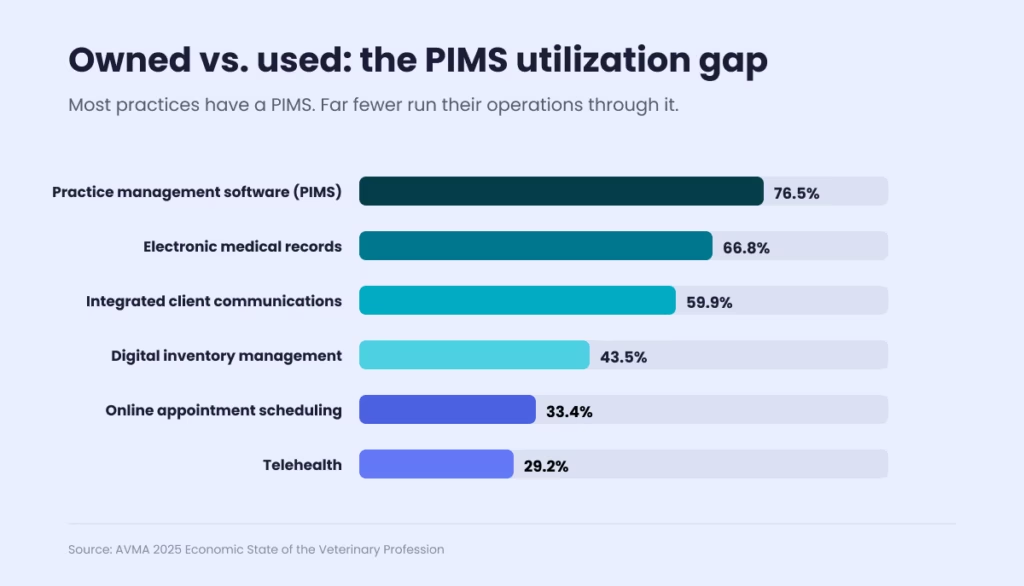
76.5% of practices run a PIMS, but fewer than 1 in 3 offer online scheduling or telehealth, which is where the untapped capacity sits.
11. Most practices have a PIMS, but leave its biggest features unused
The AVMA 2025 report shows the drop-off clearly: 76.5% of practices have practice management software, yet only 59.9% use client communications software that integrates with it, 43.5% use digital inventory management, 33.4% offer online appointment scheduling, and 29.2% use any form of telehealth. The gap between owning a PIMS and running your practice on one is where most of the untapped capacity in this profession sits.
12. Owners who feel behind on technology blame time, not money
Among practice owners who say they are falling behind on technology, 31.3% cite time constraints and 26.3% cite cost. The tools that would return hours to the team are the ones teams feel too stretched to adopt, which is a strong argument for choosing platforms measured on speed to value, not feature count.
What Do These Veterinary Statistics Mean for Your Practice?
Here’s the thing about numbers like these: they describe the profession, but they don’t describe your practice. Every clinic sits in a different market, with a different team, a different client base, and a different set of constraints. A statistic can tell you which way the wind is blowing. It can’t tell you how to trim your own sails.
That’s the real work of running a practice, and it’s the part no report can do for you. The owners who thrive over the next few years won’t be the ones who read the trends fastest. They’ll be the ones who get honest about their own bottlenecks, question the workflows they’ve always taken for granted, and make deliberate choices about where their team’s hours actually go. Data points at the problem. Judgment solves it.
So treat the numbers above as a starting question, not an answer. Where is your capacity leaking? What are you doing by habit rather than by design? The clinics that ask those questions early, and act on them, are the ones that will still be standing when the ones who waited are still trying to hire their way out.
Run your practice on a PIMS that works as hard as you do
Cloud-based AI-native veterinary software for simpler operations, improved pet care, and getting home on time.