The State of AI in Veterinary Medicine: 2026 Digitail and AAHA Study

Digitail and AAHA surveyed 1,730 veterinary professionals on AI adoption in veterinary medicine. See how AI use has grown across veterinary practices since 2024, and where the profession now stands on AI maturity. Download the full report for all the findings.
See how your clinic compares
Key Findings
- AI adoption in veterinary practices more than doubled, from 39.2% in 2024 to 83.7% in 2026, with daily or weekly use up to 88.3%.
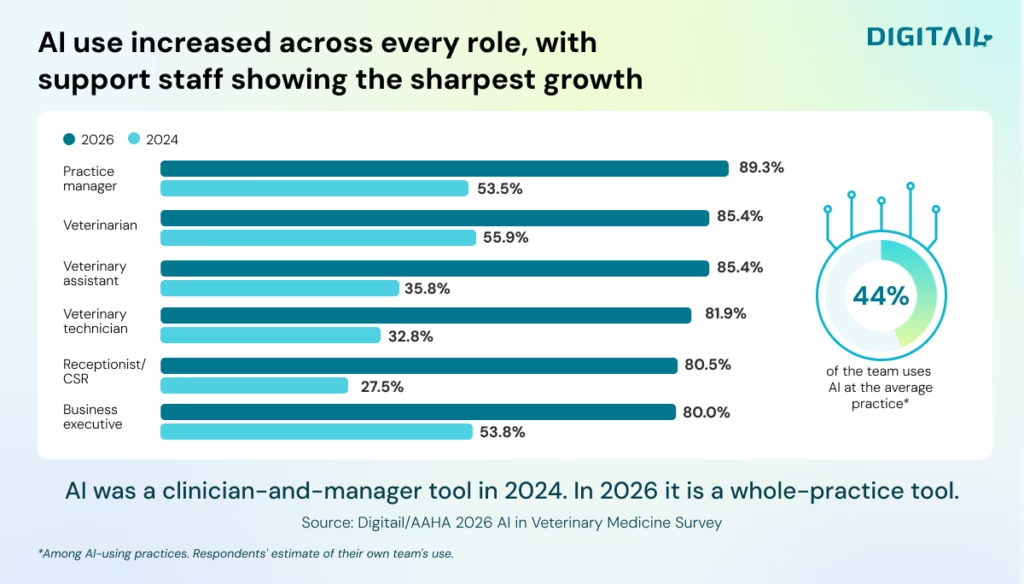
- AI use has spread across the whole team, growing fastest among support staff.
- Some are experimenting with custom AI: 38.9% have tried creating their own AI agents.
- Top applications include clinical documentation (AI scribes and SOAP notes) and client communication tools, and most veterinary professionals use AI across three or more areas.
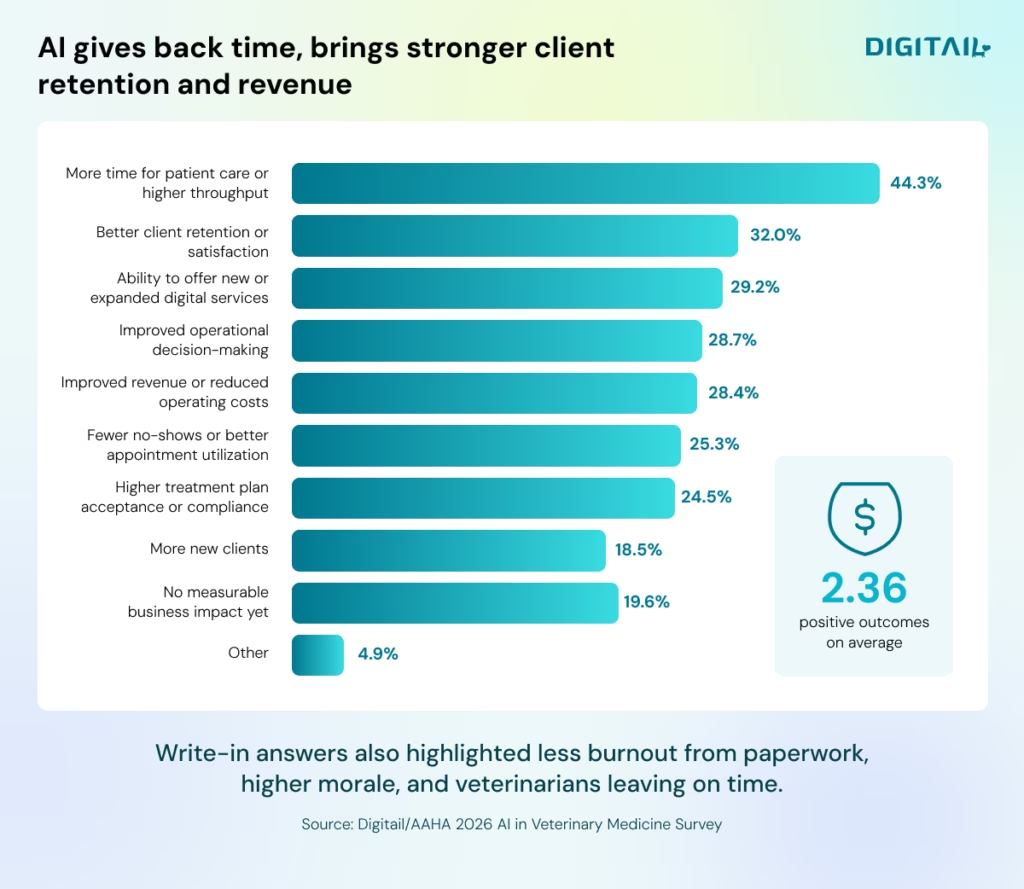
- Major payoffs are time, client retention, better operational decisions, and growth, with independent practices leading on retention and operational decision-making.
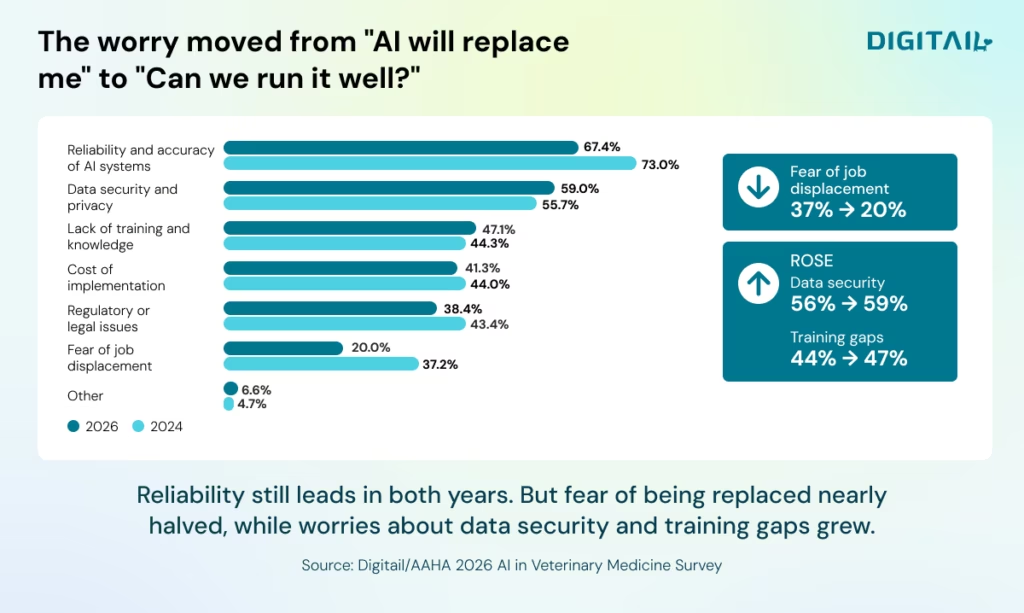
- Fear of job displacement nearly halved, while concerns around data security and lack of training rose.
- Most have automated reminders, few have personalized care: 61.1% send rule-based reminders, but only 11% get tailored next-step recommendations for each patient, a major untapped opportunity for AI.
- Practices feel ready for AI, but the structure lags, as 65.2% added AI without meaningfully changing how they work, close to half have no plan or owner, and nearly a third have no AI governance in place.
- Veterinary AI maturity scored 2.67 out of 4, with most practices between emerging and established, adopting AI but not yet managing it deliberately
- Returns rise with AI maturity, with the most mature practices reporting 6× the business outcomes, and the share seeing no measurable impact drops sharply with maturity.
Two years ago, we ran our first industry-wide study of AI in veterinary medicine, in collaboration with the American Animal Hospital Association (AAHA). Back then, the profession was still cautiously experimenting, with early adopters moving ahead and plenty of skeptics holding back. A lot has changed since then. The question is no longer whether practices use AI, but how well they’ve put it to work.
This matters because the quality of adoption is what can turn access into real value, the kind that improves patient care and strengthens the business. Evidence from other industries makes the point: most organizations that try AI never see a financial return, and those that build the right foundations, the systems, skills, and strategy behind the tools, are far more likely to benefit.
So this time we looked deeper. We set out to understand the industry’s overall AI maturity as veterinary professionals see it: how widely AI has spread across the team, how far it’s reshaped everyday workflows, how deliberately practices govern and select it, and what outcomes for the business and for patient care are beginning to emerge.
“Most surveys tell you how many veterinary professionals are using AI. Digitail wanted to know what separates practices seeing actual results from those seeing none, and what got them there. A maturity model is a new lens for this profession, and what it revealed is the clear role of strategy, governance, and workflow design in the value practices report from AI.”
Bill Voegeli, President of Association Insights, who led the study in collaboration with the American Animal Hospital Association
In total, 1,730 veterinary professionals across the United States and Canada shared their views. The full white paper is available for download below, with all the detailed findings and a discussion written exclusively for this study by Adam Wysocki, a leading veterinary software advisor and founder of VetSoftwareHub. Here’s what we found.
Download the Full Report
AI adoption in veterinary medicine has doubled, becoming a whole-practice, everyday tool
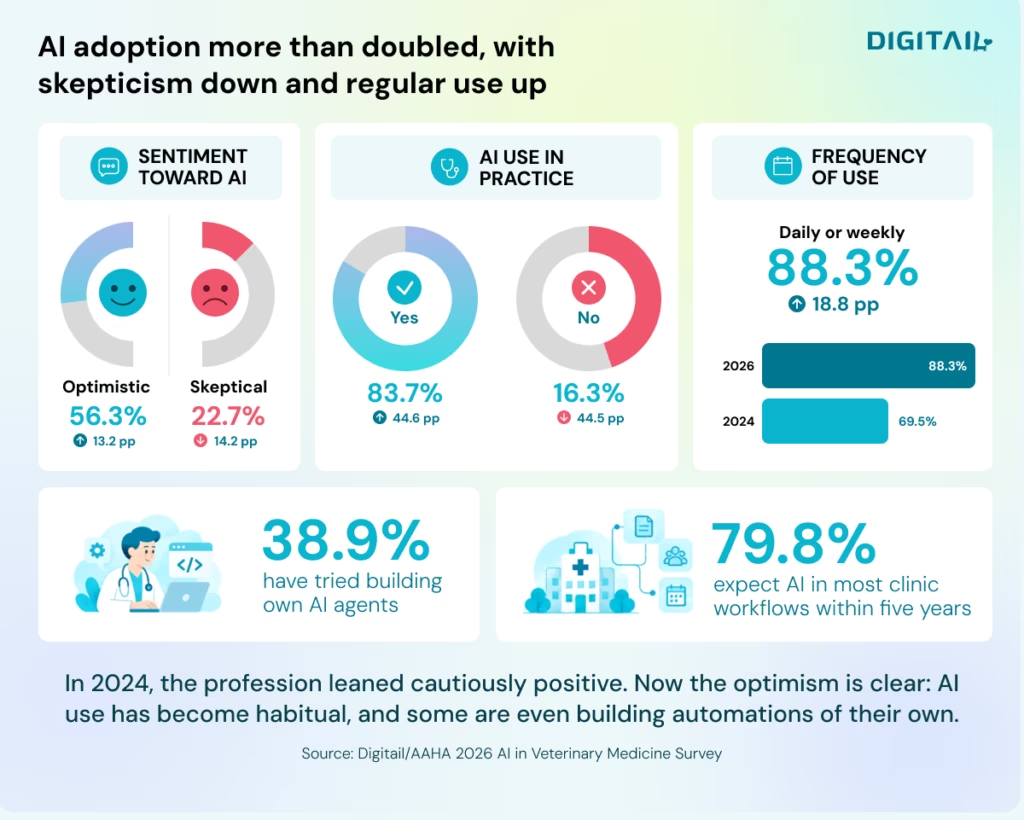
The profession has grown more positive about AI in veterinary medicine. In 2024, sentiment averaged just above neutral, a slight lean toward optimism. By 2026, the optimists had grown to 56.3%, and the skeptics had shrunk to 22.7%, each moving more than 13 points.
AI adoption more than doubled, reaching 83.7% from 39.2% in 2024. Use also grew deeper: among those using AI, 88.3% now reach for it daily or weekly, up from 69.5%. AI has become a habit rather than an occasional experiment.
Younger professionals stand out in both. The under-30s were once the most skeptical group and the slowest to adopt AI. Now they match every other age band on optimism and have posted the largest jump in use of any group.
There is also a do-it-yourself streak worth watching. Beyond using AI, some veterinary professionals are trying to automate their own tasks with it, building agents that can carry out steps and complete workflows on their behalf through tools like ChatGPT or Claude. Nearly four in ten (38.9%) have tried, and more than half of those succeeded; another 29.9% are considering it.
The last big change is who uses AI. In 2024 it was mostly a clinician-and-manager tool; by 2026 it had spread across the team, with the sharpest growth in support roles — assistants, technicians, and CSRs. At the average AI-using practice, respondents estimate 44% of the team now uses AI.
Sentiment and adoption did not differ meaningfully by practice setting, though practices on cloud-based veterinary software reported higher use (89.3%) than those on server-based systems (81.2%).
Out of the 16.3% of respondents whose practice had not used AI, 60.2% plan to adopt it in the near future, and 41% believe it could give their clinic a competitive advantage.
79.8% of veterinary professionals expect AI in most clinic workflows within five years.
AI handles the admin more than the medicine
The tools veterinary teams use cluster on the operational side of the practice rather than the medical one. Clinical documentation, including AI scribes and AI-generated SOAP notes, leads by a wide margin, followed by client-facing tools for messaging, outreach, and marketing. Diagnostic applications like AI-assisted radiographic, lab, and cytology interpretation are less common so far. Satisfaction tracks the same admin-versus-medicine split: highest where AI drafts and communicates, and relatively lower where it interprets images and samples.
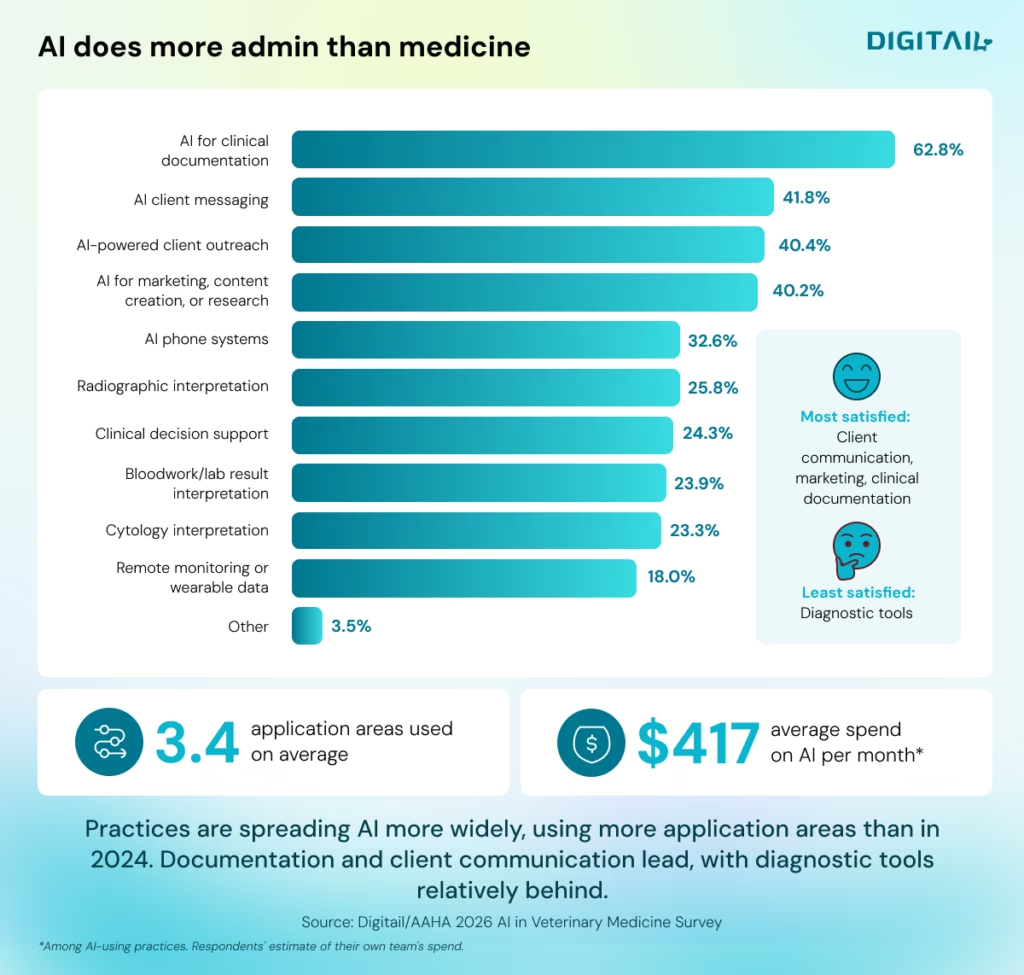
Respondents reported using AI across a mean of 3.33 application areas. Among AI-using practices, monthly spend on AI averages an estimated $417.
Clinical documentation tools were most common in general practice, reported by 71.2% of respondents, compared with 49% in emergency, specialty, and urgent care hospitals, and 38% among relief/locum respondents.
AI helps practices see more patients, retain clients, and grow services
The business outcomes practices credit to AI center on time, clients, and growth. Most often, respondents said AI helped them see more patients or work with higher throughput (44.3%), followed by better client retention or satisfaction (32%) and the ability to offer new or expanded digital services (29.2%). Better operational decision-making and improved revenue or lower operating costs were close behind. On average, respondents reported 2.36 positive outcomes each, and only about one in five reported no measurable impact yet.
Respondents also pointed to gains in wellbeing: veterinarians leaving on time, less burnout and stress from paperwork, better work-life balance, and higher morale.
Outcomes also varied by ownership: respondents at privately owned practices reported more positive outcomes on average than those at corporate practices (2.48 versus 2.20 of nine), a gap driven mostly by better client retention (34.8% versus 26.8%) and improved operational decision-making (33.5% versus 24.5%). The share reporting no measurable impact was similar in both groups, so the difference reflects private practices capturing more from AI rather than corporate practices seeing none.
Personalized patient care remains a major opportunity for veterinary AI
One area stands out for how much room is left. Asked how their practice handles patient care and client outreach, a question put only to respondents in general and mobile practice, 18.4% said they reach out proactively but track who needs what by hand. Most respondents (61.1%) described automated reminders based on fixed rules, such as time since last visit. And only a few had moved to genuinely proactive, personalized patient care: 11% reported that their system recommends the right next step for each patient based on that animal’s specific history and clinical needs. Automating reminders is a real efficiency gain, but it is not the same as anticipating what a patient needs. That gap, between sending everyone the same rule-based nudge and tailoring outreach to the individual animal, is one of the clearest places AI in veterinary medicine has yet to deliver on its potential.
Veterinary professionals’ top concerns about AI in 2026: less fear of job replacement, more worry about using AI safely
Reliability and accuracy remain the single largest concern in both years, at 67.4%. The biggest change is fear of job displacement, which fell 17 points from 37.2% to 20%, the largest movement of any concern. That fear declined with age, and among all roles it was expressed most by receptionists and CSRs (37.8%), compared with just 13.3% of practice managers.
Data security and privacy climbed to 59% and lack of training and knowledge to 47.1%, the only two concerns to rise. Reliability and regulatory concerns both eased by around five points.
Environmental impact emerged as a new issue — no respondent raised it in the 2024 free-text responses. In 2026, it appeared repeatedly, with survey participants citing data centers’ water consumption and energy demand, their effects on the communities where they’re built, and their climate consequences. Several respondents named environmental impact as the reason they will not adopt AI at all.
Other concerns included the ethics of AI companies and their training data, the erosion of clinical judgment and critical thinking, and the loss of human contact in client interactions.
Practices feel ready for AI, but few have built the structure to match
Part of what this study set out to measure was how prepared the profession feels to adopt AI: whether the strategy, systems, processes, and team buy-in are in place to support sustainable implementation.
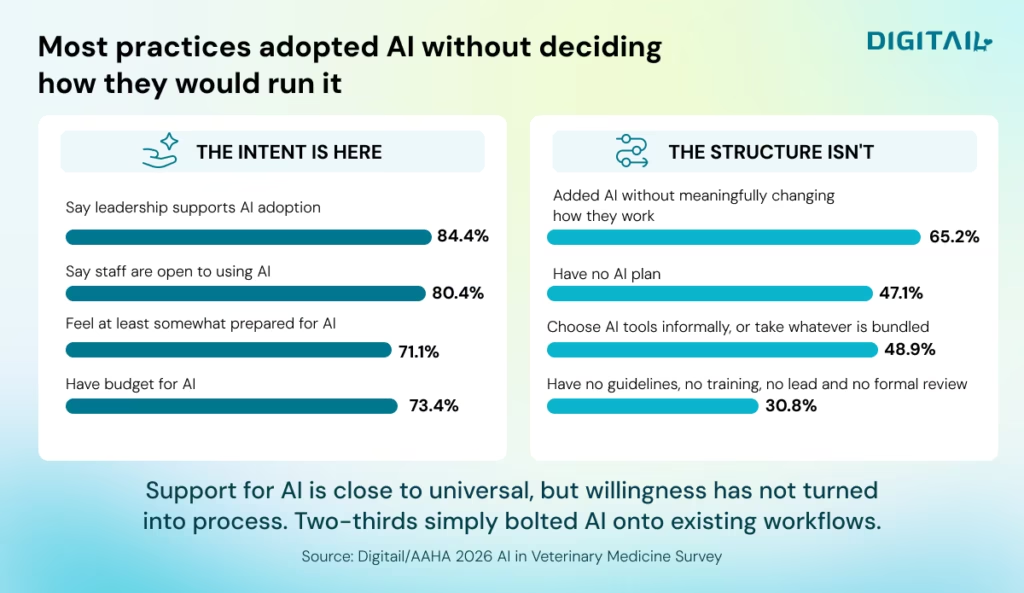
The readiness picture is broadly positive. Most respondents describe leadership as supportive of AI, staff as open to using it, and their practice as at least somewhat prepared, with budget and infrastructure largely in place.
The gap appears when that confidence is set against what respondents report their practices are actually doing. Most say their practice added AI without meaningfully changing how it works, or made only small adjustments, and very few have redesigned their workflows around the tools.
Close to half of respondents say their practice has no AI plan and no one responsible for it, and only about one in five have AI written into documented plans with goals they track. Adoption has run ahead of management: the tools arrived first, and the strategy to direct them has not caught up. Tool selection reflects it too, with around half deciding informally, comparing a couple of options, asking peers, or taking whatever comes bundled, and only a minority formally evaluating tools for data handling and security before adopting them.
Veterinary AI governance is where the structure is thinnest. Asked which supports they have in place, such as usage guidelines, staff training, a named AI lead, or formal review of tools, nearly a third of respondents report having none at all.
Two structural patterns run through these findings. Self-reported preparedness rises with practice size, highest at large practices and lowest at small ones. Additionally, respondents at privately owned practices rated their capability and readiness higher than those at corporate practices.
Veterinary AI maturity sits mid-scale, held back by weak governance
To move past whether veterinary professionals use AI and look at how well it’s being implemented, we mapped the industry on a veterinary AI maturity model adapted for this study from the Healthcare AI Governance Readiness Assessment (HAIRA), a peer-reviewed framework from human healthcare. HAIRA was designed for smaller, resource-constrained organizations, a profile that fits veterinary practices well.
We assessed AI maturity across six dimensions: Strategy and Intent, Governance and Oversight, Vendor Evaluation and Selection, Workflow and Technology Integration, Adoption Depth, and Capability and Readiness. Each is rated on a four-level scale, from ad hoc to advanced. Respondents whose practices did not use AI (16.3%) sit outside the index. Because the unit of analysis is the individual respondent, results reflect perceived maturity rather than a verified, practice-level measure.
Across the profession, AI maturity scored 2.67 out of 4, placing most practices between emerging and established, past incidental experimentation, but short of deliberate, well-governed use.
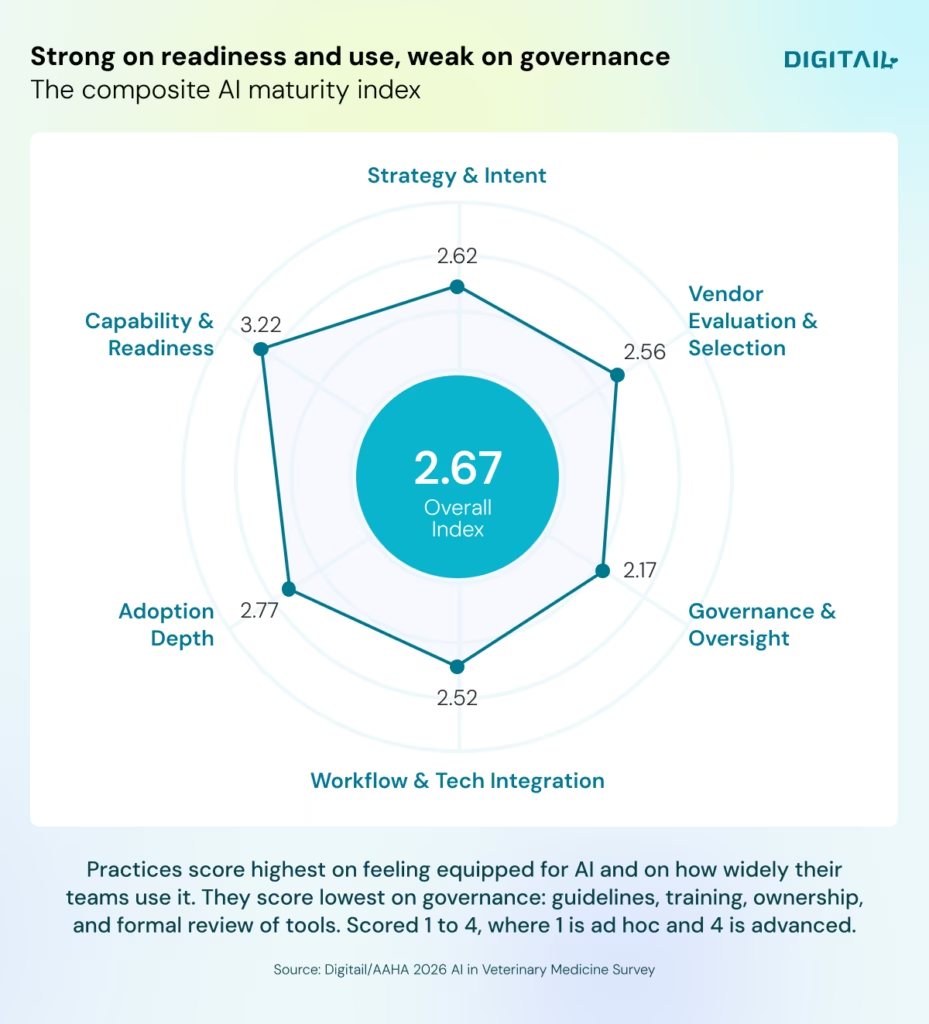
Looking at the six dimensions individually shows where the gaps sit.
- Capability and Readiness scored highest, which fits the earlier readiness picture: practices feel equipped, with infrastructure, budget, and leadership backing largely in place.
- Adoption Depth came next, meaning AI has spread to a good share of the team at many practices, even if not yet to everyone.
- Strategy, vendor selection, and workflow integration clustered together in the middle, the level where a practice has brought AI in and chosen its tools with some care, but hasn’t yet set clear goals, evaluated tools formally, or redesigned its workflows around them.
- Governance and Oversight scored lowest by a wide margin, more than a full point below the top dimension, the level at which AI use runs on informal rules, with no documented guidelines, no training, and no one clearly responsible.
Scores on Strategy, and Capability and Readiness dimensions grew steadily with size. Governance, by contrast, stayed flat across small and medium practices and rose only at the largest, suggesting that formal guidelines, training, and review tend to appear only once a practice reaches a certain scale. Adoption Depth and Workflow Integration barely varied by size.
There was no association between AI maturity and clinic ownership. Independent and corporate practices sat at the same level overall, with one exception: on Capability and Readiness, private practices scored somewhat higher.
More AI-mature veterinary practices report 6× the business outcomes
The clearest thread in this study is that the value practices get from AI depends less on how many tools they own than on how deliberately they put them in place. Grouped by veterinary AI maturity level, practices at Level 1 report an average of 0.64 positive outcomes. Those at Level 4 report 4.05, six times as many.
It shows up from the other direction too. Among Level 1 practices, 70.9% say AI has produced no measurable impact. At Levels 3 and 4, that falls to roughly 11%. The practices seeing nothing from AI and those seeing the most are separated by how deliberately they’ve adopted it: whether there’s a strategy behind it, whether workflows were rebuilt around it, and whether someone owns how it runs.
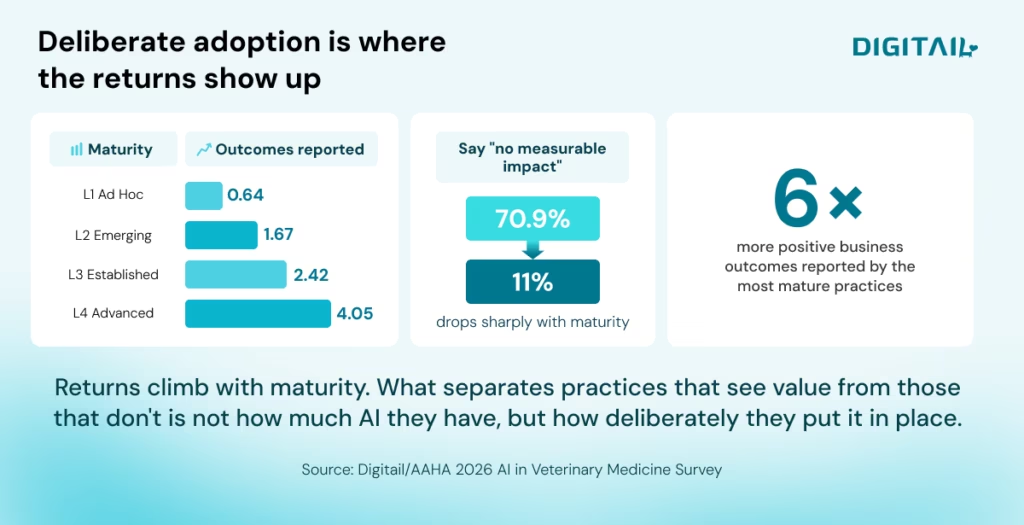
That is the difference between having AI and benefiting from it. Adoption is now nearly universal, but the returns are concentrated among practices treating AI as something to manage and integrate, not simply switch on. For everyone else, the gains are still there to claim. We hope these findings help practices see where they stand and identify concrete next steps toward realizing the full value of AI.
If you want to know what to do about all this, Adam Wysocki read the full findings and wrote up what they mean for practices deciding their next move: After the Breakthrough Comes the Work.
Frequently Asked Questions
In the 2026 Digitail and AAHA survey, 83.7% of veterinary professionals reported using AI in practice, up from 39.2% in 2024. Among those using it, 88.3% use AI daily or weekly.
The most common use is clinical documentation, including veterinary AI scribes that generate SOAP notes from dictation, followed by client communication, outreach, and marketing. Diagnostic uses such as radiographic, lab, and cytology interpretation are less common so far. On average, practices use AI across 3.4 application areas.
AI maturity describes how deliberately a practice adopts and manages AI, across strategy, governance, tool selection, workflow integration, adoption depth, and readiness, rather than how many AI tools it owns. In this survey, more AI-mature practices reported about six times the business outcomes of the least mature.
Practices credit AI with saving time, improving client retention, and enabling new services, reporting 2.36 positive outcomes on average. Outcomes were strongly associated with AI maturity: the share of practices seeing no measurable impact fell from 70.9% among the least mature to roughly 11% at the top two maturity levels.
AI is most established in the administrative side of veterinary practice management, from clinical documentation and client communication to reminders and scheduling. The survey found adoption has outpaced structure, though: 65.2% of practices added AI without meaningfully changing how they work, and returns were highest at practices that integrated AI deliberately rather than bolting it on.
Reliability and accuracy remain the top concern, cited by 67.4% of respondents in the 2026 Digitail and AAHA survey, followed by data security and privacy (59%) and lack of training (47.1%). Fear of job displacement fell sharply, from 37.2% in 2024 to 20% in 2026.
Yes. In the survey, practices using cloud-based veterinary software reported higher AI use (89.3%) than those on server-based or on-premises systems (81.2%).
The survey was initiated by Digitail and administered by the American Animal Hospital Association (AAHA), gathering responses from 1,730 veterinary professionals across the United States and Canada. Data collection took place from July 27 to August 12, 2026.