Guide: Best Software for a Mobile Veterinary Clinic


Most mobile vets searching for the best veterinary software for mobile clinics assume they are shopping for one product. Then the results come back, and a telehealth app, a booking platform, a staff messaging tool, and a full practice management system are all on the same page competing for the same click. They are not competing for the same budget line. Treating them as interchangeable is how a practice ends up paying for three tools, each solving a third of the problem.
When your exam room is a driveway, software is no longer a back-office purchase. It is the thing that decides whether your day ends after the last appointment or two hours later at the kitchen table.
What Kind of Mobile Software Does Your Practice Actually Need?
Four categories show up in the same search results, and each solves a different problem.
- A mobile PIMS is your core system: records, scheduling, invoicing, and inventory, with a phone or tablet interface built for working outside a clinic. Replacing it is a real project.
- A telehealth app adds video and chat consults on top of whatever you already run. It does not touch your records.
- A client engagement app handles booking, reminders, and no-shows. It also layers on top of your PIMS.
- A practice ops layer modernizes scheduling, forms, and payments without asking you to switch core systems.
Mobile Vet Software Compared
Mobile PIMS Platforms
| Tool | Best for | Price | Capterra rating |
| Digitail | Mobile vets wanting an all-in-one, cloud-based PIMS with AI, payments, and client communication | Quote-based, four tiers | 4.7 (97 reviews) |
| Shepherd | Solo and housecall vets wanting a simple workflow | From $299/month, unlimited users | 4.7 (87 reviews) |
| DaySmart Vet | Small and field practices on a flat budget | From $116/month | 4.6 (283 reviews) |
| Covetrus Pulse | Larger practices already in the Covetrus ecosystem | From $549/month | 4.0 (542 reviews) |
Add-Ons That Work Alongside Your PIMS
| Tool | Category | Best for | Price |
| Airvet | Telehealth | 24/7 on-demand triage | Custom quote |
| Anipanion | Telehealth | Video rechecks inside an existing VCPR | Custom quote plus per-visit fee |
| PetDesk | Client engagement | Multi-location practices fighting no-shows | From $249/month |
| Otto | Practice ops | Modern scheduling and payments without switching PIMS | Custom quote |
| Slack | Staff comms | Internal coordination before a vet-specific tool | Free to $18/user/month |
The Best PIMS Platforms for Mobile Vet Clinics
Digitail
Best for: Mobile practices that want charting, client communication, built-in AI tools, and payments in one system
Price: Quote-based across four tiers (Mobile, Growth, Growth AI, Enterprise)
Capterra Rating: 4.7 out of 5 from 97 reviews as of June 2026
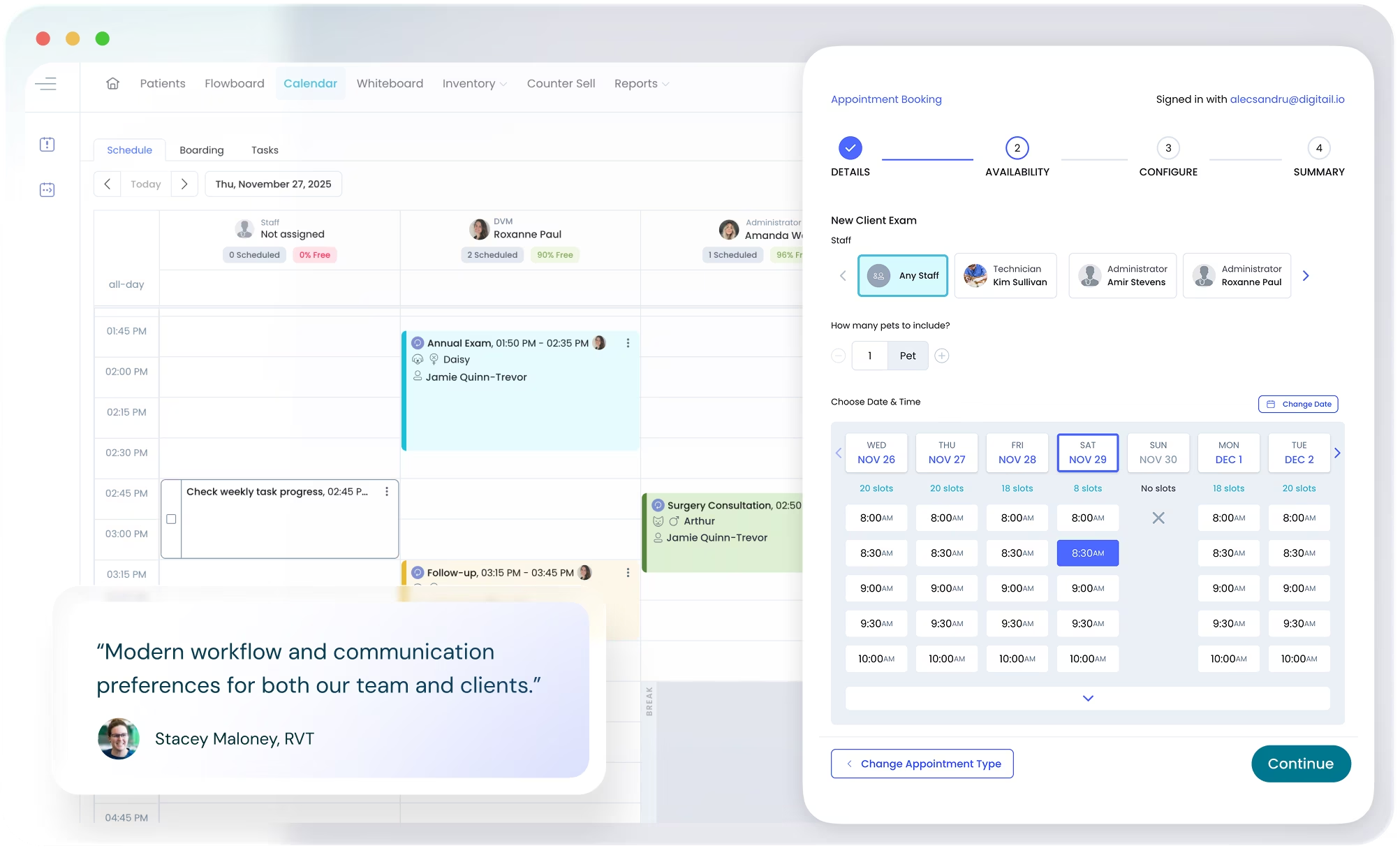
Digitail is a cloud-based veterinary software with AI built into the workflow rather than added later, so Tails AI handles charting and documentation inside the core product. The part that matters for mobile work is that the mobile experience is not one app stretched to serve everyone. Your team gets a native staff app for clinical work. Clients get a separate Pet Parent App for booking, messaging, records, and payments. Both read from the same record, so nothing needs reconciling at the end of the day.
Manage your mobile practice with all-in-one veterinary software.
Shepherd
Best for: Solo and housecall practitioners who want the lightest possible clinical workflow
Price: From $299 per month, unlimited users, free trial available
Capterra Rating: 4.7 out of 5 from 87 reviews
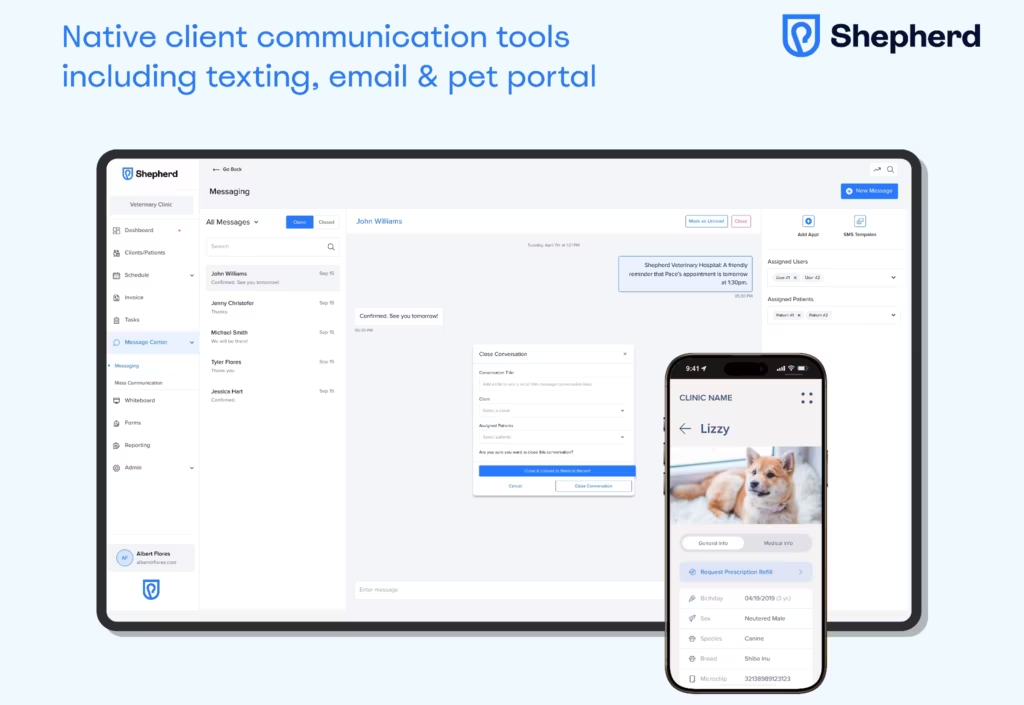
Shepherd is mobile-first by design and markets directly at practitioners escaping a legacy system’s learning curve. Reviewers consistently contrast it against older, clunkier platforms, and the unlimited-user pricing draws real praise from small teams who are used to paying per seat.
It is a narrower product than the all-in-one platforms, and reviewers say so. The texting feature comes up as a weak point, and there is no automatic spay-and-neuter certificate generation.
DaySmart Vet
Best for: Small to mid-size and field practices that need predictable monthly costs
Price: From $116 per month, flat rate
Capterra Rating: 4.6 out of 5 from 283 reviews, 94% positive sentiment
DaySmart Vet posts the highest review sentiment in this roster, and its flat-rate pricing is the easiest here to budget against. Built-in two-way texting and waitlist management cover the client-side basics without a second subscription.
Its feature-depth score of 4.4 trails its ease-of-use and customer service scores of 4.6 and 4.7. Reviewers attribute that to functionality gaps against larger platforms, though public sources do not specify which features fall short.
Covetrus Pulse
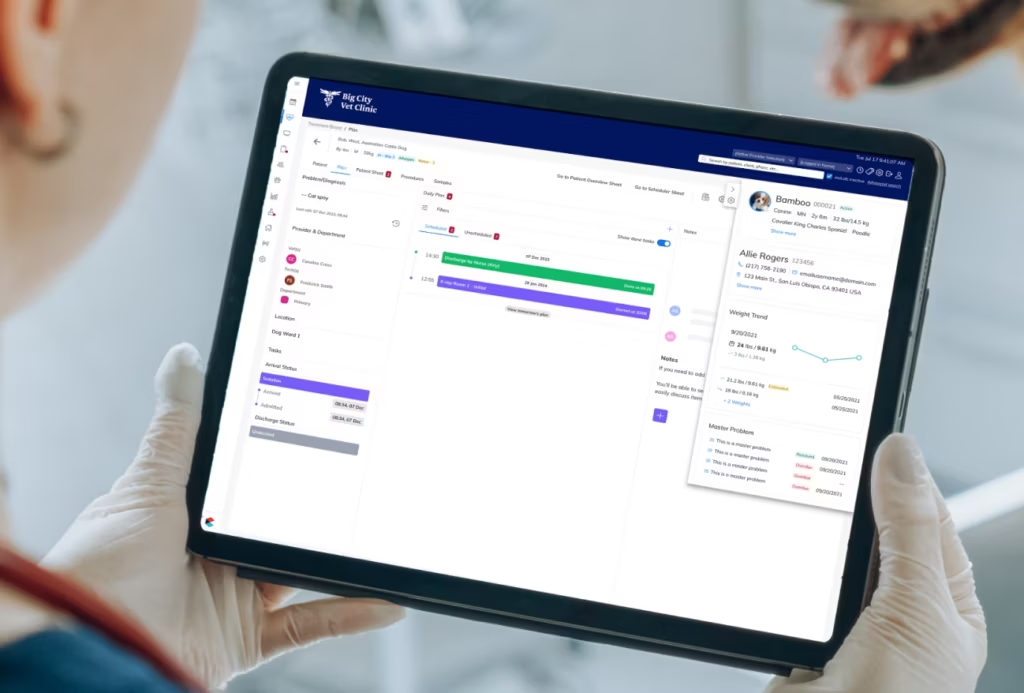
Best for: Larger or multi-doctor practices already buying through Covetrus
Price: From $549 per month
Capterra Rating: 4.0 out of 5 from 542 reviews
Pulse is a cloud PIMS with mobile access, backed by the wider Covetrus supply and services business, which is most of its appeal for practices already inside that ecosystem.
The review data is the softest here and worth weighing seriously. A value-for-money score of 3.7 and 8% negative sentiment, the highest of any tool in this guide, sit against smaller competitors charging a third as much with better satisfaction scores.
The Best Veterinary Telehealth Apps for Mobile Practices
Airvet
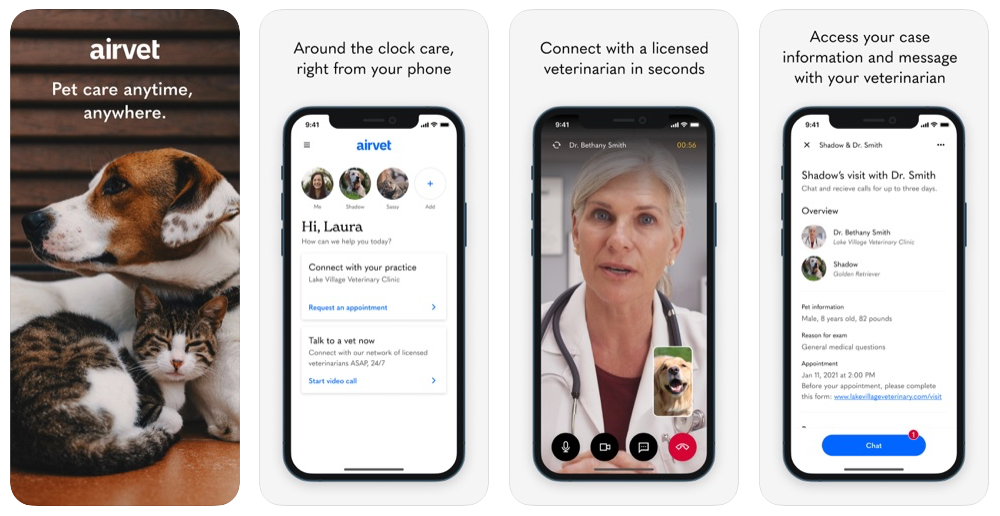
Best for: Clinics adding 24/7 triage without building it themselves
Price: Custom quote, for clinics or for employers buying it as a pet benefit
Airvet does one thing: on-demand telehealth and triage, usually deployed as a branded layer over your existing identity. That focus is the advantage. A single-purpose telehealth product never has to compromise video quality or triage flow to also handle billing, and Airvet advertises connect times under 90 seconds.
The 7,000-plus five-star reviews Airvet cites come from its own aggregator page, not an independent platform, and no verified third-party rating surfaced during research. Treat that number as a vendor claim.
Anipanion
Best for: Practices doing video rechecks inside an established patient relationship
Price: Custom quote plus a per-visit fee, with practices setting their own consult price
Anipanion takes a more compliance-conscious position than most telehealth apps, built explicitly as VCPR-compliant infrastructure rather than a direct-to-consumer app connecting strangers to random vets. It handles rechecks, drop-off updates, and chat follow-ups, the touchpoints that otherwise become unanswered voicemail.
Practices set consult fees themselves, typically $35 to $60, so margin stays under your control instead of a fixed vendor cut. No independent Capterra or G2 rating surfaced, so lean on the demo.
The Best Client Booking and Practice Ops Tools
PetDesk
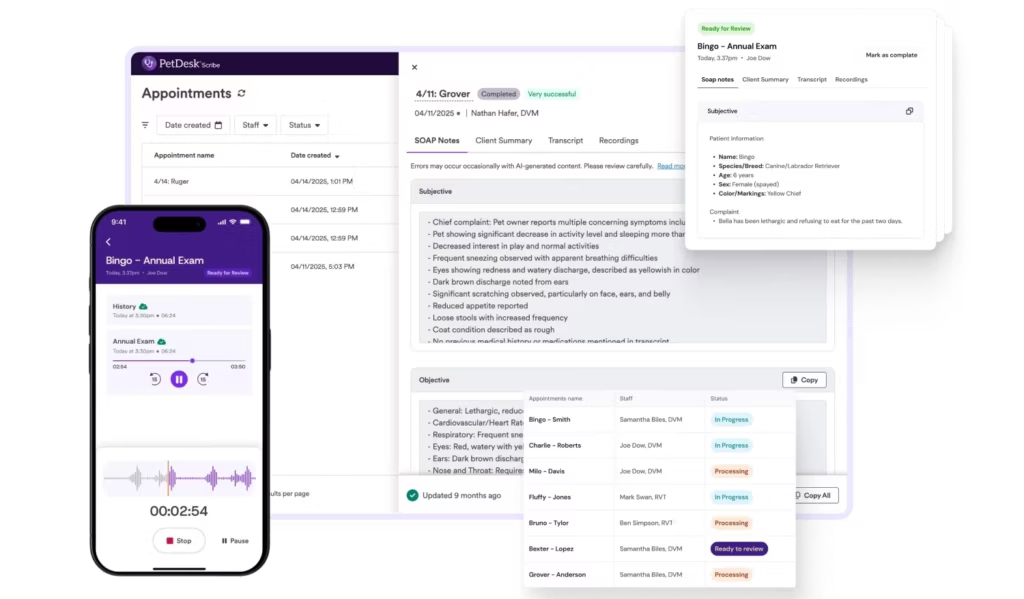
Best for: Multi-location practices where no-shows are the real cost
Price: From $249 per month
Capterra: 4.7 to 4.8, depending on the source
PetDesk is a client engagement platform, not a PIMS, focused on booking, automated reminders, and no-show reduction. If reminders are your actual pain point rather than clinical workflow, that narrow focus beats a generalist PIMS’s built-in reminder tool.
The scale claims deserve a second look. PetDesk’s 12,000-plus practices and a 4.9-star client app across 409,000 reviews both come from its own materials, unconfirmed against live app store listings. Capterra sources disagree on the current rating, so confirm it directly.
Otto
Best for: Practices that like their PIMS but find it thin on mobile
Price: Custom quote, plus Otto Scribe at $0.80 per day
Otto sits on top of your existing system rather than replacing it, integrating with ezyVet, Cornerstone, AVImark, Neo, and Impromed to sync scheduling, reminders, digital forms, deposits, and payments in real time. For a practice otherwise happy with its core system, that is a genuinely cheaper path to modern mobile scheduling than a migration.
Otto claims its automation saves up to 200 hours a month and roughly halves no-shows. Base pricing is not published, and no independent rating surfaced on Capterra, G2, or TrustRadius, which is a real gap against rated competitors.
Slack
Best for: Small teams whose only problem is disorganized group texts
Price: Free tier, Pro around $7.25 to $8.75 per user per month, Business+ around $15 to $18
Slack is not a veterinary product, and it belongs here as the honest baseline. If your mobile gap is coordination rather than clinical, you can solve it without buying anything vet-specific.
The limit is obvious. Slack has no concept of a patient record, an appointment, or a VCPR. It is a reasonable stopgap and the wrong choice for anything client-facing.
How to Choose the Best Veterinary Software for Your Mobile Clinic
Four questions narrow this quickly.
- Where does your time actually go? After-hours triage points to telehealth. No-shows point to client engagement. Charting after the last appointment points to the core platform.
- What happens when the signal drops? Most demos never test this, and vendors vary widely on whether work queues locally and syncs later or simply stops. For rural and large-animal work, this question deserves more weight than most feature comparisons get.
- How many people are on your license? Unlimited-user pricing and per-seat pricing produce very different numbers once a technician and a relief vet are on the schedule.
- Where is the practice going? Mobile-only clinics open physical locations, and traditional clinics add house calls. Software that only fits one shape becomes a migration project the moment the model changes.
FAQ
A mobile vet app, like Airvet or PetDesk, does one job and plugs into whatever PIMS you already run. A full PIMS with a mobile app, like Digitail, replaces your core system entirely, so mobile access, records, and billing all live in one place instead of syncing between separate apps.
Yes, on the right platform. Digitail covers records, treatment plans, communication, and invoicing on mobile, so it works for housecall vets and for staff moving around a hospital floor. Shepherd and DaySmart Vet are also built mobile first. Any of these will still lean on a desktop for heavy in house lab and imaging work.
Airvet focuses on 24/7 on demand triage. Anipanion focuses on video rechecks within an existing VCPR. Both are separate logins outside your PIMS. Digitail includes client messaging and virtual touchpoints natively, and either Airvet or Anipanion can still layer on top if you want dedicated triage.
Slack works for basic coordination like operations, marketing or shift scheduling, but it has no patient records or clinical context. Once communication touches patient info or scheduling, you need a vet specific platform with proper access controls, which is already built into Digitail.
On Digitail, the Pet Parent App handles booking, messaging, records, and payments natively, tied to the same record your staff uses. On a different PIMS, PetDesk is a solid add on for booking and reminders.
Yes. It covers the full clinical workflow on a phone or tablet, so a housecall vet can run the whole practice from it. It does mean adopting Digitail as your full PIMS, which for most solo practices is a plus: one system, one record, nothing to integrate.
Otto integrates with platforms like ezyVet, Cornerstone, AVImark, Neo, and Impromed. PetDesk and Airvet are also usually deployed as add ons. An all in one platform like Digitail skips this question entirely since there’s no separate system to integrate.