

The Sensory Exam Room: Why Hearing Wellness Belongs in Every Visit

Vision, cardiac function, dental health: these are things we routinely screen for at every wellness visit. Yet one of the most primary senses shaping a pet’s behavior, safety, and quality of life is almost never assessed: hearing.
The exam room is one of the loudest, most sensory-dense environments in healthcare. Doors slam, metal bowls clang, alarms chirp, dogs bark, HVAC systems hum, and hard floors echo every footstep. Cats can detect frequencies up to 64,000 Hz and dogs up to 45,000 Hz: more than double the human ceiling of 20,000 Hz. The room your patients walk into sounds nothing like the room you walk into.
In a recent Digitail webinar, we sat down with Janet Marlow, founder and CEO of Pet Acoustics and a certified sound behaviorist, to unpack what we’re missing, and how clinics can begin closing the gap with two minutes of screening, a free decibel app, and a small shift in how we frame “wellness.”
Here are the four ideas every practice owner and manager should walk away with:
1. Sound Comes Before Behavior
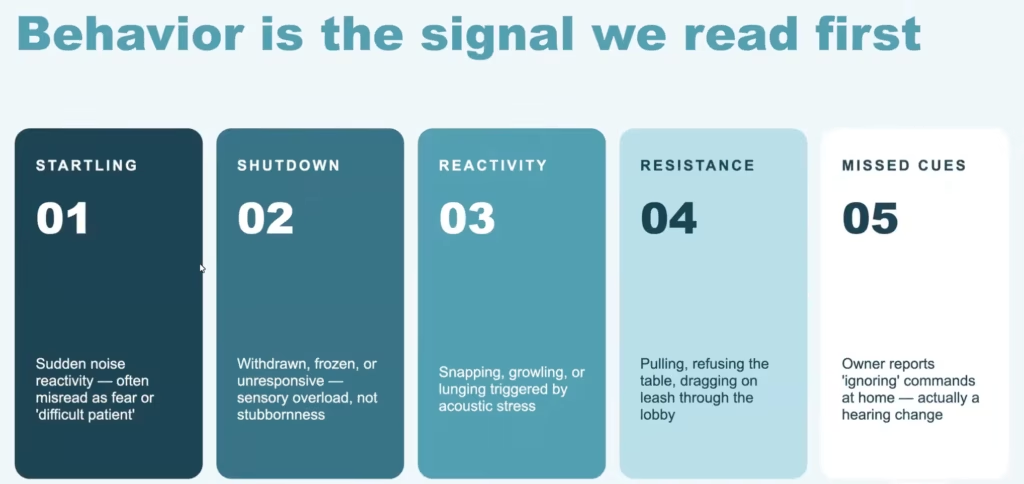
The single most important reframe from the webinar is this: animals hear first, then react. By the time we see pulling away, freezing, vocalizing, or what owners describe as “ignoring,” the nervous system has already responded to a sensory input we may not even notice.
That means a lot of behavior we label as stubbornness, anxiety, or fear-aggression may actually be a hearing story we haven’t decoded yet. A 7-year-old border collie named Archer is a perfect example. His pet parent had cycled through behaviorist after behaviorist trying to understand sudden startle responses and street reactivity. A two-minute hearing screening revealed he had lost most of his hearing — and the entire care plan changed.
- Behavior conversations become clinical conversations, not disciplinary ones.
- Pet parents shift from frustration to empathy the moment a sensory explanation surfaces.
- Handling protocols can be tailored to what the patient is actually experiencing, not just what they’re showing.
2. The Clinical Gap: Nearly 1 in 2 Pets Has a Hearing Change
Pet Acoustics has completed more than 10,000 hearing screenings across clinical hospitals, universities, rehabilitation programs, and working dog organizations in four countries. One finding stood out the most: out of all 10,000 screenings, nearly one in two animals showed some degree of hearing change — and most had never been assessed before.
Janet’s data points to three recurring categories: normal hearing, frequency-specific hearing loss (most often a drop in the high range, which mirrors human aging), and broad-range hearing loss. Each tells a different story and unlocks a different conversation with the owner.
Frequency-specific loss is particularly worth flagging. A dog who can no longer hear high frequencies isn’t being defiant when she ignores her name called from the next room — she literally cannot hear it. That single insight can transform a household.
- Hearing changes get caught early, when intervention is most useful.
- Selective responsiveness, “stubbornness,” and apparent cognitive decline in senior pets are properly differentiated.
- A longitudinal hearing record (a baseline at age 2) becomes incredibly valuable at 7, 10, and 13.
3. A Two-Minute Screening That Fits Into Wellness Workflow
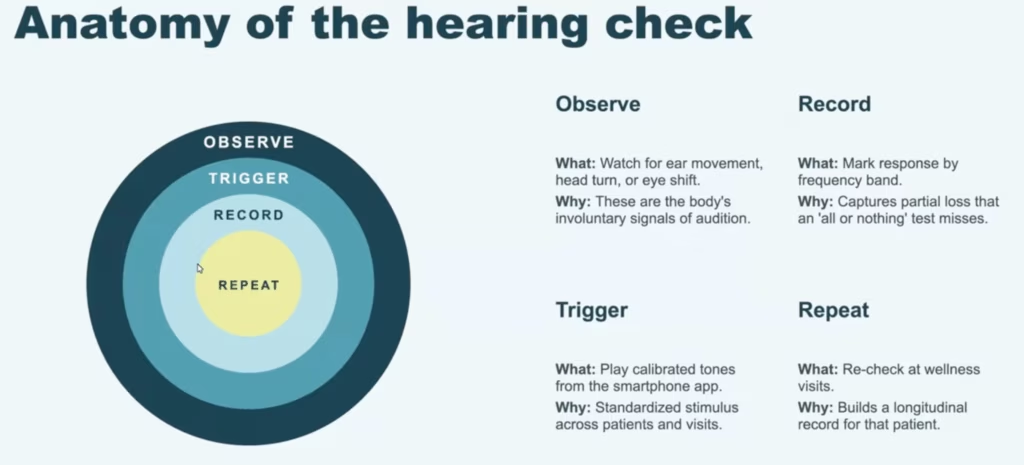
The screening itself is intentionally simple. Using a calibrated app, the team triggers high, mid, and low-frequency tones while observing involuntary responses such as ear movement, head turning, eye shifts, and then records the patient’s responsiveness. A PDF report is generated within 15 seconds and can be attached to the patient record.
What makes this clinically powerful is that it sits between the two extremes most practices currently rely on: informal claps, whistles, and bowl-drops on one end, and the full BAER test (around $350 and often stressful for the patient) on the other. There was no middle ground. Now there is.
The screening also gives the clinical conversation a natural script. As Janet shared:
We check vision, dental, and heart at every wellness visit. Today, I’d also like to check Bella’s hearing. It’s a two-minute test and tells us a lot about behaviors you might be seeing at home.
And on the result:
Her high-frequency response is reduced. That’s why she may seem to ignore you when you call from the next room. Here’s what it means going forward.
- No sedation, no equipment purchase, no dedicated room.
- Puppy and kitten visits become the ideal moment to establish a hearing baseline for life.
- Senior wellness visits gain a meaningful new touchpoint that clients genuinely value.
4. Beyond Screening: Designing a Sound-Conscious Clinic
Here are two practical tools from the webinar worth implementing this week to ensure a calmer sound environment:
A free decibel meter app. Walk the building and measure. The recommended range for a sound-comfortable space for cats and dogs is 50–80 dB (50–70 if you can manage it). Identify the loudest pockets (most likely the surgery suite beeps, the kennel, the lobby at peak intake) and start mitigating one at a time.
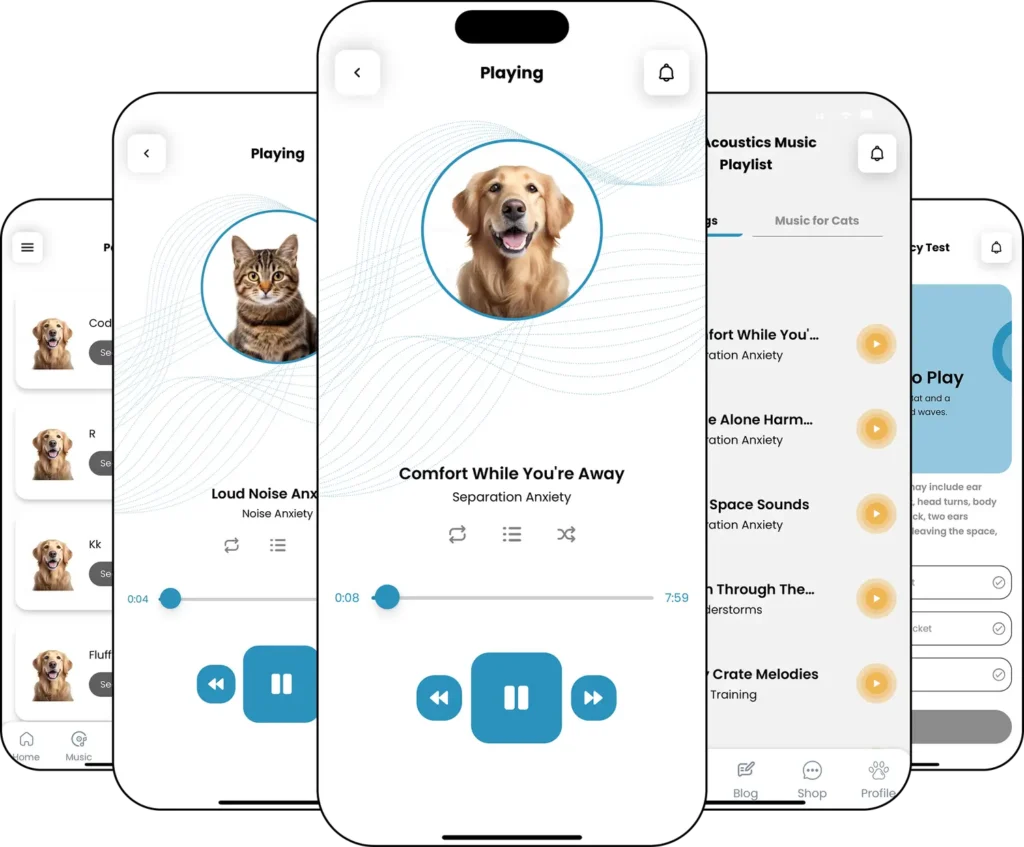
Species-specific sound therapy. Pet Acoustics demonstrated two highly stressed German Shepherds visibly relaxing within 1–2 minutes of targeted sound therapy engineered for canine auditory range. The same principle is being applied to the “feline medicalization gap”, easing cats from home, to crate, to car, to lobby, to exam room without spiking cortisol.
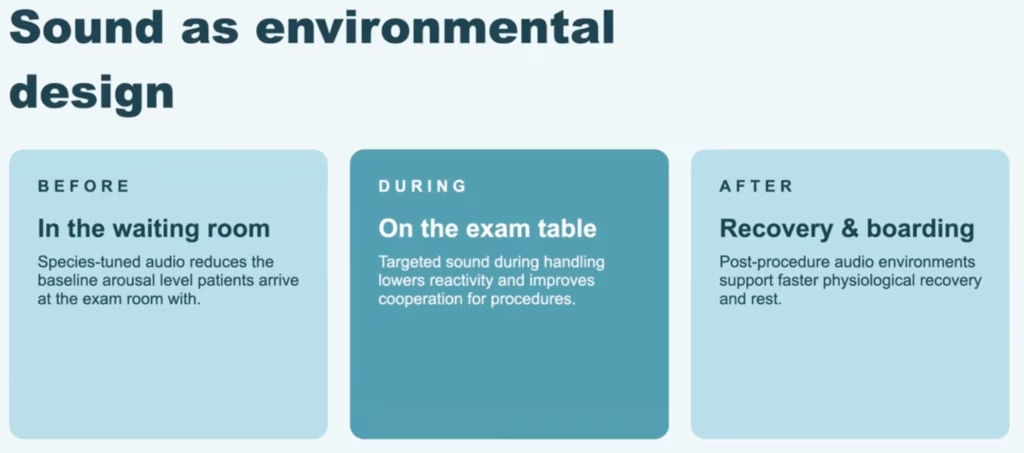
- A measurable, repeatable way to reduce stress-driven handling difficulty.
- Fewer fear-free escalations, shorter exams, calmer recoveries.
- A clinic environment that differentiates the practice — and gives clients another reason to choose you.
Bringing It All Together
Hearing wellness isn’t a new product category but a missing chapter in the wellness exam that’s been hiding in plain sight. The technology to screen for it is now affordable, fast, and non-invasive. With tens of thousands of screenings across four countries, the data is finally large enough to act on. And the clinical impact, from behavior reframing to senior care to fear-free handling, touches almost every part of a practice’s day.
The practices that move first will own a meaningful piece of differentiated wellness care.
What this means for your clinic
🩺 Veterinarians get a new clinical lens for behaviors that were previously labeled “behavioral.” 👩⚕️ Technicians and front desk teams have a calmer, lower-stress patient flow to manage. 🐕 Pet parents leave with answers — and a deeper sense of partnership in their pet’s care. 🎧 Your practice becomes known as one that treats every sense, not just the visible ones.
Bring Hearing Wellness Into Your Practice
At Digitail, we believe the future of the wellness exam is multi-sensory, and that the tools to deliver it should live inside the workflow your team already uses. We’re actively exploring how hearing wellness screenings, results, and longitudinal tracking can sit alongside every other vital your team captures inside Digitail.
If you’d like to see how Digitail can support a more complete, more connected wellness exam we’d love to show you.
📚 Resources from Janet Marlow & Pet Acoustics
Janet generously shared a full library of complimentary resources for clinics that want to go deeper:
- 📱 Download the free Pet Acoustics App
- 🩺 Clinical Application Guidelines
- 🐾 Pet Parent Guidelines
- ✍️ Pet Acoustics Blog Hub
- 🎙️ “We’re All Ears” Podcast
- 📄 White Paper: The Advantage of Using Pet Acoustics to Reduce Canine Stress
- 📄 White Paper: Audiometric Study Reveals Patterns of Age-Related Hearing Loss in Dogs and Cats
🎥 Watch the full webinar: The Sensory Exam Room with Janet Marlow