The Complete Veterinary Equipment Checklist for 2026: Tools, Tech & What’s Worth the Investment

Running a high-performing clinic in 2026 isn’t just about having the latest tech; it’s about having a toolkit that protects your time, your team’s sanity, and your bottom line.
Whether you’re building a new practice from scratch, planning a renovation, or just doing an honest audit of what you have, a structured equipment list helps. Sourcing, budgeting, and compliance all go smoother when you’re working from a complete picture rather than a mental checklist assembled between appointments.
Veterinary Equipment for Reception and Waiting Area
The reception area is both a clinical gateway and a business environment. How it’s set up directly affects client retention, staff workload, and patient stress levels before patients are even seen.
1. Reception workstation
Reliable computers or tablets, a payment terminal that talks directly to your practice management software, and a receipt printer. If your checkout process involves switching between two or three systems to close an invoice and process a payment, that friction costs time at every single appointment.
2. Client seating and species separation
Comfortable, easy-to-clean seating is a baseline. If you have the space, separate waiting zones for dogs and cats are worth planning for.
Cats housed even briefly in a visually open area with barking dogs arrive in the exam room already stressed. That stress affects your exam findings, your technicians’ ability to handle the patient, and the client’s overall experience. The Fear Free approach frames this as a clinical issue rather than a design preference.

3. Walk-on floor scale
A floor-level or built-in lobby scale is worth it for the patient compliance alone. Anxious patients, especially large breeds and dogs that have had negative experiences, are often more willing to walk across a floor sensor than step up onto a raised platform. Getting weight at arrival also keeps the exam room workflow cleaner.
4. Sanitation station
Hand sanitizer, disinfectant spray, paper towels, and a clearly accessible trash can. Accidents happen; make it easy for clients to handle them without having to ask.
5. Product display
Parasite prevention, prescription diets, dental care products, and OTC supplements placed near checkout are a genuine revenue point.
Veterinary Equipment for Examination Rooms
Exam rooms are the core clinical environment. The most common failure mode isn’t missing equipment; it’s inconsistency between rooms, so staff never know exactly where something is, and disorganization that adds friction to every appointment.
If your space allows, species-specific exam rooms are also worth considering. Cats, in particular, benefit from a dog-free, low-noise environment, which directly improves handling, exam quality, and overall visit experience.
1. Exam table
Height-adjustable tables (hydraulic or electric) are worth the cost if your team sees a high volume of large or heavy patients, or if you have staff members with back issues (which is most practices eventually). For a small or low-volume clinic, a quality fixed-height table with a non-slip surface is a reasonable starting point.
2. Stethoscope
Clinicians use a stethoscope more consistently than almost any other instrument, and the difference in acoustic quality between an entry-level and a mid-range model is meaningful, particularly for cardiac auscultation across species.
3. Otoscope
Models with disposable specula tips are preferable in busy practices — reusable tips work but add a step between patients. A combined otoscope/ophthalmoscope handle is a practical option that reduces costs and drawer clutter without compromising clinical practice for general practice.
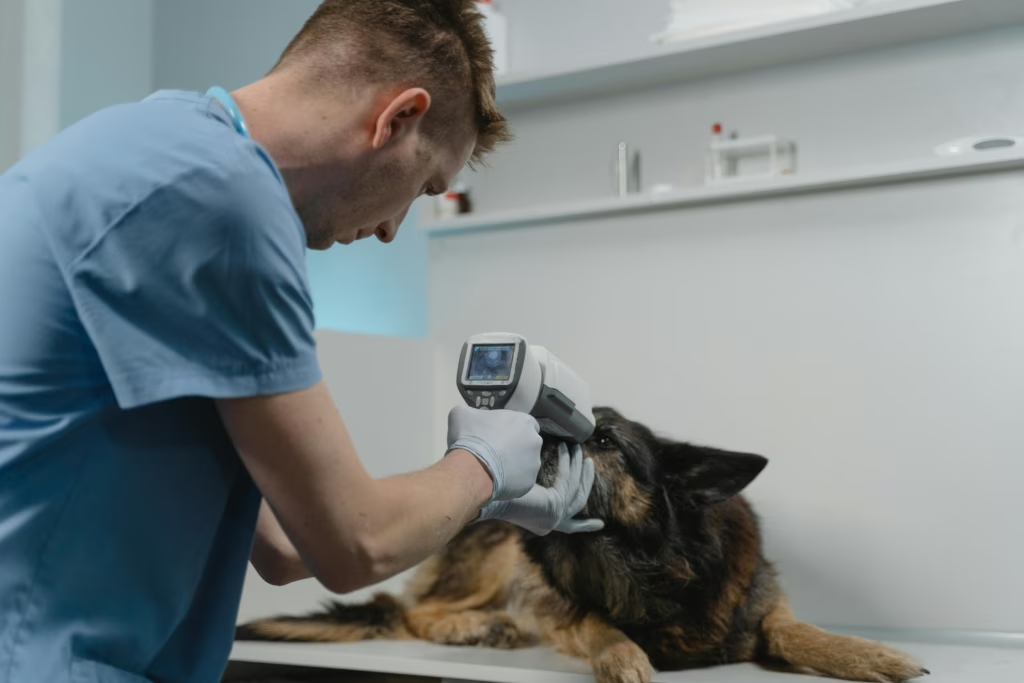
4. Ophthalmoscope
A direct ophthalmoscope covers most general practice needs. If you do a high volume of ocular cases or have a particular interest in ophthalmology, a slit lamp is the appropriate next step, but it’s a specialist investment, and most general practices refer those cases.
5. Thermometer
Digital rectal thermometers are the standard. One per room to avoid cross-contamination, with a defined disinfection protocol between patients.
6. Penlight
LED penlights are inexpensive, bright, and long-lasting. Good for pupillary response, oral cavity inspection, and anything that benefits from a focused light source. Cheap enough that there should be one in every room and a few in the lab.
7. Reflex hammer
Simple, inexpensive, and belongs in every exam room.
8. Wood’s lamp
Useful in dermatology, primarily for screening suspected Microsporum canis (ringworm). A positive blue-green fluorescence warrants culture confirmation; many infected hairs don’t fluoresce at all, so a negative result doesn’t rule it out. Worth having; not worth over-relying on.
9. Flea comb
One of the most underappreciated tools in the exam room, specifically for clients who are convinced their pet doesn’t have fleas. A comb-through that produces flea dirt is a much more persuasive conversation than a verbal explanation.
10. In-room scale for small patients
In addition to a lobby floor scale, a small table- or cage-scale is needed in the exam room for cats, toy breeds, rabbits, and exotic patients. Some exam tables also come with built-in scales — a genuinely elegant solution that removes the need for a separate unit and keeps the workflow smooth.
11. Blood collection and diagnostic consumables
Vacutainer tubes, syringes, needles, alcohol swabs, cotton balls, microscope slides, cover slips, staining supplies, skin scrape materials, and cotton-tipped applicators. These should be stocked in the exam room, not retrieved from a central supply room — leaving the room to get supplies during an exam loses time and patient focus.
12. Restraint equipment
Muzzles in multiple sizes, cat bags, exam gloves, and a towel or two for wrapping. Consistent placement across rooms matters: in a stressful moment, staff shouldn’t need to look for a muzzle.
13. High-value treats
Squeeze tubes, small soft treats, and whipped cream in a can. These function as clinical tools, not extras. They enable blood draws, nail trims, and injections on patients who would otherwise require sedation, and they change the patient’s association with the clinic over repeat visits. Cheese-based spreads (like Cheez Whiz) are also popular in practice. They don’t require refrigeration and create the same level of patient enthusiasm.
Fear Free and Low Stress Handling practices include these as standard exam room equipment, and the clinical case for cooperative care is well established.
Veterinary Equipment for In-House Laboratory
A well-equipped in-house lab is one of the most important investments a general practice can make. The ability to run diagnostics and have results in minutes, rather than hours or the next day, changes how you practice and how clients experience their visit.
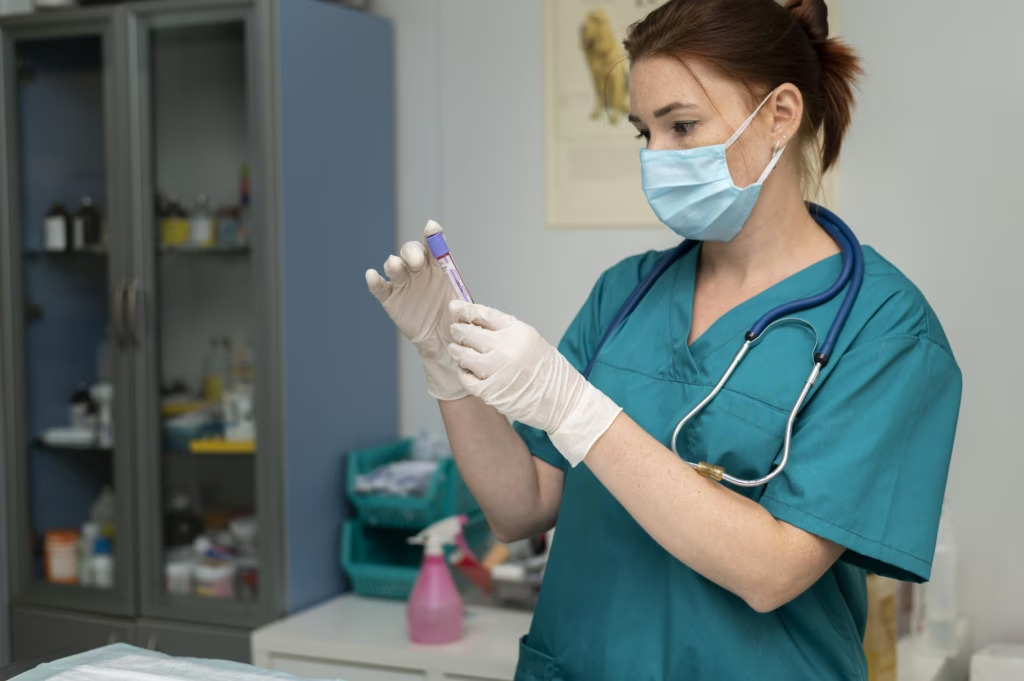
1. Hematology analyzer (CBC)
The cornerstone of in-house diagnostics. Worth investing in a quality unit from a major platform (IDEXX Procyte, Heska HemaTrue, Zoetis VetScan) rather than a budget analyzer. Integration with your PIMS so results post automatically to the patient record is important; manual transcription of lab values is where typos happen.
2. Chemistry analyzer
For metabolic panels, organ function, and pre-anesthetic screening. Combined CBC/chemistry platforms from IDEXX, Heska, or Zoetis reduce counter space and simplify the lab workflow.
3. Urinalysis equipment
A refractometer for urine specific gravity and a centrifuge for sediment preparation are the minimum. A urine chemistry analyzer or photometric dipstick reader adds consistency and reduces technician-to-technician variation in strip interpretation.
4. Microscope
For cytology, skin scrapes, ear discharge evaluation, fecal flotation review, and blood film assessment. A quality binocular microscope with a range of 40x–1000x (oil immersion) covers the full scope of general practice needs.
5. Centrifuge
For PCV/hematocrit, urine sediment, and plasma separation. A general-purpose centrifuge with a microhematocrit rotor is the workhorse of the in-house lab.
6. Fecal diagnostics
Centrifugal flotation is more sensitive than passive flotation for detecting most common intestinal parasites. A dedicated fecal centrifuge with flotation solution covers the standard workflow.
7. Coagulation analyzer
Often skipped because it feels like a specialist tool. Worth reconsidering if you see pre-surgical patients (especially for procedures where intraoperative hemorrhage is a real risk), rodenticide cases, or patients with suspected hepatic disease. In-house PT/PTT results change clinical decisions in real time.
8. Veterinary-calibrated glucometer
Point-of-care blood glucose monitoring for diabetic patients, hypoglycemia workups, and critical patients. Use a glucometer validated for veterinary use. Human glucometers use algorithms calibrated to human erythrocyte glucose ratios, and can produce readings that are 10–20% off in dogs and cats.
9. Electrolyte analyzer
Not essential for every practice. If your caseload includes renal patients, cardiac patients, Addisonian crises, or critical care cases, in-house electrolyte results (Na, K, Cl, ionized calcium) that arrive in minutes change fluid therapy decisions in real time. If you’re referring most of those cases, it’s less essential.
10. Rapid in-house ELISA tests
Point-of-care antigen/antibody tests for parvovirus, heartworm, FeLV/FIV, Giardia, and Leptospira are fast, affordable, and provide same-visit answers that clients value. These don’t replace comprehensive diagnostics, but complement them and triage efficiently.
Veterinary Equipment for Imaging and Diagnostics
1. Digital radiography (DR)
This is a significant capital investment, but it’s also one of the most clinically impactful pieces of equipment in the clinic. Positioning aids, sandbags, and a radiation-compliant room are all part of the setup.
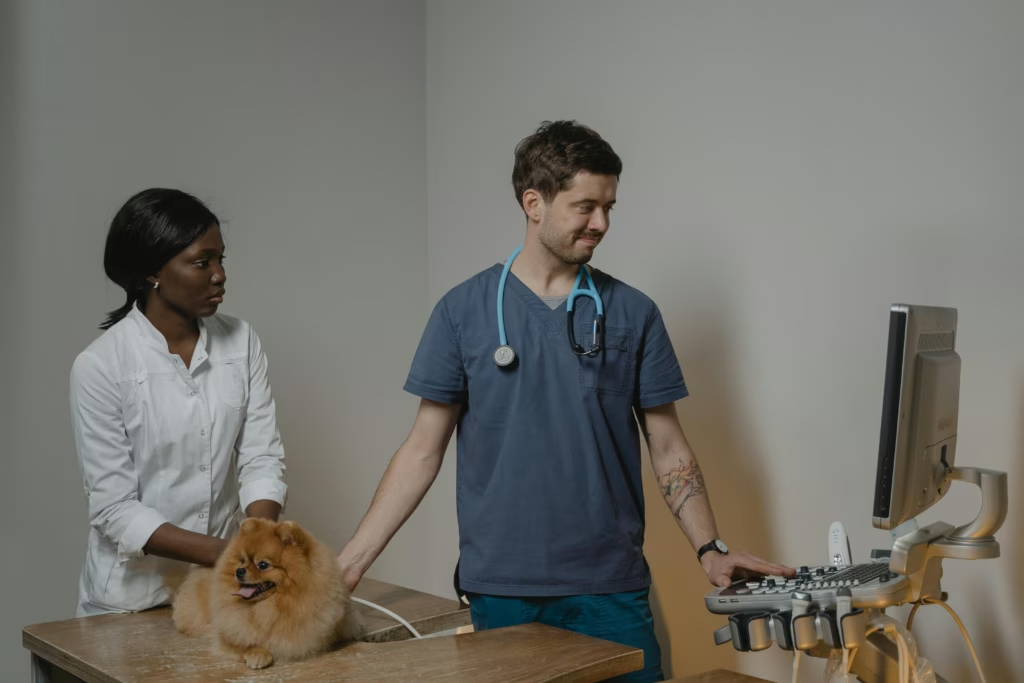
2. Ultrasound
Point-of-care ultrasound has become an increasingly core general practice capability, not just a specialty tool. Abdominal assessment, FAST exams, cardiac screening, guided procedures (cystocentesis, FNA, thoracocentesis), and pregnancy evaluation are all within scope. Portable units are adequate for most general practice applications and offer flexibility for patients of all sizes.
3. Endoscope
Not essential for all general practices, but increasingly common. Rigid and flexible endoscopes allow for visualization and biopsy of the GI tract, airway, nasal cavity, and bladder. The decision to invest depends on your referral patterns and what you’re currently referring out.
4. Tonometer
Rebound tonometers are the practical standard in companion animal practice — fast, non-invasive, and tolerated well by most patients without topical anesthesia.
Veterinary Equipment for Anesthesia and Surgery
1. An anesthesia machine
A precision vaporizer, a rebreathing circuit for most patients, and a non-rebreathing system for small patients under 5–7 kg.
2. Scavenging system
Waste anesthetic gas (WAG) exposure is a genuine occupational health risk. An active or passive scavenging system connected to your anesthesia machine is required for every room where inhalant anesthetics are used.
3. Anesthetic monitoring (multi-parameter)
Your monitoring unit should cover: heart rate, SpO₂ (pulse oximetry), EtCO₂ (capnography), NIBP, temperature, and ECG. Capnography in particular has become an expected standard of care for inhalant anesthesia — it detects problems (esophageal intubation, airway obstruction, cardiopulmonary arrest) earlier than any other monitor. If your current monitoring setup doesn’t include EtCO₂, that’s a gap worth closing.
Some monitoring systems can also integrate directly with your PIMS. For example, Digitail supports integrations with select anesthesia monitors to sync patient vitals into the medical record automatically. While workflows vary by clinic, reducing manual charting during anesthesia is a meaningful efficiency gain.
4. Doppler blood pressure monitor
For small patients, cats, and exotics where oscillometric blood pressure is unreliable. Doppler remains the most accurate method for measuring systolic blood pressure in small animals.
5. Endotracheal tubes
A complete range of sizes (from 2.5mm up to 14mm or larger depending on your patient population), both cuffed and uncuffed, with appropriate stylets.
6. Laryngoscope
Interchangeable blades in multiple sizes for confident intubation across patient sizes.
7. IV catheters and fluid therapy equipment
Catheters in a full range of sizes (24g through 14g), extension sets, T-ports, and tape for securing. Syringe pumps and volumetric fluid pumps with programmable delivery rates for surgical fluid therapy and CRI administration.
8. IV fluid warmer
Particularly important for small patients and lengthy procedures. Cold fluids contribute to intraoperative hypothermia, which prolongs anesthetic recovery and increases complication risk.
9. Patient warming system
Forced warm air (Bair Hugger-style) or circulating warm water pads are the safest options. Electric heating pads and heat lamps carry burn risk and should be avoided.
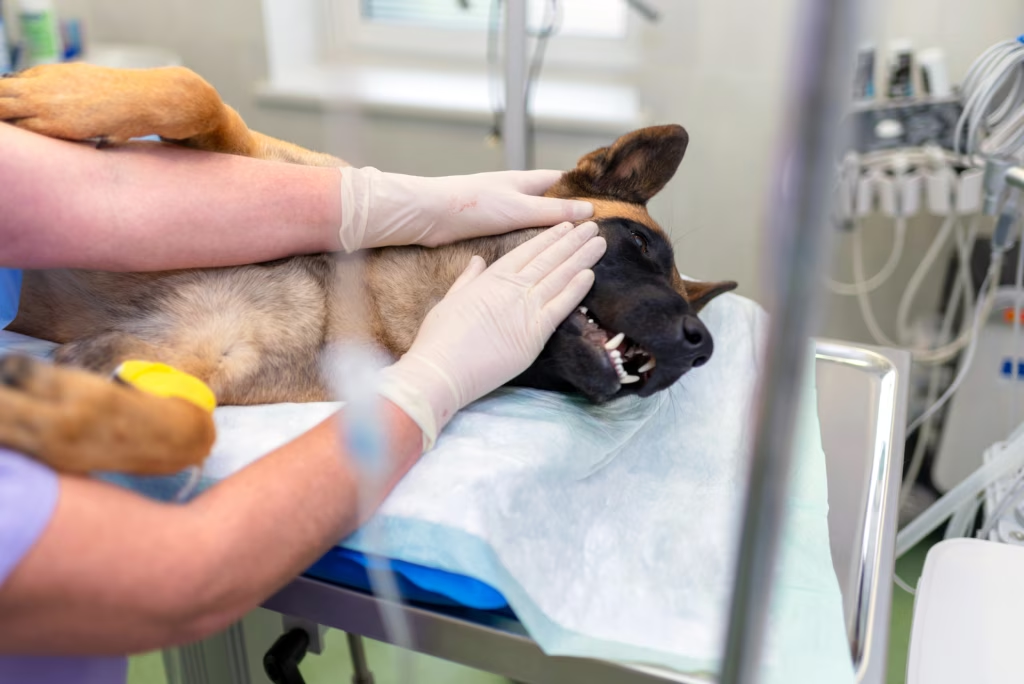
10. Surgery table
Stainless steel, with a V-trough top for patient positioning, a drainage channel, and ideally, hydraulic height adjustment. A prep/treatment table in the adjacent area for patient preparation before moving to the surgical suite keeps the sterile field intact.
11. Surgical lighting
Shadow-free LED overhead lighting is now the standard. A well-lit surgical field reduces fatigue and improves precision. Secondary lighting for the anesthetist’s workspace is worth considering.
12. Electrosurgery unit (ESU)
Bipolar and monopolar capabilities for hemostasis and tissue dissection. Reduces blood loss, operative time, and the need for suture ligation. Standard in any modern surgical suite.
13. Surgical instrument sets
A complete soft tissue set includes: scalpel handles (#3 and #4), hemostatic forceps (mosquito and Kelly), tissue forceps (thumb and rat tooth), needle holders, Metzenbaum and Mayo scissors, tissue retractors, and towel clamps. Instrument counts should be performed and documented before and after every procedure.
14. Ultrasonic instrument cleaner
Effective decontamination before sterilization is as important as the sterilization itself. An ultrasonic cleaner removes debris from instrument hinges and serrations that manual scrubbing misses.
15. Autoclave/sterilizer
A steam sterilizer appropriate to your pack volume — gravity displacement or pre-vacuum (dynamic air removal), depending on your instrument complexity. Biological indicator testing on a documented schedule is required for quality assurance.
16. Orthopedic instruments
Dependent on your caseload. If you’re performing fracture repair, cruciate surgery, or other orthopedic procedures in-house, the instrument sets required are substantial and procedure-specific. If you’re referring most orthopedics, a basic set for emergency stabilization may be sufficient.
17. Suction unit
Not essential in every setup, but the cost barrier is relatively low, and it’s extremely useful in a pinch for airway management, fluid removal, and improving surgical field visibility.
Veterinary Equipment for Dental Suite
Вental procedures are among the most commonly booked and highest-value services in companion animal general practice. A well-equipped dental setup is both a clinical necessity and a significant revenue driver.
1. Veterinary dental unit
Ultrasonic scaler for supragingival and subgingival scaling, high-speed handpiece for extractions, and low-speed handpiece for polishing. The handpiece is the most used and most frequently damaged component. A maintenance schedule extends its life significantly.
2. Intraoral dental X-ray system
Approximately 60% of the tooth structure is below the gumline, meaning a visual exam provides only a partial assessment. A digital dental sensor with positioning aids and dedicated software for full-mouth radiographic series is now considered the standard of care. Dental X-ray changes treatment plans in a meaningful percentage of cases. It also changes conversations with clients.
3. Wet table
A wet table is a non-sterile workspace used primarily for dental procedures and other fluid-heavy treatments. This is separate from your surgical table and prep area. Proper drainage, splash control, and ergonomic positioning make a significant difference in both efficiency and safety during dentals. If you’re performing dental procedures regularly, this is a worthwhile addition.
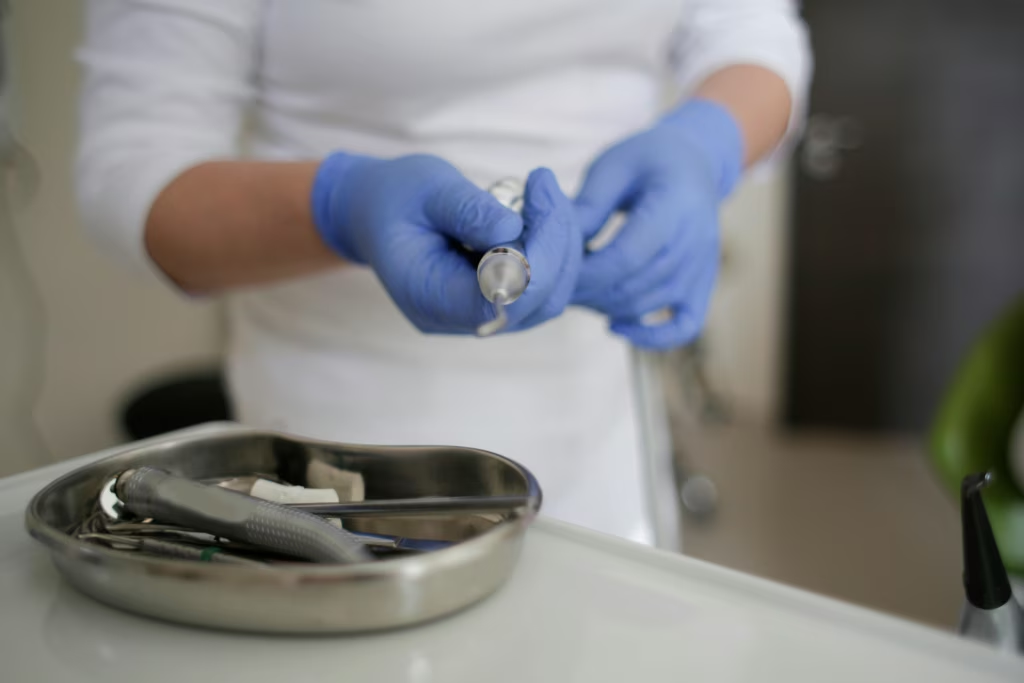
4. Dental hand instruments
Explorer, periodontal probe, scalers, curettes, extraction forceps (in multiple sizes, including cat-specific), elevators, and root tip picks. Quality instruments with appropriate sharpening protocols last longer and work better.
5. Oral surgery supplies
Suture material appropriate for intraoral use, tissue scissors, periosteal elevators, and surgical burs for alveoloplasty when needed.
6. Dental charting (integrated into your PIMS)
Paper dental charts that live in a binder are not searchable, not comparable across visits, and not a complete part of the medical record. Dental charting built into your practice management software allows you to document probing depths, abnormalities, and treatments in a way that’s accessible to the whole team, comparable at recheck, and usable for patient recall. A screenshot of the dental chart can be included in discharge instructions — a simple but highly effective way to demonstrate clinical value and improve client understanding.
Veterinary Equipment for Treatment Area and Pharmacy
1. Drug storage and cabinetry
Organized shelving or cabinetry for medications, with clear labeling, logical grouping, and regular rotation of stock to prevent expired products from remaining in circulation.
2. Controlled substance safe
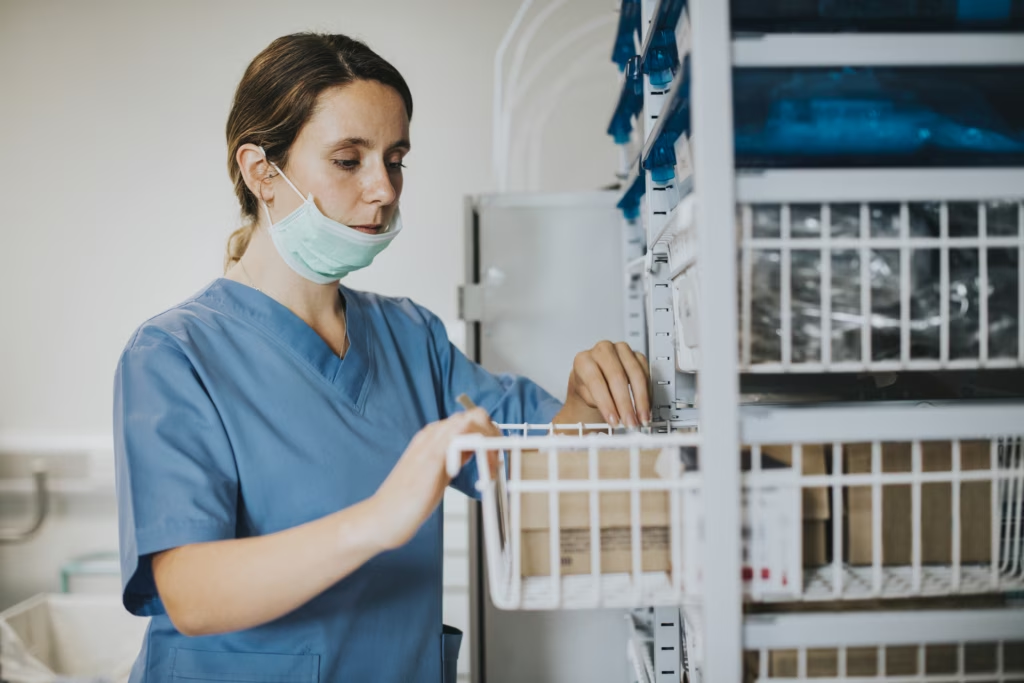
Regulatory-compliant storage for Schedule II–V medications, with a dispensing log that accounts for every dose. Digital controlled substance logs through your PIMS reduce manual entry errors and make audits significantly easier.
3. Pharmacy refrigerator
A dedicated medical refrigerator with a calibrated thermometer and daily temperature log. Essential for vaccines, biologics, and temperature-sensitive medications.
4. Prescription label printer
Labels generated directly from the patient record through your PIMS eliminate handwriting errors, include the correct dosing information, and create an auditable dispensing record.
5. Oxygen therapy
Oxygen concentrators, flow-by oxygen setups, or oxygen cages for patients in respiratory distress. An oxygen cage is particularly valuable for cats, who often do not tolerate restraint or nasal prongs well.
6. Crash cart and emergency kit
A dedicated crash cart stocked with emergency drugs, syringes, IV supplies, and an emergency drug dosing chart. Weight-based dosing references should be posted on the cart or accessible within your PIMS.
7. Defibrillator
For practices performing anesthesia, a defibrillator should be accessible. Basic external defibrillation capability is recommended; advanced models with rhythm analysis are available but not universally required in general practice.
Veterinary Equipment for Hospitalization and Recovery
1. Kennel runs and cages
Stainless steel construction, easy to disinfect, with adequate ventilation, and multiple sizes to accommodate your patient population. Divider panels that allow you to create different configurations add flexibility.
2. Cat-specific housing
Separate feline ward or visual separation from canine patients. Cats hospitalized in proximity to barking dogs show measurably elevated stress hormones. This is not a luxury, it directly affects recovery and healing.
3. Isolation ward
A dedicated isolation area for infectious or suspected infectious patients is an essential part of a responsible hospitalization setup. This means physical separation from the general ward, but also accompanying protocols — dedicated equipment, dedicated laundry, and defined entry/exit procedures. Nosocomial infections are a real risk in any clinic that hospitalizes patients, and having isolation infrastructure in place before you need it is far preferable to improvising when a parvovirus or ringworm case arrives.
4. Incubator
For neonatal patients, hypothermic patients, or very small patients whose thermoregulation is compromised. Essential if you see any pediatric or exotic cases.
5. Patient treatment boards or digital task tracking
Every hospitalized patient needs a clearly assigned, current treatment schedule visible to the whole team: medications, dosing times, fluids, feeding, monitoring parameters, and who is responsible for each. A physical whiteboard works. A digital patient task system within your PIMS works better, because it’s accessible from any workstation, creates an audit trail, and doesn’t get erased accidentally.
Personal Protective Equipment
1. Radiation protection
Lead aprons, thyroid shields, and leaded gloves for staff involved in radiographic procedures. Dosimetry badges for all personnel with radiation exposure, sent for reading on the schedule your radiation safety authority requires.
2. Surgical PPE
Sterile gowns, gloves in multiple sizes, surgical masks, and eye protection. Adequate supply management is part of what makes a surgical suite function.
3. General clinical PPE
Exam gloves (nitrile, multiple sizes), face shields or safety glasses, and coveralls or disposable gowns for procedures with significant fluid exposure. These belong in your inventory tracking, not purchased reactively when someone notices you’re out.
4. Zoonotic disease PPE
For suspected zoonotic cases (ringworm, Leptospira, rabies suspects, psittacosis, and others) additional PPE and isolation protocols should be established, documented, and practiced before they’re needed.
The Practice Management Software That Ties It All Together
Physical equipment gets your clinic running. Your practice management software determines how well it runs.
In 2026, separate systems for scheduling, medical records, invoicing, inventory, client communication, and lab results create the same kind of operational drag that outdated equipment does. Every time a staff member has to switch between platforms, re-enter data, or manually reconcile records, that’s time not spent on patients, and a place where errors can compound.
Digitail is an all-in-one, cloud-based veterinary PIMS built to eliminate that fragmentation. Here’s what that looks like in practice:
Medical records and AI-assisted documentation
SOAP notes, patient histories, treatment records, and discharge summaries all live in one place. Tails AI — Digitail’s built-in AI assistant — helps clinicians generate SOAP notes and clinical documentation faster, reducing the documentation burden without reducing record quality.
For clinicians using Tails VIP, Digitail now extends beyond the mobile app to the Apple Watch. Vets can log patient updates, capture notes, and record consultation details directly from their wrist — without picking up their phone.
In a busy clinic environment, this matters more than it might initially seem. When you’re mid-examination, moving between wards, or managing a patient who requires both hands, reaching for a phone is a genuine interruption. The Apple Watch integration removes that friction entirely. The flow is straightforward: record on the watch, sync to the iPhone app, and the update lands in the patient record.
Scheduling and online booking
A fully integrated appointment calendar with online booking available through your practice website, automated appointment reminders via SMS and email, and real-time availability management. No third-party booking forms that create separate records to reconcile. The booking, the reminder, and the appointment record all live in the same system.
Lab and diagnostic integrations
Results from IDEXX, Antech, Zoetis, Ellie Diagnostics, and other major diagnostic platforms post directly to the patient record in Digitail — no email checking, no manual entry, no results that miss the file. The same applies to imaging: DICOM-compatible records linked directly to the patient history.
Inventory management
Real-time inventory tracking that updates automatically as items are dispensed and charged. Low-stock alerts prevent mid-appointment shortages. Integration with suppliers like Vetcove and CDMV streamlines ordering. Controlled substance logs that reconcile against dispensing records without a spreadsheet.
Client communication
Two-way messaging for prescription questions, post-visit follow-ups, and general communication without playing phone tag. Automated recall reminders for vaccines, parasite prevention, and health checks that run in the background without a staff member manually managing a recall list. Digitail also includes a dedicated Pet Parent App, giving clients direct access to their pet’s records, appointment history, and care reminders, reducing inbound calls and keeping clients engaged between visits.
Payments and invoicing
Integrated payment processing so invoices close and payments process in a single step. No manual entry of invoice totals into a separate terminal, no end-of-day reconciliation between a PIMS report and a card machine report.
Multi-location and mobile capability
For practices with more than one location, or veterinarians who work across sites, Digitail’s cloud-based architecture means the same patient record is accessible from any device, anywhere. Mobile vets can run a full clinical workflow from a tablet in the field. Multi-location practices have centralized reporting and consistent workflows across sites.
Digitail is available for independent clinics, new practices, mobile veterinarians, and multi-location groups — with plans designed to match the scale and complexity of each. If you’re evaluating your practice technology alongside your equipment, book a demo to see how Digitail works in practice.
Ready to take the next step?
Book a demo today and explore how Digitail allows you to run your entire practice with one single tool.