How to Choose the Right Veterinary Software for Your Mobile Clinic

The mobile pet care market is booming. The global market was valued at around USD 824 million in 2024 and is projected to reach over USD 1.2 billion by 2032, reflecting steady annual growth in services delivered directly to clients’ locations. This trend is driven by rising pet ownership, convenience preferences, and demand for personalized care that reduces stress for animals and owners alike.
But growing a mobile practice isn’t just about demand. Practitioners must provide high-quality medical care outside of a clinic setting, while managing every part of the workflow in environments that are often unpredictable. In this context, choosing the right practice management software becomes one of the most important decisions for mobile veterinary success.
The Unique Challenges of Mobile Veterinary Practice
Mobile vets bring care directly to homes, farms, and stables. You’re navigating traffic, weather, and different locations all day while carrying equipment, medications, and diagnostic tools in your vehicle.
The work is rewarding, but the operational hurdles are real and constant:
- Your setup travels with you. Equipment, medications, and diagnostics have to fit the space you have, and what you didn’t bring isn’t down the hall.
- The environment changes with every appointment. A kitchen, a barn, a client’s driveway… each visit means adapting to whatever space you’re working in that day.
- Admin work happens between visits, not at a desk. Notes, invoices, and client follow-up get handled wherever you are.
- The team is smaller and more spread out. Whether you’re solo or working with a technician, there’s less support immediately on hand than in a full clinic.
Every aspect of running a practice needs to function seamlessly, regardless of location or internet strength.

Must-Have Features in Veterinary Software for Mobile Clinics
Mobile clinics face a distinct set of operational challenges — but the software that supports them shouldn’t be siloed or single-purpose. The strongest veterinary platforms are built to support practices of all sizes and models, while remaining flexible enough to adapt to mobile workflows.
Below are the core features mobile veterinarians should look for, with examples of how an all-in-one veterinary software like Digitail supports these needs in real-world scenarios.
1. Mobile-Friendly Interface
While brick-and-mortar clinics rely on desktop computers and large monitors, mobile vets primarily use tablets and smartphones in vehicles, driveways, and barns.
A mobile-friendly interface should provide:
- Touch-optimized layouts
- Clear navigation on smaller screens
- Fast access to key actions during a visit
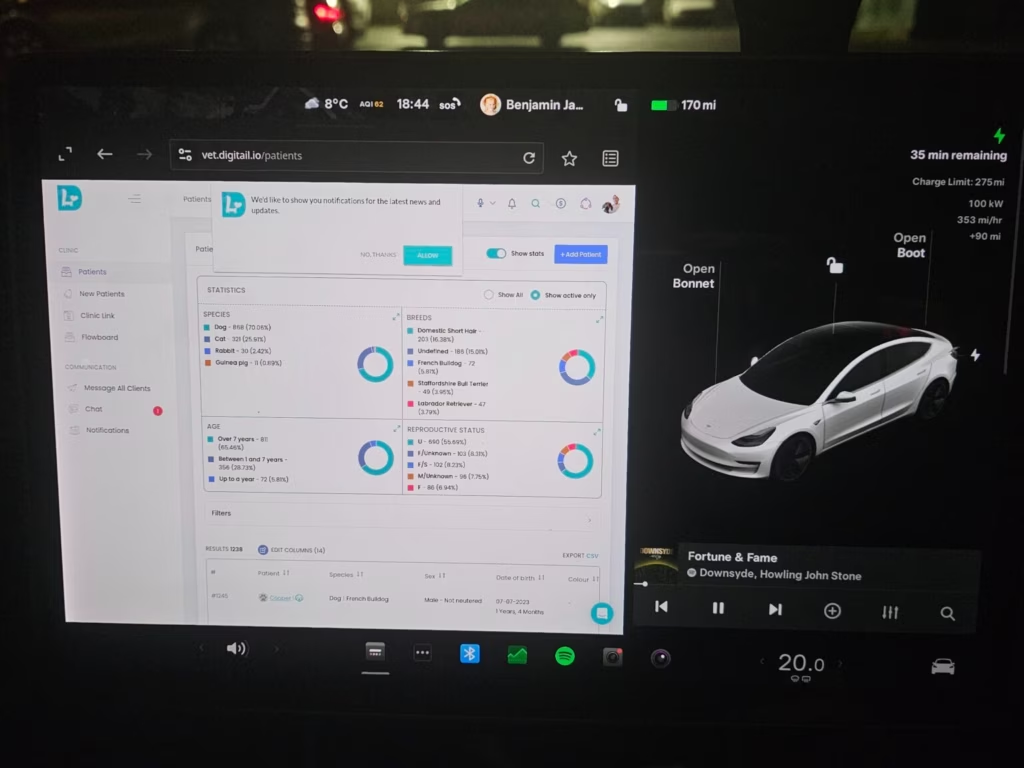
For example, Digitail has a tablet- and phone-friendly interface that allows mobile clinicians to document visits, manage schedules, and handle billing on the go — using the same system that works just as well inside a clinic setting.
2. Cloud-Based EMR
On-premise software runs on a server sitting in a building. That works when your team comes to the building every day, but a mobile practice doesn’t have that anchor. If your records live on a machine at a fixed location, you’re either tied to that location or dependent on remote-access workarounds that weren’t designed for a tablet in a driveway.
Cloud-based software removes the anchor. Records live in one central place and are reachable from any device you sign in on, so the patient history is available at the visit rather than back at an office. Nothing to transfer between devices, no version confusion, no exports to reconcile at the end of the day. Updates and backups happen automatically, and adding a device or a team member is a login, not an installation.
3. Scheduling and Calendar Integration
In a mobile workflow, schedules are dynamic. Appointments depend on travel times, weather, and client availability. Integrated scheduling with map links and real-time updates helps teams plan routes and adjust plans without missing visits or overbooking.
4. Navigation Tools
Built-in navigation or easy address linking matters because location transitions are constant. A system that quickly transitions from schedule to directions saves time and reduces the mental load of switching between apps.
Digitail solves this by integrating Google Maps directly into the appointment schedule. With one tap, you can get instant directions to your next visit, helping you plan routes efficiently and adjust on the fly without juggling apps.
5. On-The-Go Payments
Mobile clinics must close the loop on billing at the time of service. Integrated online payment processing lets veterinarians accept cards or contactless payments immediately, generate invoices, and issue digital receipts without returning to a central system.
With Digitail Secure Payments, you can handle all billing on the spot. It’s fully integrated, allowing you to take down payments, process real-time charges, and track outstanding balances from your mobile device. This seamless connection between medical records, invoices, and payments prevents missed charges and improves cash flow.
6. Client Communication Tools
You can’t risk no-shows after a long drive. Appointment reminders and two-way texting let clients reach you without endless phone calls, so you can focus on care instead of playing phone tag.
Look for systems that offer automated appointment reminders, two-way texting, and client portals that reduce phone tag. The best platforms also provide personalized notifications, e-signatures for consent forms, and the ability for clients to access their pet’s medical records digitally.
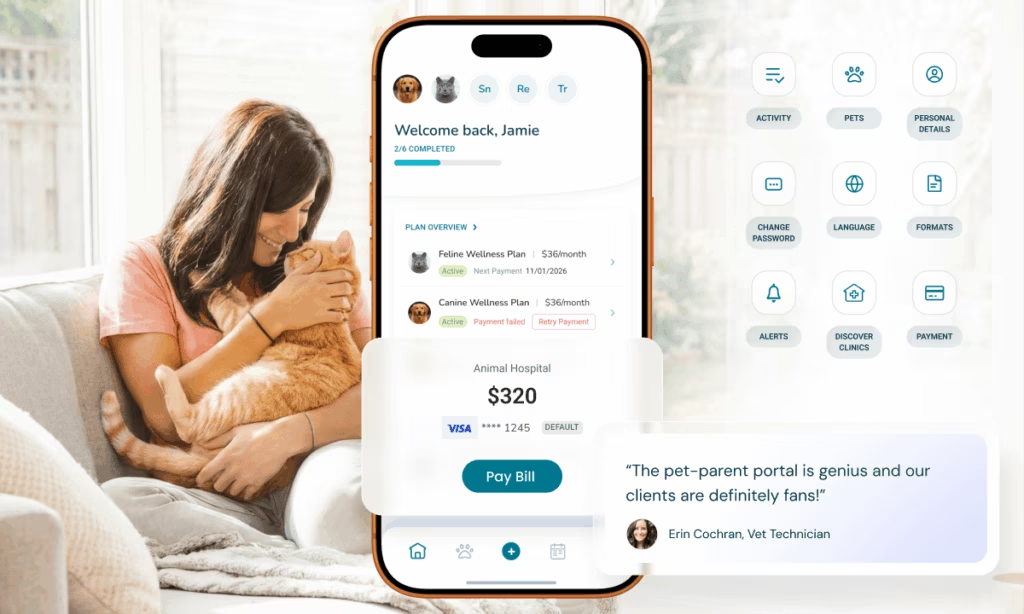
Digitail takes this further with a native Pet Parent App where clients can view their pet’s complete medical records, visit history, and receive curated educational resources specific to their pet’s needs. Clients can also communicate with you directly through the app, book appointments online, and receive automated reminders — dramatically reducing inbound calls and keeping everyone informed without you having to play phone tag between appointments.
7. Inventory and Prescription Management
Brick-and-mortar clinics have storage rooms and can restock daily. Mobile vets carry their entire pharmacy in their vehicle with limited space and no ability to run to the back for more supplies. Real-time inventory tracking prevents the embarrassing scenario of discovering you’re out of a critical medication while parked at a client’s home. Your software needs to alert you when stock is low so you can restock before leaving for appointments.
Digitail’s inventory system provides this level of visibility with real-time tracking and Vetcove integration, allowing you to see exactly what’s in your mobile pharmacy at any moment. The system tracks usage as you document treatments, alerts you before you run critically low on medications, and lets you reorder directly through integrated supplier connections — ensuring you can restock before leaving for appointments and never run out of critical medications mid-day.
8. AI Assistant
While AI tools benefit all veterinarians, they’re particularly valuable for mobile practitioners who lack the administrative support of a full clinic staff. Voice-to-text dictation allows hands-free SOAP note documentation while examining patients in awkward positions or tight spaces. AI-generated discharge instructions save time when you’re working from a tablet with limited screen space and typing capability. Automated dosage calculations and treatment protocols provide critical reference support when you don’t have colleagues nearby to consult.
For mobile vets working independently, AI tools effectively provide the support staff they don’t have with them in the field. Digitail’s Tails AI delivers voice-enabled assistance that lets you document medical records hands-free while you’re examining a patient. Instead of typing on a tablet balanced on your knee, you can speak naturally and have the AI generate structured SOAP notes, create discharge instructions, and support your clinical documentation. This dramatically reduces the time spent on paperwork after visits, allowing you to move between appointments more efficiently and focus on patient care rather than administrative tasks.
If you want a deeper look at where AI dictation makes the biggest impact day to day, we break down the most common real-world use cases in this article: How AI Dictation Saves Vets 10 Hours a Week →
9. Flexibility and Scalability Across Practice Models
Your practice model may evolve over time. A mobile-only clinic might eventually open a brick-and-mortar location. A traditional clinic might add home-visit services. Or you might operate a hybrid model from the start. The right software should adapt to your business as it grows and changes, not force you into a rigid structure.
Look for platforms that offer flexibility and customization to fit different practice types while still providing specialized workflows for each scenario. This means having templates, automation, and reporting that can be tailored to mobile clinic operations when you need them, but also supporting multi-location management, in-clinic workflows, and everything in between.
Digitail is built to scale with practices of all types and sizes — from independent mobile clinics to traditional practices, dental specialists to enterprise groups with multiple locations. For mobile veterinarians, the platform offers special workflows designed specifically for home-visit scenarios, mobile-specific pricing options, and customized dashboards that track the unique KPIs that matter for mobile operations — like revenue per mile traveled, appointment density by geographic area, and travel time efficiency. At the same time, if you decide to add a physical clinic location or transition to a hybrid model, the same platform seamlessly supports in-clinic operations without requiring you to switch systems or migrate data. This flexibility ensures your software investment grows with your practice, rather than limiting your options.
To see how this works in practice, we recommend reading this success story on how a mobile veterinary clinic used Digitail to pioneer a scalable home-visit care model.
Making the Right Choice for Your Mobile Practice
Choosing the right practice management software is one of the most important decisions you’ll make for your mobile practice. The right system doesn’t just help you manage your practice — it enables you to deliver better care, serve more clients, and build a sustainable business doing work you love.
Book a demo of Digitail today and discover how the right all-in-one platform can transform your mobile veterinary practice.
Great Business Starts with the Right Partner
Discover a veterinary software designed to improve the care experience for patients, clients, and veterinary teams alike.