5 Digitail Features That Move the Numbers That Matter in Your Practice


When you compare practice software, it is easy to get pulled into the feature checklist. Does it have online booking? Medical records? Invoicing? At this point, almost every PIMS does, and ticking those boxes tells you very little about how a platform will actually change your week.
What Makes a Veterinary Software Feature Actually Worth Paying For?
A feature earns its keep when it changes something you can put a number on. Scheduling, treatment plans, and digital records are table stakes now. The real question is not whether your software has them. It is whether your software turns them into gains you can measure in revenue, efficiency, and retention: fewer no-shows, cleaner charge capture, faster checkouts, doctors leaving at 5 PM with their charts already done, etc.
So rather than list everything Digitail can do, we picked five features that move metrics you already track.
1. Tails AI: AI Built Into Every Role, From Front Desk to Back Office
Most AI conversations in vet med stop at SOAP notes. That misses the bigger opportunity, because the vet is one person on a team that also includes a front desk fielding dozens of calls a day, technicians moving patients between rooms, and a manager trying to work out why last month’s revenue does not line up with the appointment volume. Tails AI is built for all of them: 20+ workflows split across three assistants that each take work off a different part of the practice.
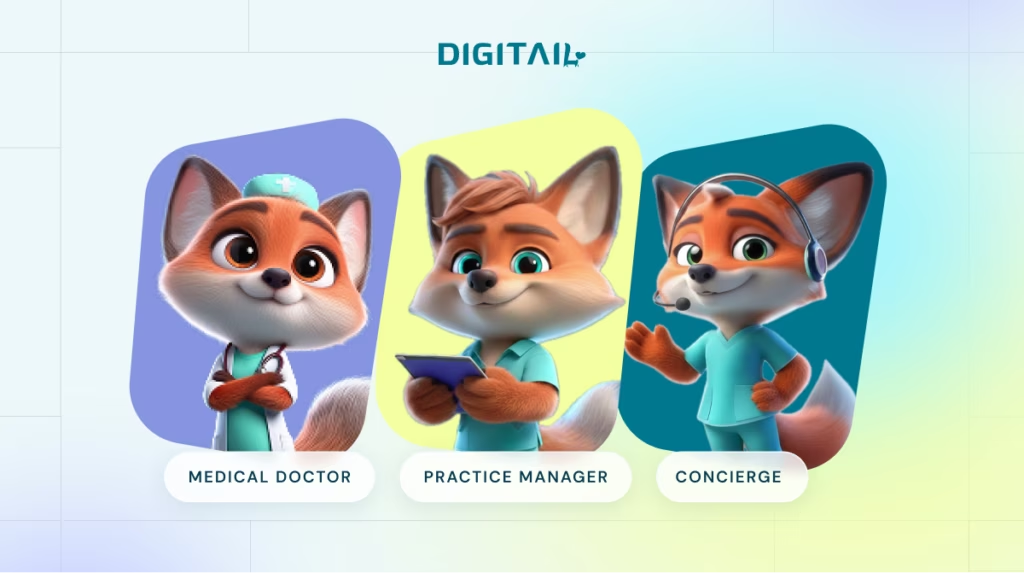
Tails Concierge covers the front desk, handling bookings, triage, follow-ups, prescription refills, and reminders around the clock, logging everything straight into the record.
Tails Medical sits with the veterinarian, turning spoken notes into structured SOAP records, capturing charges by voice, and surfacing patient history and decision support during the exam.
Tails Practice Manager works in the background on real-time analytics, inventory, commissions, and business coaching, so the people running the clinic are not waiting until month-end to find out what happened.
What this looks like in a real practice is less time lost to admin and more capacity without more hires. AcharaVet, a nine-clinic group in South Carolina, measured a 30% productivity increase with no added workload after adopting Tails AI, and during one clinic’s busiest week ever, a single veterinarian covered a two-doctor caseload, finished on time, and never fell behind.
The shift worth noticing: AI stops being one tool you bolt on for one task, and becomes a layer that quietly supports the whole team through the day.
When AI absorbs the administrative load across the front desk, the exam room, and the back office, you get more done with the team you already have, and burnout, the thing that quietly drives turnover, gets easier to manage.
2. The Pet Parent App: One Connection Point Before, During, and After Every Visit
A client’s relationship with your clinic does not start and stop at the appointment. They are thinking about their pet’s care in the days before and the weeks after, and most of those moments happen on their phone. The Pet Parent App gives them one place for all of it, which is also what makes it one of the most direct tools you have for retention and growth.
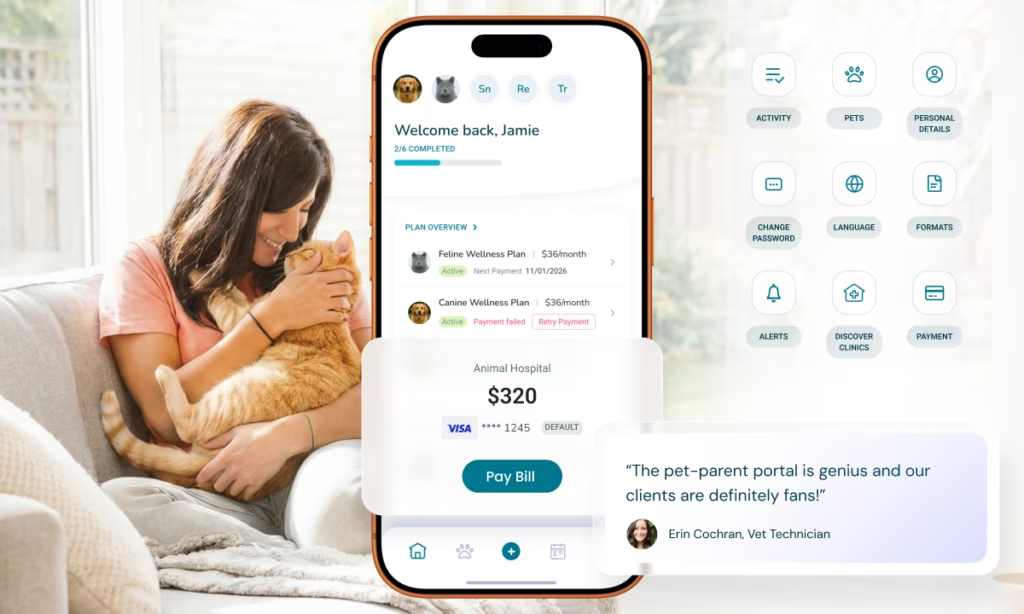
Before a visit, clients book against your live availability without phone tag, fill out intake ahead of time, and get reminders by email, text, and push notification, the kind of nudge that keeps slots filled.
During and right after, they can see discharge instructions, diagnoses, certificates, and invoices, and pay straight from their phone, so checkout moves faster.
Between visits, two-way chat lets your team request a photo or answer a quick question, while a built-in education library keeps clients from defaulting to Google.
Because the app is native to the PIMS, a client’s pet data is already there the first time they open it, which is the difference between an app people actually use and one they download once and forget.
That ongoing engagement shows up in the numbers in two ways. It protects revenue you have already earned: AcharaVet saw a 30% drop in no-shows once automated reminders became part of the workflow, recovering income through a workflow change rather than more staff. And it builds the reputation that brings new clients in. Shoreview Veterinary in Toronto used the same client-experience tools, right down to AI-generated discharge summaries delivered in a client’s own language, to earn 60+ five-star Google reviews in its first six months open.
An app clients keep using turns one-off visits into an ongoing relationship, which is what cuts no-shows, speeds up payment, and quietly compounds into reviews and referrals.
3. Reporting and Analytics: Real-Time Visibility Across the Whole Business
Most clinics learn their numbers weeks after the fact, pieced together from exports and spreadsheets, by which point the month is already gone. Digitail’s reporting flips that by surfacing the data live, while you can still act on it. The point is not a single metric. It is seeing every part of the business clearly enough to catch problems early and follow the money.
The reports fall into a few categories that matter to any practice:
💸 On the financial side, you can track revenue, average patient transaction, accounts receivable, discounting, and true per-line margin, so you know how much you made and what actually drove it.
🏥 Client and medical reports turn your own records into recoverable revenue: a list of overdue reminders with no appointment booked is often the single most underused growth lever in a practice.
📦 Inventory reports tie stock movement to COGS, and operational views like the Flowboard report show where visits bottleneck and when no-shows cluster.
📊 Pulling it together, the clinic performance dashboard tracks revenue trends, appointment fill rate, no-show rate, treatment plan acceptance, and new clients year over year in one place.
For practices running more than one location, the bigger win is consistency. When every site reports on the same system, you can finally compare them fairly instead of guessing. Dr. Joshua Gehrke of Veterinary United described work that used to eat two weeks now taking five minutes, with a real-time snapshot of the business that lets the team spot trends and make decisions on the spot.
When financial, client, inventory, and operational data are all visible in real time, you stop running the clinic on last month’s numbers and start catching the leaks and the opportunities while they still matter.
4. Digitail Secure Payments: Faster Checkout and Fewer Dollars Left on the Table
Payments are where a surprising amount of revenue quietly slips away, through missed charges, manual entry errors, and hours lost reconciling at month-end. Digitail Secure Payments (DSP) closes those gaps by building the whole payment flow into the PIMS instead of bolting on a separate terminal and a separate login.
Because checkout lives inside Digitail, the exact invoice amount goes straight to the terminal, every transaction logs itself, and reconciliation that used to take hours largely takes care of itself. The flexibility around it is just as useful: you can send a payment link by text, email, or app so clients pay from anywhere, which is ideal for mobile visits, special orders, and remote follow-ups; keep cards on file to collect deposits and cut no-shows; and offer Buy Now, Pay Later so clients can approve bigger treatment plans without sticker shock.
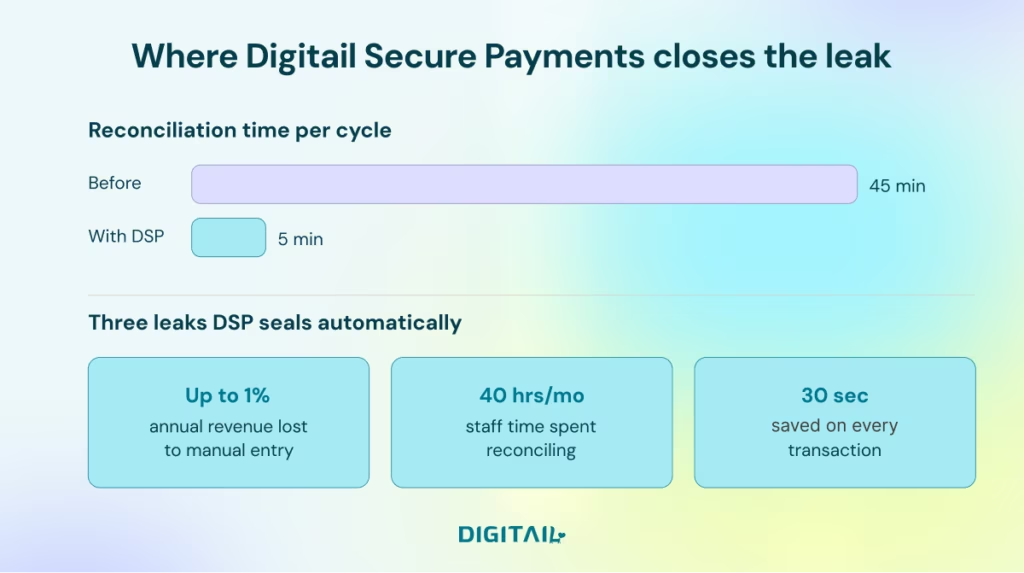
Payments built into the PIMS mean fewer missed charges, faster checkouts, and hours of reconciliation handed back to your team, which is about as close to found money as a clinic gets.
5. Stock Management: Turn Inventory From a Blind Spot Into Cash Flow
Inventory is usually a practice’s second-largest expense, with the average clinic carrying $50,000 to $150,000 in stock at any moment, and it is the area that can’t be run on instinct.
The problem is usually visibility. Because products get dispensed, used in procedures, given as samples, and administered in treatment, and any one of those slipping past the count throws everything off. Digitail brings that under control by tying stock to the work itself, so levels update in real time as products move.
That real-time foundation is what makes the rest useful. Batch and expiration tracking flag what is about to lapse before it becomes waste. The Stock Movement Report ties purchases, sales, and adjustments to accurate COGS, so you can spot a product you are selling faster than you reorder, or cash sitting idle on a shelf. Purchase orders and shopping lists keep reordering tied to actual usage instead of guesswork, and for routine maintenance, bulk updates let you revalue an entire catalog at once when a supplier raises prices, a job that takes Digitail users up to 95% less time than editing products one by one. Auto-increase rules can even nudge sale prices up as costs rise, so margins do not quietly erode.
Real-time inventory turns capital tied up on your shelves into visible, manageable cash flow, and bulk pricing tools mean a supplier hike no longer costs you money for weeks before anyone notices.
See the Difference for Yourself
Good software shouldn’t just keep your practice running. The basics, scheduling, records, are the price of entry now, and almost every PIMS handles them. What actually separates one practice from another is whether the software underneath it makes a real difference to revenue, to how the team spends its day, and to whether clients come back.
That’s the shift worth keeping in mind when you weigh any PIMS. A feature isn’t valuable because it appears on a comparison chart; it’s valuable when it changes an outcome you can measure.
See What Digitail Could Move in Your Practice
The best way to know what these features are worth is to see them against your own caseload.