Covina Animal Hospital in Southern California is known for delivering exceptional pet care. In a recent episode of the Veterinary Hospital Managers Association Manager to Manager podcast, Heidi Traylor, CVPM, PHR—practice manager at Covina Animal Hospital—shared her journey of evaluating, selecting, and implementing a new PIMS. For clinics considering a similar transition, her clinic’s approach, from identifying operational roadblocks to evaluating options and rolling out new software, offers a clear and practical framework for success.
The breaking point: a server-based system wasn’t cutting it anymore
Covina Animal Hospital had been using a server-based system for years. While the team knew the system thoroughly, limitations were increasingly problematic.
Heidi’s team kept running into the limits of their server-based system: workflows her team needed simply weren’t possible, updates required downtime, and the aging server was increasingly unstable. Instead of sinking more money into hardware repairs, she started evaluating cloud-based PIMS that offer automatic updates, remote access, built-in integrations, and smoother workflows that save staff time and improve the client visit experience.
Evaluating the options: a team-driven approach
Switching PIMS can be one of the most intimidating operational changes a veterinary clinic can make. It can require data migration, extensive staff training, workflow redesign, and months of preparation, all while continuing to deliver patient care without disruption. For many practices, the sheer scope of the change makes it difficult to even know where to begin.
Covina Animal Hospital approached this challenge with a structured, step-by-step evaluation process, providing a model for clinics unsure how to assess their options moving forward.
1. Define your clinic’s pain points and non-negotiables
The leadership team began by identifying exactly where their existing system was falling short. Key frustrations included limited functionality, slow performance, frequent system hang-ups, and an inability to support newer workflows that would improve efficiency for both staff and clients. Costly server upgrades and the looming risk of system failure further underscored the need for change.
To ensure real clinic needs were addressed, Heidi’s team asked their staff what they liked, disliked, and could no longer work around, helping leadership define clear must-haves for the new PIMS.
2. Do research and focused demos
With clear requirements in place, the team researched available solutions through online forums, conferences, and peer recommendations. Combining traditional online research with direct input from colleagues proved especially valuable, as peer insights and conference conversations offered real-world context beyond what demos alone can show. The clinic initially evaluated six systems through demos, then narrowed it down to two finalists based on integrations, speed, usability, scalability, and long-term viability. This proved to be a critical step for avoiding “demo overwhelm,” which is a common challenge for clinics comparing multiple platforms.
3. Get your team involved with hands-on evaluation
Recognizing that adoption depends on usability, Covina Animal Hospital staff were told to treat some demos and system access as a playful “sandbox environment” to test workflows firsthand. Their feedback from these sessions informed Standard Operating Procedure (SOP) development and helped leadership assess how each system would function in day-to-day operations. This involvement proved essential for identifying potential challenges early and building confidence in the final decision.
Heidi emphasizes that this level of preparation and team engagement played a key role in ensuring the new system would not only meet leadership goals, but also gain staff buy-in and support smoother daily workflows.
🔔 In the end, Covina Animal Hospital ultimately selected Digitail, for a few key reasons:
AI-driven automation to streamline workflows
Cloud-based reliability with 99.99% uptime
Ultra-responsive customer support, even after implementation period
Time to implement: preparing for a smooth transition
The transition to Digitail followed a deliberate, phased timeline. Covina Animal Hospital spent nearly a year evaluating options and conducting demos before selecting a new PIMS. Once the decision was made, an additional six months were dedicated to preparation, developing SOPs, training staff, and testing workflows in a sandbox environment.
During rollout, key team members led training efforts and provided one-on-one support on the floor. Traylor emphasized that patience and structured guidance were essential throughout the process, allowing staff to build confidence and adapt to the new system without unnecessary disruption.
Results: streamlined workflows and improved morale
Switching practice management systems only delivers value if it leads to measurable, day-to-day improvements. For Covina Animal Hospital, the goal was never to change for its own sake; it was to resolve the limitations of a legacy, server-based system that slowed workflows, restricted growth, and created unnecessary frustration for staff and clients alike.
Since implementing their new PIMS, the practice has seen meaningful progress across several areas:
Stronger staff engagement and confidence: Hands-on training, clearly documented SOPs, and on-the-floor leadership support helped team members adapt more quickly and feel supported throughout the transition.
Improved client experience: Streamlined workflows and integrated payment capabilities have made interactions smoother for clients, supporting faster check-ins, clearer communication, and more efficient visits.
Greater flexibility for the future: With a cloud-based system designed to evolve, the practice now has the ability to refine workflows over time rather than being constrained by software limitations.
Heidi noted that, now that the team has moved beyond the initial adjustment period, the focus has shifted from simply operating within the system to actively optimizing processes—a clear indication that the platform can scale alongside the practice’s long-term goals.
What other managers can take from this
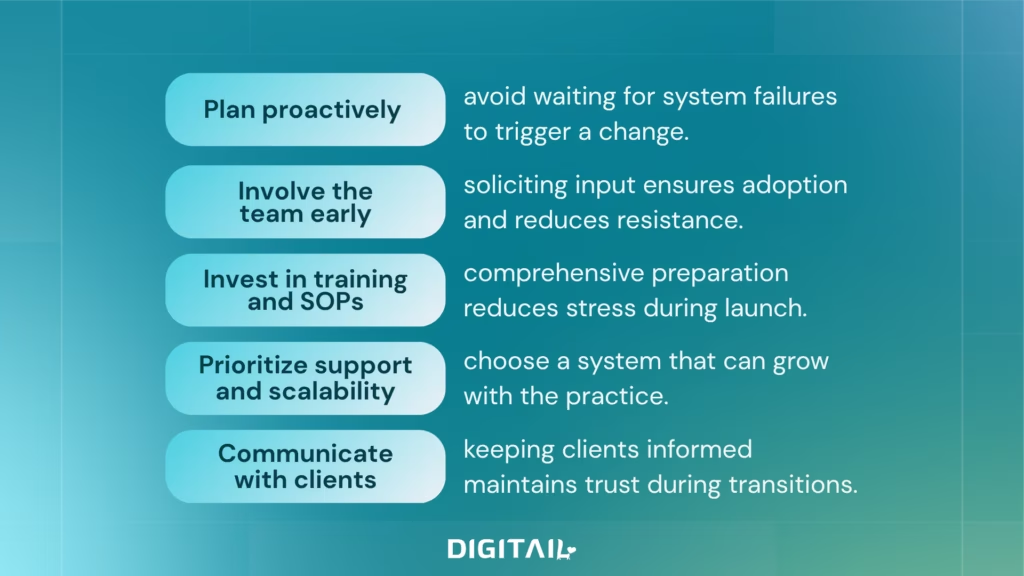
Covina Animal Hospital’s experience highlights several best practices for PIMS transitions:
Covina Animal Hospital’s journey highlights how careful evaluation, team collaboration, and a modern, reliable PIMS can transform practice management. In 2026, being comfortable with AI-driven functionalities is increasingly essential, allowing veterinary teams to work more efficiently, reduce administrative burdens, and enhance patient care. Digitail offers a platform that not only addresses today’s operational challenges but also positions practices to adapt, grow, and thrive in a technology-driven future.
🏥 About Covina Animal Hospital
Covina Animal Hospital is a full-service veterinary practice recognized for its commitment to exceptional patient care, efficient operations, and continuous improvement. Through a collaborative team approach and the use of modern technology, the hospital leads the way with high-quality care while creating a positive experience for pets, clients, and staff alike.
Running a high-performing clinic in 2026 isn’t just about having the latest tech; it’s about having a toolkit that protects your time, your team’s sanity, and your bottom line. Whether you’re building a new practice from scratch, planning a renovation, or just doing an honest audit of what you have, a structured equipment list helps....
Most veterinary practice owners think about profitability in terms of appointment volume and fee schedules. Add more clients, raise prices, and see more patients per day. That math makes sense on the surface. But many clinics that increase appointment volume still struggle to improve their margins. The reason is often the same: the operational infrastructure...
The front desk at a busy veterinary clinic is one of the most demanding environments in healthcare. Phones ring, pets are anxious, pet parents have questions, and the care team needs records ready before the doctor walks in. When check-in processes are manual and disconnected, small inefficiencies compound into real problems: missed information, delayed care,...