Best Veterinary Management Software for Growing Clinics

The veterinary industry is evolving rapidly. Consolidation is accelerating. Client expectations are rising. Labor costs remain high. And according to Mordor Intelligence, the U.S. veterinary services market continues to grow steadily year over year, driven by increased pet ownership and higher per-pet spending.
As appointment volume increases and teams expand, the systems that once felt “good enough” often start to strain. Workflows slow down. Reporting becomes limited. What felt manageable at 15 appointments per day becomes chaotic at 40.
That’s why choosing the right veterinary practice management software (PIMS) is no longer a simple operational decision. For growing clinics, it’s a strategic one.
This article breaks down what to look for in the best veterinary software for growing clinics — and how to evaluate whether your current system is supporting your next phase of growth.
Why Growing Clinics Outgrow Their Veterinary Software
Many clinics don’t actively decide to replace their veterinary clinic software. Growth forces the decision.
Early on, most veterinary software programs handle scheduling, medical records, and billing adequately. But as you add another doctor, extend hours, or introduce new services, limitations surface:
- Manual data entry between systems
- Limited reporting for financial planning
- Inventory inconsistencies
- Missed charges
- Increasing after-hours documentation
What worked for a two-doctor clinic may not hold up for five. And when expansion becomes part of the strategy, your veterinary management software must evolve from a record-keeping tool into an operational platform that actively supports efficiency, visibility, and scalability.
What Defines the Best Veterinary Software for Growth?
Not all PIMS are built with scale in mind. The best veterinary practice management software for growing clinics shares several defining characteristics:
- Cloud-based architecture
- Fully integrated workflows
- Built-in automation and AI
- Real-time operational visibility
- Built to evolve continuously
Let’s explore each in more detail.
1. Cloud-Based Veterinary Software
If you’re planning to grow, cloud infrastructure is non-negotiable. Cloud-based veterinary software provides flexibility that server-based systems simply can’t match. It allows you to:
- Access records securely from any location
- Add new team members without hardware upgrades
- Receive automatic updates
- Avoid server maintenance and downtime
- Manage multiple clinics within one ecosystem
Cloud-based veterinary practice software reduces IT complexity, lowers long-term infrastructure costs, and removes the technical barriers that often slow down expansion.
Please read the article about server-based vs cloud-based software if you want to learn more about the difference between them.
2. Integration and Synchronization Across Systems
Many clinics operate with fragmented tools — separate systems for reminders, labs, payments, inventory, and communication. Each additional system introduces complexity and increases the risk of synchronization errors.
The most effective veterinary software programs consolidate:
- Scheduling
- Medical records
- Billing and secure payments
- Inventory management
- Client communication
- Reporting and analytics
- AI-powered documentation
When everything operates on a single platform, teams avoid duplicate entries, reduce errors, and simplify training. Integrated veterinary management software doesn’t just save clicks — it reduces billing leakage, minimizes human error, and creates consistent workflows across the entire team.
3. Vet Software Should Increase Capacity
Between SOAP notes, discharge instructions, lab entries, inventory updates, and client follow-ups, a significant portion of a veterinary team’s day happens behind a screen. When appointment volume increases, the administrative load scales with it.
Consider the impact at scale:
- If documentation takes 8–10 minutes per appointment
- And a veterinarian sees 20 patients per day
- That’s 160–200 minutes — over 3 hours daily — spent on documentation alone
Even small inefficiencies compound quickly. A clinic seeing 30–40 appointments per day can easily lose dozens of staff hours weekly to repetitive administrative work.
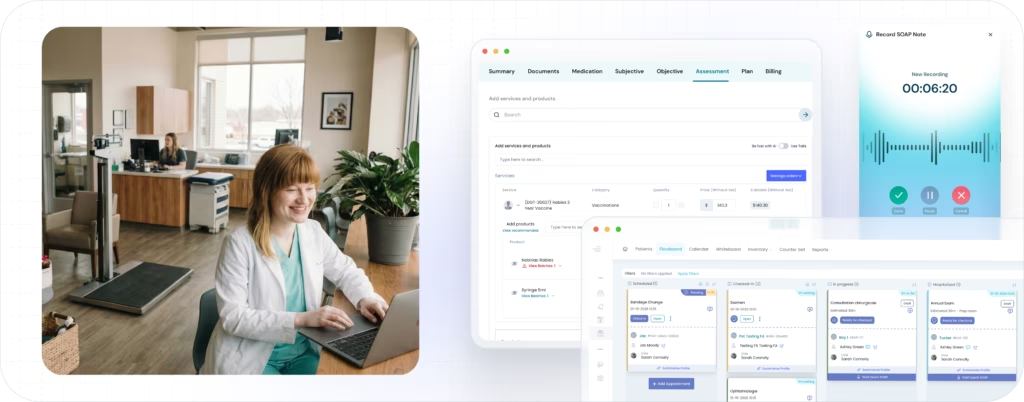
This is where modern vet software makes a measurable difference. They actively reduce workload through:
- AI-generated SOAP notes
- Automated discharge summaries
- Pre-visit digital history collection
- Smart appointment reminders
- Real-time inventory deduction tied to treatment entries
- Integrated billing that prevents missed charges
For clinic owners, it directly impacts profitability. When administrative time drops, either appointment volume increases or payroll strain decreases. In both scenarios, operational margins improve.
Digitail’s Tails AI is fully embedded inside the veterinary practice management software — generating structured SOAP notes, syncing charges automatically, and reducing after-hours charting.
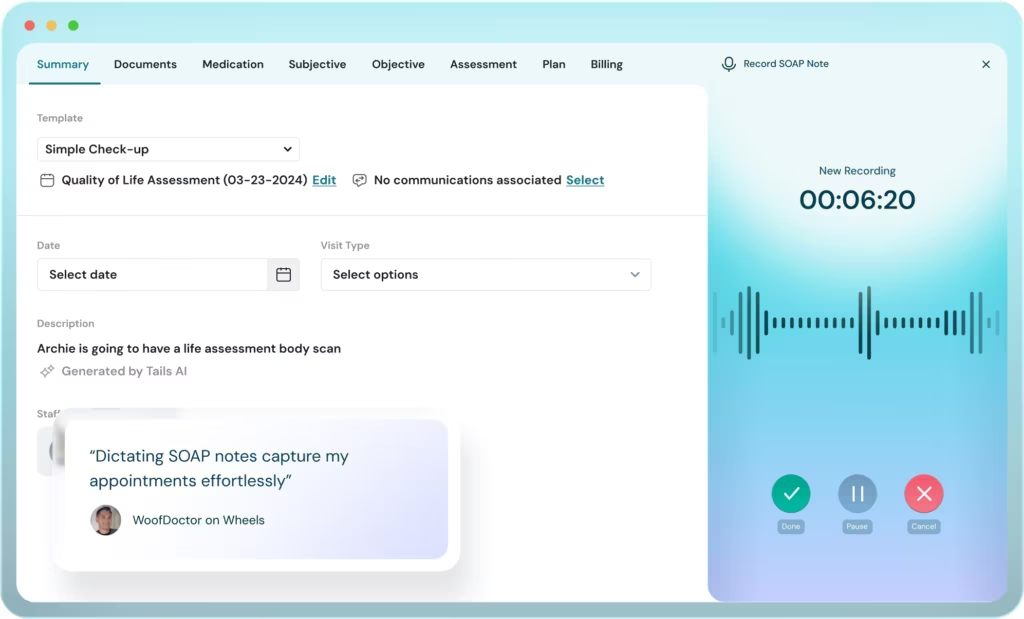
For multi-DVM practices, even small time savings compound into significant operational gains. That’s exactly what Paumanok Veterinary Hospital experienced after implementing Digitail. Hospital Manager Brian Bernatzky shared:
With Tails AI Dictation, our veterinarians are saving approximately eight minutes per SOAP note. That translates into more than 10 hours per week per DVM.
At Hefner Road Animal Hospital in Oklahoma City, the impact extended beyond documentation alone. After implementing Digitail’s AI-powered workflows across scheduling, intake, SOAP dictation, and client communication, the clinic reported saving more than 70 minutes per doctor per day.
Zero chart backlog, doctors leaving on time, more consistent records across providers, and smoother end-to-end workflows — from booking through checkout.
Growth shouldn’t require your team to work longer hours. The right veterinary practice software allows you to see more patients while maintaining clinical quality and getting home on time.
4. Data Visibility Enables Smarter Growth Decisions
Your veterinary clinic software should provide real-time insight into performance metrics that matter:
- Revenue by provider
- Revenue by service category
- Appointment utilization
- Average invoice value
- Client retention
- Inventory turnover
- No-show rates
Without clear reporting, expansion decisions rely too heavily on instinct. The right clinic platform transforms operational data into actionable insight, allowing practice managers and owners to make confident decisions.
Digitail’s customizable dashboards and real-time analytics enable clinic owners to monitor KPIs in real time — supporting strategic hiring decisions, service expansion planning, and margin optimization.
5. Multi-Location Support in Veterinary Software
Even if you operate a single clinic today, your software should support future expansion. Scalable systems allow you to:
- Centralize reporting across locations
- Standardize workflows
- Share inventory oversight
- Maintain consistent medical records
- Add new clinics without system migration
Switching veterinary software in the middle of expansion can be painful and expensive. Choosing scalable software from the start prevents that disruption later.
Digitail was built to support single clinics, hybrid models, and multi-location groups — all within one unified system. Adding a new location does not require separate servers, disconnected databases, or duplicated reporting structures.
Warning Signs Your Current Veterinary Software Is Limiting Growth
If your practice is growing and you’re experiencing the following, your system may be creating friction:
- Slow system performance during busy hours
- Inability to generate detailed financial reports
- Manual lab uploads
- Workaround processes
- Doctors stay after hours for documentation
- Limited integration with vendors and labs
These inefficiencies may seem minor day-to-day, but they compound significantly over time, impacting margins, team morale, and long-term scalability.
Great Business Starts with the Right Partner
Discover a veterinary software designed to improve the care experience for patients, clients, and veterinary teams alike.