6 Ways Veterinary Software Improves Clinic Profitability

Most veterinary practice owners think about profitability in terms of appointment volume and fee schedules. Add more clients, raise prices, and see more patients per day. That math makes sense on the surface.
But many clinics that increase appointment volume still struggle to improve their margins. The reason is often the same: the operational infrastructure underneath the practice isn’t built to support profitable growth.
That’s where veterinary practice management software (PIMS) becomes a financial lever, not just an administrative tool.
This article breaks down the direct and indirect ways your practice management software affects clinic profitability and what to look for if you want your system to actually move the number that matters most.
Why Operational Efficiency Is a Profitability Problem
Before looking at software features, it’s worth understanding the mechanics of how inefficiency costs clinics money.
A typical full-time veterinarian in a busy practice spends a substantial portion of their day on tasks that don’t directly generate revenue: writing SOAP notes, generating discharge instructions, answering routine client calls, reconciling invoices, and handling administrative follow-up. Research consistently shows that documentation alone consumes 2–3 hours of a clinician’s day.
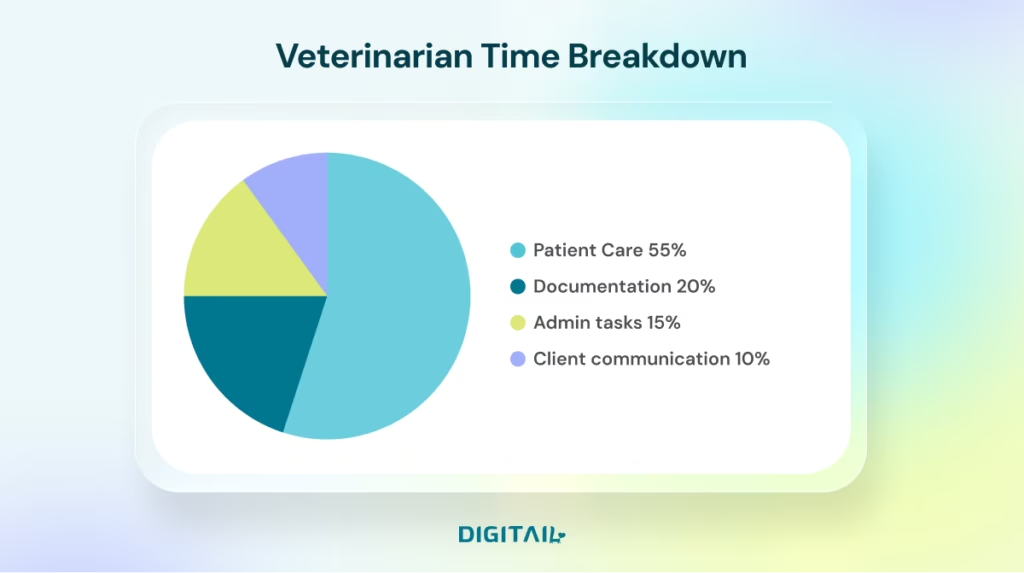
When revenue-generating staff spend significant time on administrative tasks, clinics face a hidden capacity problem. You’re paying for veterinary expertise but consuming it on work that, in a well-designed system, doesn’t require it.
Multiply that across a team of three or four doctors, and the cost becomes significant.
Modern practice management software is designed to close that gap — not by reducing headcount, but by redirecting the time of your most expensive staff toward patient care.
The 6 Ways Veterinary Software Directly Impacts Clinic Profitability
1. Charge Capture and Missed Revenue
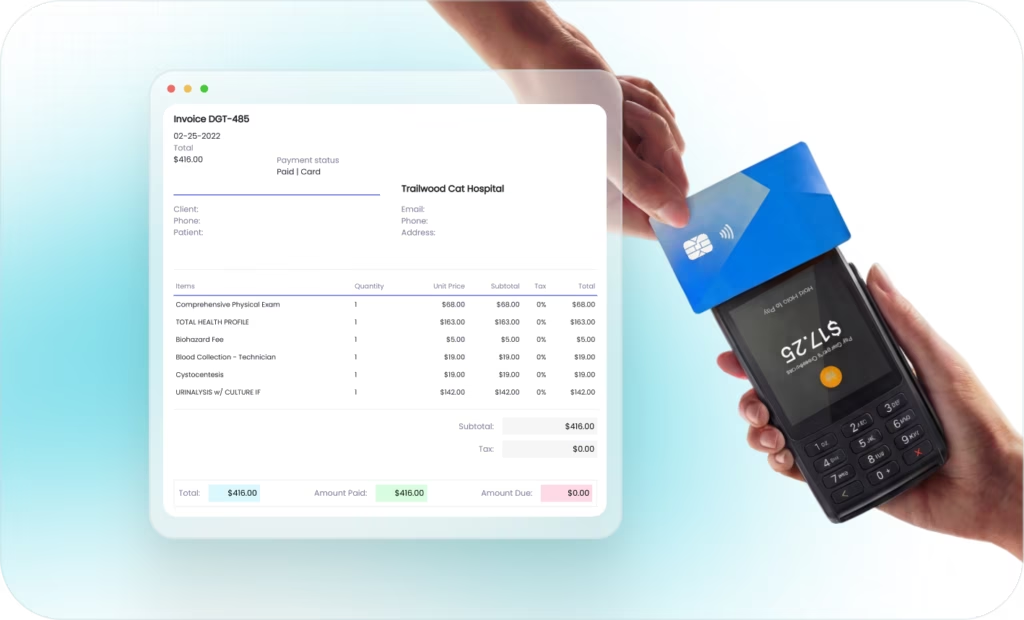
Missed charges are one of the most common and underestimated profit leaks in veterinary medicine. When a veterinarian performs a procedure, administers a medication, or runs a diagnostic during a busy appointment, those items don’t always make it onto the invoice. The moment is fast, the room is full, and manual entry is easy to skip.
Digitail addresses this with AI-powered voice-to-invoice charge capture. As the veterinarian documents the visit, Tails AI reviews the medical record and suggests invoice items before checkout — so what happened in the exam room is actually reflected on the bill.
For a clinic running 40 appointments per day, even small improvements in charge capture per visit compound into substantial annual revenue recovery.
2. Appointment Utilization and No-Show Rate
Empty appointment slots are lost revenue that can never be recovered. No-shows and late cancellations contribute meaningfully to underutilization, and most clinics manage this manually (if they manage it at all).
Effective practice management software handles this automatically: SMS and email reminders go out on schedule, cancellations trigger waitlist prompts, and the front desk team doesn’t need to manually call every client.
When no-show rates drop, even modestly, the impact on daily revenue is immediate.
3. Documentation Speed and Daily Appointment Capacity
If your veterinarians finish their last appointment at 5:00 PM but spend another 60-90 minutes completing medical records before they can leave, that time has a cost. Either it erodes work-life balance and accelerates burnout — which drives turnover, which is expensive — or it limits how many appointments can realistically be booked.
AI-assisted SOAP note dictation changes this equation. When a veterinarian can dictate exam findings in real time and have the record structured automatically, documentation time drops substantially. That reclaimed time can translate into one or two additional appointments per day, or it can translate into doctors leaving on time — which has its own retention and morale value.
At Paumanok Veterinary Hospital, after implementing Digitail’s AI-powered SOAP dictation, veterinarians saved approximately eight minutes per SOAP note. For a multi-DVM practice, that amounts to more than 10 hours per week per doctor reclaimed from administrative work and returned to patient care.
4. Average Invoice Value and Preventive Care Compliance
Revenue per visit is a KPI that many clinic owners track but few actively manage at the system level. Preventive care (annual wellness exams, vaccinations, dental cleanings) is where revenue is most often left on the table. Not because clients refuse these services, but because they’re not prompted at the right moment.
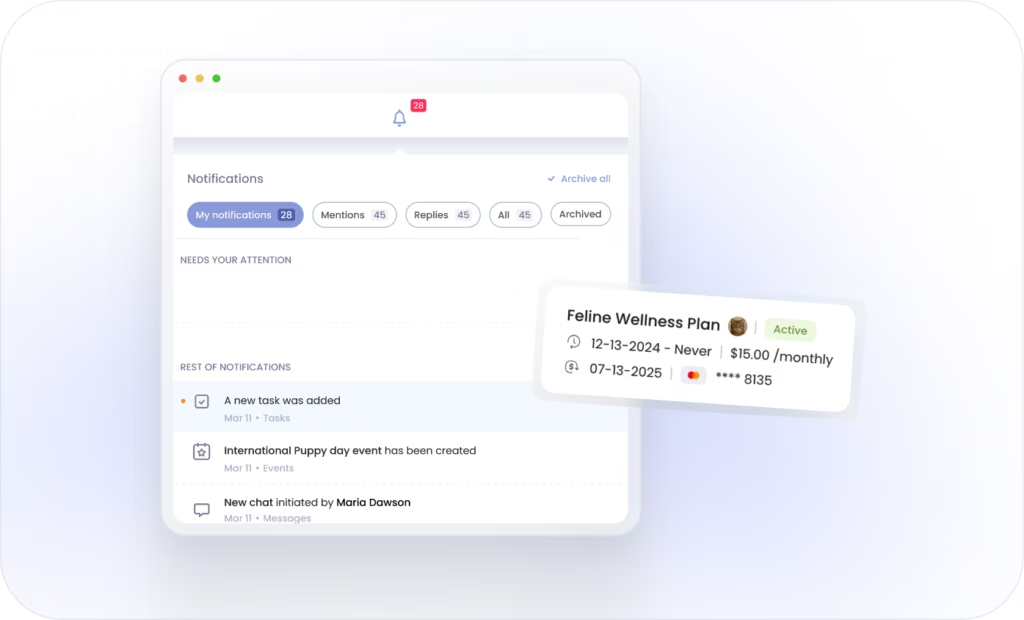
Digitail’s preventive care tracking flags every patient who is overdue for a service, both before the appointment and at checkout. When these prompts are built into the workflow rather than relying on staff memory, compliance rates improve and average invoice values rise with them.
5. Inventory Management and Cost Control
For most veterinary clinics, pharmaceuticals and medical supplies represent the second-largest expense after labor. Inventory shrinkage through waste, expired products, errors in dispensing records, or untracked usage adds up quickly and is often invisible until a physical count reveals the discrepancy.
Veterinary software with real-time inventory tracking tied directly to clinical records ensures that every product dispensed is deducted from stock automatically at the point of care. This eliminates the gap between what was used and what was recorded, reduces unnecessary reorder cycles, and improves the accuracy of cost-of-goods calculations.
Better inventory visibility also supports smarter purchasing decisions. When practice managers can see product utilization patterns and turnover rates in real time, they can optimize order quantities and avoid both stockouts and overstocking.
6. Reporting, Analytics, and Financial Visibility
Profitability problems are difficult to fix when they’re difficult to see.
Many clinics only review revenue monthly, and breaking it down by provider or service category requires manual spreadsheet work.
In a competitive, high-volume environment, that lag is costly. Issues that could be corrected quickly — a drop in specific service utilization, a decline in a particular doctor’s average invoice value, a product category with unexpected cost overruns — remain invisible until they’ve been compounding for weeks.
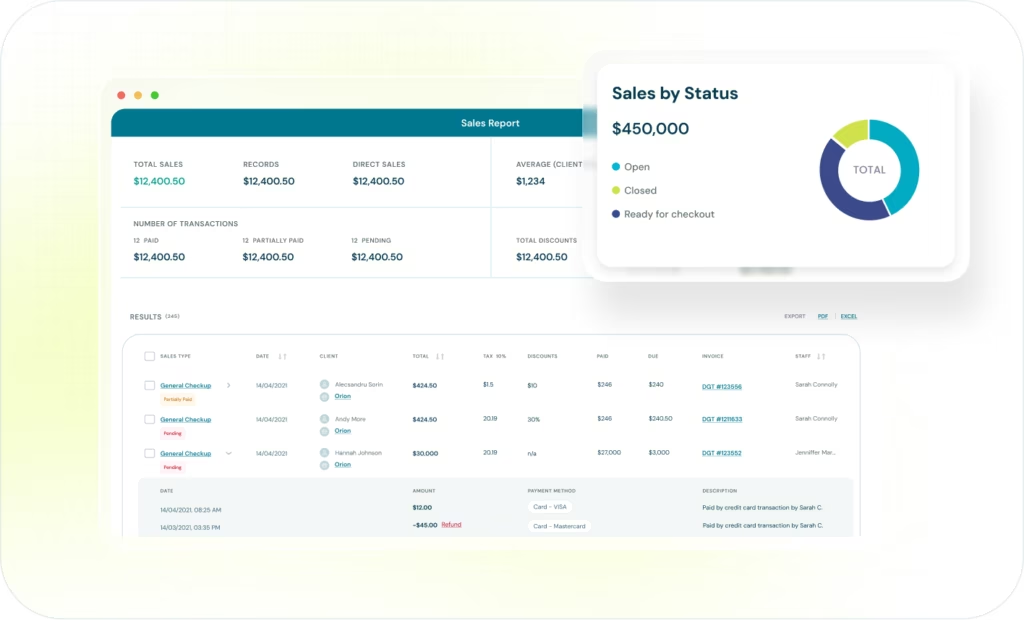
Digitail’s real-time dashboards surface revenue by provider, service, and appointment type automatically. When performance dips practice managers see it immediately, not weeks later when it’s already compounding.
An All-in-One Veterinary Software Built for Growth
A collection of disconnected tools creates gaps, and gaps are where revenue and efficiency are lost. When SOAP notes, invoicing, inventory, reminders, and reporting all live in separate systems, data doesn’t flow, staff duplicate entries, and reports require manual reconciliation.
When these functions operate inside a single platform like Digitail, every clinical event automatically triggers the downstream workflows it should: charges appear on the invoice, inventory is deducted, the patient’s preventive care record is updated, and the data feeds into reporting in real time. The result is a measurable reduction in the friction that costs clinics money at every step of the patient journey.
If you’re ready to see how Digitail supports clinic profitability, book a demo and talk to our team.
Build a More Profitable Veterinary Clinic
Let us show you the specific ways Digitail can turn your clinic’s operational friction into financial growth.