Client churn is the silent killer of growth for many veterinary clinics. You spend time, effort, and marketing budget to attract new clients, only to have them disappear after their initial visit.
The truth is, client drop-off often has little to do with the quality of your medicine. It’s about what happens in the mind of the pet owner after they leave your clinic. The stress of a sick pet, the overload of new information, and the return to a busy life can quickly dissolve the rapport built in the exam room.
Client retention, therefore, hinges on extending that supportive, educational partnership beyond the physical clinic. It’s about continuously reinforcing trust, reducing anxiety, and making ongoing care feel seamless. The goal is to transition the client from a state of “I visited the vet” to “My pet is under the care of this veterinary team,” and the solutions lie in addressing the very human needs for clarity, convenience, and connection.
Why New Veterinary Clients Don’t Return
1. Information Overload
You’ve provided a wealth of knowledge, but by the time they get home, the details are fuzzy. What was the name of that medication? When is the follow-up appointment?
Reducing first-visit drop-off isn’t just about the quality of medicine; it’s about the quality of the connection established in the days following that initial appointment. If the only interaction a client has with your clinic is the appointment and the bill, it can feel impersonal. When clients feel like a partner in their pet’s health rather than just a transaction, retention happens naturally.
3. The Inconvenience Factor
Life is busy. That follow-up appointment you mentioned? It seemed important at the time, but three weeks later, it’s competing with work deadlines, school pickups, and everything else on their plate. Without a clear reminder and an easy way to schedule, it just doesn’t happen.
Strategies to Improve Client Loyalty and Reduce Churn
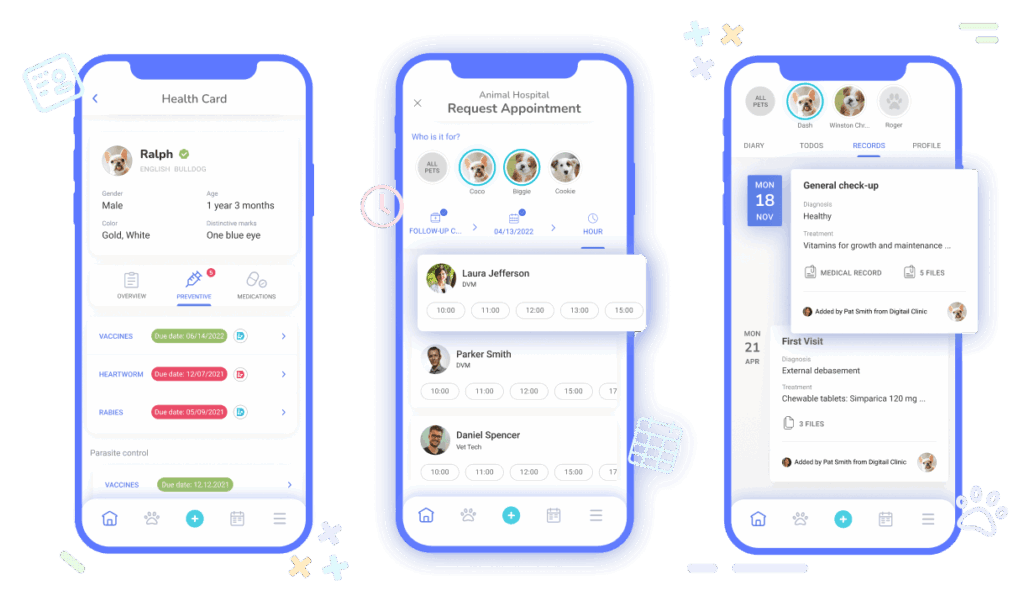
1. Give Clients 24/7 Access to Their Pet’s Health Records
When clients leave your clinic with a stack of papers explaining their puppy’s vaccine schedule, there’s a decent chance those papers end up buried in a drawer. Digital access to records means they can check “wait, did Bella get her second DHPP shot?” while standing in line at the grocery store.
A digital health hub gives pet parents immediate access to their pet’s medical records, visit summaries, vaccination certificates, and lab results whenever needed. The Digitail Pet Parent App serves this purpose by centralizing all health information in one place that clients can access from their phones. This means fewer frantic calls to your clinic for basic information and more empowered pet parents who feel in control of their pets’ care.
2. Meet Clients Where They Prefer to Communicate
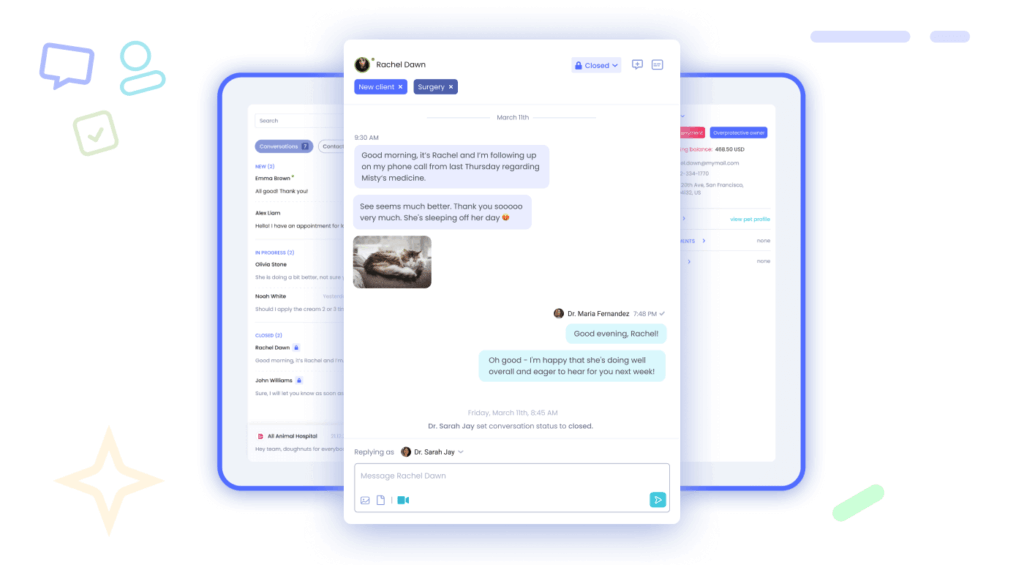
Modern pet parents prefer asynchronous communication—they want to send a quick message when they think of a question, not play phone tag during their lunch break. The friction of scheduling alone can deter a second visit. If a client has to call during business hours, wait on hold, and navigate a busy receptionist’s schedule, they may simply put it off.
The Digitail Pet Parent App removes this barrier entirely. Clients can reach out via secure two-way messaging with questions like “Is this poop color normal?” or send photos of a concerning symptom without the hassle of a phone call. They can also see your availability in real time and book their own follow-ups at their convenience—even at 10 PM in their pajamas.
3. Send Appointment Reminders Through Multiple Channels
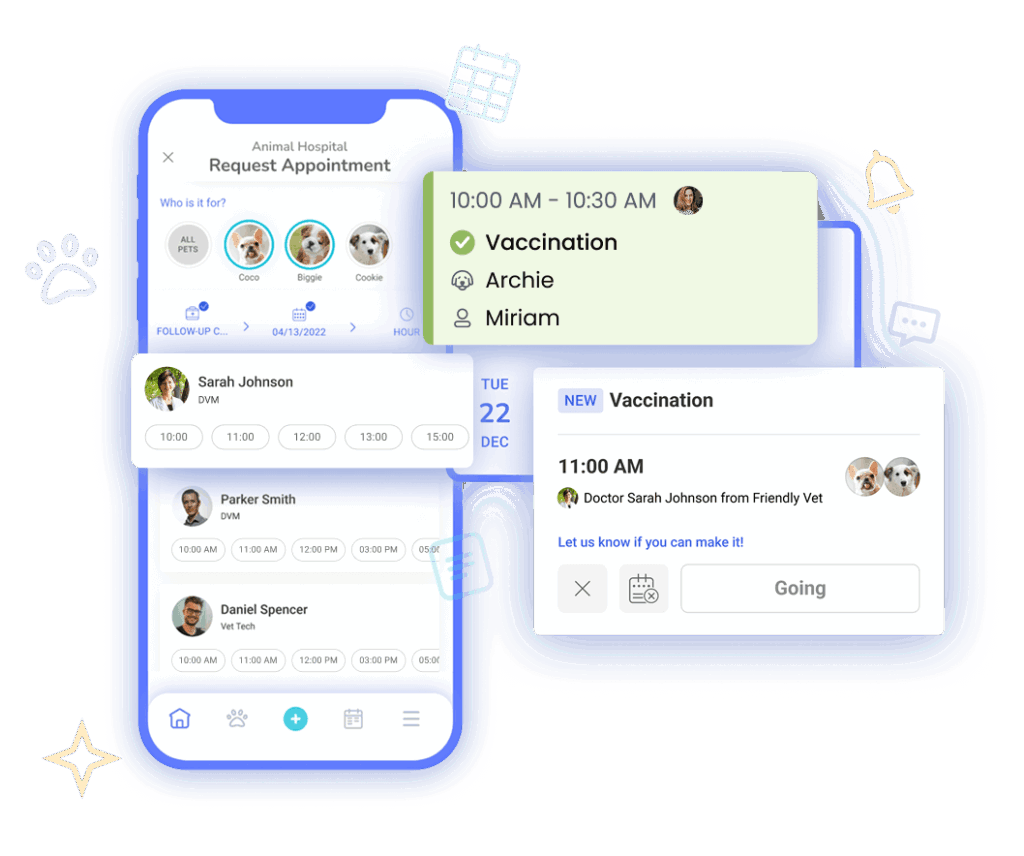
To keep your clinic top of mind, use automated, multi-channel reminders. While emails and texts are great, push notifications through an app are particularly effective because they are immediate and easy to act upon. A well-timed notification that “Max is due for his booster” becomes a bridge back to your clinic, especially if it includes a “Book Now” button that lets them schedule the visit in seconds.
4. Share Educational Resources Clients Will Actually Use
Instead of overwhelming clients with verbal instructions during the visit, you can share bite-sized care tips, videos, or articles after they leave. A two-minute video on “How to Brush Your Dog’s Teeth” sent after a dental discussion is infinitely more useful than trying to remember everything you said three weeks ago.
The challenge is curating quality content that’s actually relevant to your clients’ needs. Some practices maintain their own library of educational materials, while others tap into carefully curated resource libraries that cover common pet health topics. The Digitail Pet Parent App allows you to do both—you can share from their existing resource library or add your own specialized content that reflects your practice’s approach and expertise. This way, you’re not starting from scratch, but you can still personalize the educational experience for your clients.
5. Use Technology to Extend Your Team’s Empathy
The 48 hours following a first visit are critical for building an emotional connection. A simple check-in asking “How is Max feeling after his vaccines?” or “Did you have any questions about the new diet we discussed?” can turn a one-time visitor into a loyal client.
The reality is that busy clinical teams rarely have time for manual follow-up calls. You’re juggling appointments, emergencies, surgeries, and administrative tasks. Technology can help bridge this gap without sacrificing the personal touch.
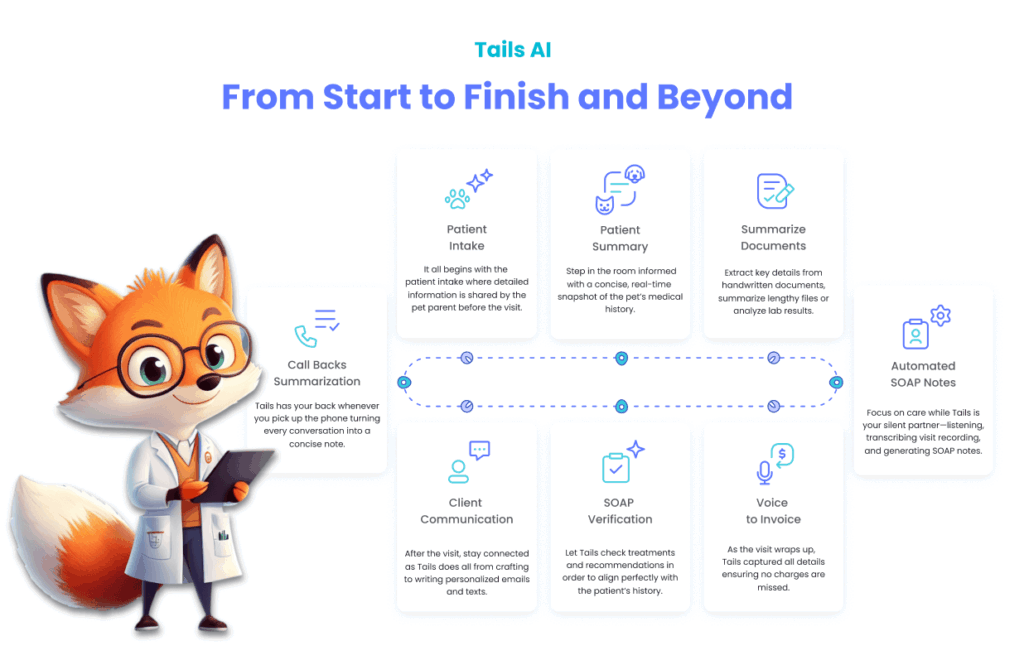
Tools like Tails AI assist your team in quickly drafting personalized follow-up emails based on the visit details. Instead of staring at a blank screen trying to compose a thoughtful message, your team can review and customize AI-generated drafts that check in on the pet’s progress, address common questions related to the visit, and offer proactive guidance.
This isn’t about replacing the human touch—it’s about extending it. Your team’s expertise and compassion are amplified by automation that works in the background. Clients get the attention and support they crave, and your team gets their time back.
How to Implement Client Retention Tools in Your Veterinary Practice
Implementation is simpler than you might think. Start by making digital access part of your new client onboarding process. During the first visit, take two minutes to set clients up with the Pet Parent App. Show them how to view their pet’s record, where to find upcoming appointments, and how to message the team with questions. Make it part of your new client onboarding.
After the appointment, let Tails AI handle the immediate follow-up: send the visit summary, share relevant educational content, and check in 24-48 hours later to see how things are going. Your team reviews and sends these messages, adding personal touches where appropriate, but the initial drafting is handled for them.
Set up your team to respond to app messages during designated times—maybe 15 minutes at mid-morning and mid-afternoon. Quick responses to simple questions build trust without requiring lengthy phone calls.
Monitor your retention metrics. You’ll likely see follow-up appointment compliance increase, phone call volume decrease, and clients expressing appreciation for the ongoing support.
Dr. Chris Simmons at Simmons Veterinary Clinic successfully implemented the Pet Parent App and saw significant improvements in client engagement and retention. His approach to onboarding new clients, training staff to promote the app’s benefits, and integrating it into daily workflows offers practical insights for any clinic looking to reduce first-visit drop-off.
Managing controlled substances is a non-negotiable part of running a veterinary clinic — but it shouldn’t come at the cost of time, focus, or team sanity. That’s why we’re excited to share that VetSnap is now integrated with Digitail. This new integration gives Digitail clinics a seamless, reliable way to handle controlled substance logging without extra...
Hi — I’m Jamie, Director of Customer Success at Digitail. If you’re a practice manager, owner, or DVM, you don’t need reminding how much pressure exists on a normal clinic day. Phones ringing, patients waiting, staff juggling rooms, inventory, payments, and client communication — all while trying to deliver great care and keep the day...
Veterinary clinics are busier than ever, yet many teams still feel like they’re running on empty. What’s the culprit? The truth is, most veterinary teams aren’t struggling because they lack dedication or skill. They’re losing hours to invisible inefficiencies that quietly compound throughout the day. These hidden time drains don’t announce themselves with alarms or...